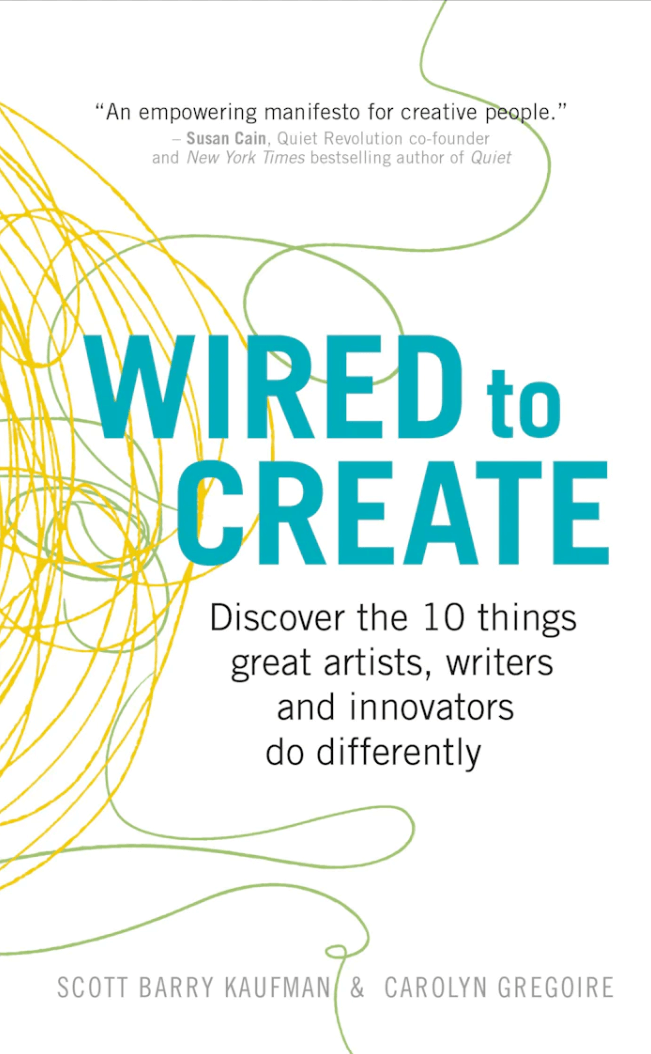
People tend to treat creativity as a single quality, something they were either born with or were destined never to develop. Though some people may have a greater innate capacity for creativity than others, it’s a mistake to assume that it’s a fixed trait.
People tend to treat creativity as a single quality, something they were either born with or were destined never to develop. Though some people may have a greater innate capacity for creativity than others, it’s a mistake to assume that it’s a fixed trait.
Several methods are available to foster the development of your unique blend of intrinsic and teachable characteristics that make up creativity.
That is the point of these blinks. You will discover what characteristics are most important for creative thinking and what routines and surroundings are most conducive to developing those characteristics.
In addition, you’ll learn.
Boldness is remarkable because of its rarity. We’re fascinated by those who challenge the status quo, whether rebels like Kurt Cobain or visionaries like Steve Jobs. But what is it about these nonconformists that draw people to them?
A single factor can’t explain a creative mind, that’s for sure.
Frank X. Barron, a psychologist who investigated a wide range of well-known creatives in the 60s, concluded that there was no one cause for exceptional creative output.
Thought to be directly related to one another, Barron’s research dispelled the myth and showed that intelligence is only one of several factors at play in the creative process.
Paradox is a common tool of the creative mind. For example, a group of authors scored above average on psychopathology and mental disease measures but also above average regarding their general mental health.
The unorganized, “messy” work habits of creative individuals mirror the “messiness” of the creative mind, a mosaic of paradoxes and contradictions.
Pablo Picasso had not set a method when he painted Guernica, one of his numerous masterpieces. He “wasted” a lot of time and effort improvising, changing his mind, and trying again as he went. The final artwork incorporates some of his earliest designs, while others were revised several times before being scrapped.
When it comes to their job, creative individuals don’t seem to care about following to a timetable or plan; instead, they tend to follow whatever schedule or plan is pushed upon them. As noted by psychologist Mihaly Csikszentmihalyi, creative people don’t mind a predetermined set of rules but rather conform to the needs of the job in their chosen sector and their responses to it.
The exceptionally talented mathematician, tirelessly attempting to solve an apparently impossible equation; the gifted writer, typing away until the wee hours of the morning; the eccentric painter, passionately applying color onto the canvas with fervor. These common artistic portrayals that we see in movies and books may appear slightly ridiculous and overused. However, their common characteristic, which is their ardent dedication to the arts, is indisputably genuine.
What is the origin of this intense enthusiasm?
Many individuals in the creative field undergo a clarifying process. At a certain juncture in their existence, individuals encounter a form of artistic expression that resonates with them so profoundly that it becomes ingrained in their very being.
Jacqueline du Pré, a celebrated cellist, displayed an unwavering love for music, evident from her early days when she showcased her exceptional talent through her rendition of nursery rhymes and enthusiastic singing of Christmas carols. At the age of four, she had a defining moment when she heard a cello for the first time and told her mother that producing that sound was her aspiration.
Following such an occurrence, imaginative individuals are energized by what developmental psychologist Ellen Winner refers to as an overwhelming desire to achieve mastery, compelling them to pursue their objectives with fervent determination.
Martha J., an American psychologist, conducted research on children who displayed exceptional levels of creativity. Morelock grew certain that those who are creative yearn for involvement with the topic of their ardor. Individuals in the creative field possess a profound ability to concentrate due to their necessity for engagement, which parallels the human body’s need for nourishment and air.
Hence, creative individuals find the persistent commitment required for achieving creative achievements less tiring, as it fulfills a neurobiological desire.
In childhood, an individual’s personal interests and passions are often discovered, according to Paul Torrance’s research. A considerable number of children in the research had already formed a distinct inclination before beginning primary education, which usually endured or grew stronger throughout their adult years.
According to Torrance’s research, having a strong interest in something during one’s childhood frequently leads to increased creativity in adulthood. Individuals who excelled academically during their childhood but were lacking a personal drive, were found to have a lower chance of attaining creative success compared to those who discovered their passion at an early stage.
Most of us imagine an artist as someone comfortable performing in front of an audience, whether it’s a rock star playing at a sold-out stadium, an actor strutting his stuff on opening night, or a poet reading at the local bookshop.
However, behind the scenes, most artists have personalities as sensitive and shy as their outgoing public personas.
Psychologist Jennifer O. Grimes, for example, conducted in-depth interviews with musicians performing at heavy metal music festivals and discovered that they were all unusually sensitive. Their auditory capabilities were especially delicate and complex, allowing them to distinguish between numerous layers in a single sound, such as the tolling of a bell.
One biological factor contributing to such sensitivity is the presence of nerve endings. Jerome Kagan, a psychologist, claims that 10–20% of neonates have hyperactive nerve systems and are hence inclined to higher sensitivity.
This kind of sensitivity feeds creativity, which in turn provides sensitivity. As a result, creative people pay more attention to sensory cues and recognize patterns more readily.
Psychologist Elaine Aron claims that sensitives process more information than the fewer sensitives. Naturally, a mind constantly feeding itself new ideas will produce more work.
However, being highly sensitive is challenging.
Darya Zabelina finds that highly sensitive persons have a greater propensity toward originality but are less skilled at tuning out irrelevant stimuli. This can make it difficult for them to tune out outside sensory input, such as the honking of cars or the sound of footsteps, which might not bother a less sensitive person.
However, there may be more positive outcomes to cultivating sensitivity beyond only creativity. The psychologists W. Thomas Boyce and Bruce Ellis propose that BSC is a highly advantageous attribute that evolved to aid us in various contexts. Depending on the circumstances, it can improve our ability to detect danger or maintain an openness to developing positive interpersonal connections.
Have you ever visited a new nation or city and returned home with your mind racing with fresh ideas? An odd but true fact is that physically moving can refresh the mind and open new vistas.
One of the writers, Scott Barry Kaufman, conducted studies showing that curiosity for knowledge and a willingness to try new things are more important for creative achievement than intelligence, “divergent thinking,” or any other personality feature.
The desire to explore the world is hardwired into our brains.
Dopamine is a neurotransmitter connected mostly with reward, although it also has important potential-related functions. Dopamine levels can rise independently of experiencing a positive event. Dopamine is released whenever there is the hope of achieving or doing something pleasurable.
Dopamine is key in facilitating psychological plasticity, which is the drive to seek novelty in one’s mental and physical environments.
Dopamine fuels imagination in other ways as well. For example, those who report vivid dreams are typically more open to new experiences, and those with higher dopamine levels are likelier to have such plans. Thus, dopamine and environmental awareness are connected.
Experimenting with novel ways of thinking and acting provides benefits beyond just dopamine release. Meeting new people and seeing different environments can lead to new friendships and creative insights.
In a broad historical examination published in 1997, psychologist Dean Keith Simonton demonstrates that times of creative achievement in many countries were typically preceded by periods of immigration. Creativity flourished in the favorable and exciting atmosphere of the influx of novel ideas, practices, and values.
The imagination thrives on novel experiences because they provide fresh fodder for its creative processes. Moreover, the more data we absorb, the more fodder we have for conceptual innovation.
Teachers frequently reprimand students for being distracted in class, asking how the students can learn in such an environment. Now, it’s true that focusing on learning something is essential, but mind-wandering may be just as valuable, especially regarding the creative process.
Daydreaming can be a useful tool for self-discovery since it allows you to get into your subconscious. Even if you’re having trouble on a mental or emotional level, this method can help you get through it.
Carl Jung, the famed psychologist, frequently did this whenever confronted with an emotional obstacle. He would actively encourage his mind to wander or engage in active imagination to open up a line of communication between his conscious and unconscious selves. Because of this, he could see the situation in a new light and come up with creative solutions.
Brain activity that bypasses the conscious mind is the source of the most interesting discoveries. Not only does daydreaming appear to be one such process, but so do other mental activities.
Several researchers support dual-process theories of cognition, which propose two distinct ways of thinking:
For example, mental shortcuts and implicit learning fall under Type 1, including intuitive and emotional responses.
Type 2 thinking is laborious and methodical. This is what most people mean when they talk of “intelligence,” It includes concepts like deducing outcomes from causes, thinking critically, and analyzing situations.
It was previously believed that these steps occurred independently of one another. The dual-process theory, however, put forth in 2009 by one of the authors, Scott Barry Kaufman, proposes that types 1 and 2 processes collaborate. Type 1 processes often operate covertly, helping with pattern detection and the classification of new information, and can be observed in all intelligent activities to some extent.
The Greek philosopher and mathematician Archimedes notably designed a method for estimating volume when his conscious mind was not actively engaged in the subject.
The incident occurred while the two were in the tub. When Archimedes was soaking in the bubbles, he finally figured out the answer to the problem plaguing him. The Greek word for “I found it,” “eureka!” is thought to have been his exclamation, which has since become synonymous with moments of epiphany.
Sometimes, the best way to unwind after a busy day is to go on a long, solitary walk, giving you a few hours to yourself and your thoughts.
But this is only the beginning of the benefits of walking alone. Some of the most brilliant minds in human history were avid walkers, using the time on their feet to both stimulate their senses and provide them with some much-needed alone time.
A good example is the philosopher Immanuel Kant, who, despite his general infirmity, went for a daily walk of exactly one hour along the same road and was always alone to meditate in peace.
Walking in nature, as the Buddhist monk Matthieu Ricard famously said, ” the outside silence opens the doors of the inner silence,” allowing hitherto untapped ideas and pictures to surface. Because our minds are freed from other concerns, we can better form new associations conducive to developing original concepts.
Indeed, many notable authors -from Charles Darwin to William Wordsworth to Virginia Woolf- prefer walking as a means to isolation, but that’s not the case for everyone.
Late in life, Ingmar Bergman relocated to Frö, a small Swedish island in the Baltic Sea, to fulfill his need for isolation. There, he led a humble existence and learned to deal with the challenges of isolation, which he later used as inspiration for his films.
Solitude has the unique quality of allowing one to listen to and learn to trust one’s inner voice, a process fundamental to all creative endeavors.
The French philosopher Michel de Montaigne from the 1600s thought it was difficult to think creatively in the modern world without totally isolating oneself from other people. “contagion is very dangerous in the crowd,” he said, referring to the infectious spread of common information.
Even though most people spend their lives working for the benefit of others, Montaigne believed that some time should be set aside to focus on one’s needs and interests.
The stereotype of artists as tortured souls perpetually downcast because of an unnameable existential crisis is pervasive. While the concept of the “suffering artist” has become somewhat cliché, there is substance to the idea that adversity can catalyze development.
Richard Tedeschi and Lawrence Calhoun of the research community coined posttraumatic development. There are over 300 studies that support this idea, and among those who have been researched, over 70% report some form of post-traumatic psychological growth.
According to the posttraumatic growth model developed by Tedeschi and Calhoun, individuals who have experienced traumatic events typically question long-held beliefs and reimagine their sense of self. Even if it’s not easy, this repair can lead to tremendous development.
Moreover, the trauma appears more manageable when a person finds meaning in it. One way Holocaust survivor Viktor Frankl turned his ordeal in a concentration camp into something positive was by looking for telling there.
A similar alchemy occurs when creative people try to mine significance from misfortune.
Marie Forgeard, a psychologist, even suggests that adversity can inspire new forms of innovation. She surveyed over 300 people and asked them to describe the most stressful event in their lives and whether or not they felt more creative due to that event.
Forgeard found that the severity of a traumatic experience correlated with a greater reported rise in creative output. This provides support for the idea that being creative might aid recovery.
And this theory is borne out by the practices of actual artists. In order “not to cry,” artist Paul Klee worked nonstop after learning he had a deadly autoimmune condition. He created over 1,200 pieces for a year despite the disease’s increasing crippling of his hands; some of these new works were larger and more innovative than anything he had made before.
When we face adversity, we have to assemble the pieces of ourselves that have been broken. Rebuilding is a creative endeavor that affords us a priceless chance: the chance to remake ourselves.
You’ve probably taken the bus or the subway and seen everyone glued to their screen. Today’s society is highly multitasking. A study found that the typical American spends nearly eleven hours per day in front of a screen, with smartphone users looking at their devices almost ten times an hour.
While total disconnection may be difficult, practicing mindfulness through meditation might help you disengage in at least some meaningful ways.
Even Apple’s former CEO, Steve Jobs, practiced meditation. He had learned Zen from Shunryu Suzuki, the author of Zen Mind, Beginner’s Mind, and concluded that meditation had created a void in his consciousness where his intuition might flourish. He considered this quiet, undisturbed environment to be essential to his inventiveness.
Don’t stress too much over the specifics of your meditation practice; there are as many meditation methods as there are meditators. Meditation, says Jon Kabat-Zinn, creator of the Mindfulness-Based Stress Reduction method, isn’t about sitting perfectly still on your haunches; rather, it’s about treating each moment as though it were the most important one of your life.
However, thinking about your motivations for meditating is important, as different methods will produce varying outcomes.
Meditating with one’s attention on one object, such as one’s breath or heartbeat, is common knowledge. This style of meditation has many advantages, but there may be better options for those who thrive on originality. Jonathan Schooler, a psychologist, found that tunnel vision prevents people from thinking creatively.
On the other hand, open-monitoring meditation downplays concentration and encourages mild daydreaming. The goal is not to suppress any thoughts that may arise. In addition, adopting this mode stimulates innovative thinking.
Lorenza Colzato, a cognitive psychologist, put this notion to the test by having two groups of meditators, one using open monitoring and the other using focused attention, take the same battery of tests. A person’s capacity for divergent thinking (the ability to provide several solutions to a problem) and convergent thinking (the ability to propose a single accurate answer) were evaluated separately.
Unsurprisingly, those who practiced open-monitoring meditation outperformed the general population on a test of creative problem-solving.
Whether it’s the same cup of coffee in the morning or the same Netflix show every night after work, we tend to get quite devoted to our rituals. However, it’s good to break these patterns occasionally, as research shows that doing so might help stimulate innovation.
Psychologists use the term “functional fixedness” to describe persons whose minds have become so accustomed to a single way of perceiving items that they no longer consider alternative interpretations. Substituting tea for coffee or putting down the computer in favor of a book are also small changes that can disrupt the monotony of a daily routine.
And it’s not like breaking habits is a piece of cake. Research conducted at Harvard University found that most adults (80%) see “thinking differently” as tiresome and unrealistic.
However, the outcome depends on the work put in.
Creators of new ideas spend roughly twice as much time on creative reflection as the average person. And as business experts, Jeff Dyer and Hal Gregersen have pointed out, this innovative work pays huge dividends for very little more work.
So, breaking from routines isn’t just about getting rid of bad habits; it’s also about building a good one: always being willing to learn and adapt.
Changing your mental picture of success is one method for forming this new pattern.
Everybody has hopes and dreams about how wonderful life will be in the future. But getting too comfortable while basking in the future’s glory is not a good idea. The pleasure we take in anticipating future accomplishment, says motivation expert Gabriele Oettingen, diminishes our motivation, making it more challenging to put in the effort required to achieve our goals.
A more effective strategy is mental contrasting, in which the target and the obstacles standing in the way are mentally contrasted.
Take, for instance, the case of someone who wishes to reduce their weight. First, you’d see yourself having already accomplished your goal. Then you’d compare that to where you are now, factoring in the temptations you know you’ll face along the way, including the desire to eat unhealthy foods or avoid exercise.
This seemingly simplistic approach will help you stay on track by preparing you to deal with problems that have yet to come up.
It’s human nature to push back against originality when it’s displayed by someone else. True creativity nearly always represents a challenge to the status quo because humans are hardwired to shun danger and adopt routines.
The nature of establishing new ways of thinking will involve taking chances and being unconventional.
The Italian philosopher, astronomer, and mathematician Giordano Bruno (1548-1600) is an extreme case in point. His theory of an infinite universe was a significant departure from the prevailing scientific understanding of his day, which put Earth at the center of the cosmos. Bruno’s idea was so ahead that it earned him a reputation as a heretic and led to his expulsion from Italy.
Bruno, however, refused to abandon his idea, maintaining that popular consensus did not influence the truth, and was ultimately martyred for his steadfastness. These days, most people accept his theory as fact.
Bruno’s status as a creative genius stems from this fact. However, only some of his thoughts were groundbreaking.
Dean Keith Simonson, a renowned psychologist, claims that genius-level creators’ output varies widely. They have some brilliant ideas and some that are complete duds. Their brilliance lies not in consistently excellent production but in their exceptionally high output rate.
So, accepting failure and societal rejection as inevitable is essential for any creative endeavor.
Professor Sharon Kim of Johns Hopkins University conducted the study and randomly assigned pupils to one of two groups. An individualistic mindset task group and a collaborative mindset task group were established.
The students were then given the assignment to draw a creature from a planet “unlike Earth,” and the first group, having been put in a differentiation mindset (that is, having engaged in tasks that made them feel unique), felt comfortable drawing something bizarre and original without worrying about the potential social consequences.
The first group’s monsters were much stranger and more creatively drawn.
The book’s central argument:
Rather than originating from a singular quality or collection of experiences, creativity is the product of a complex web of contrasting characteristics and practices that shape the minds and methods of creative people. But anyone may boost their creativity by adopting several good practices, such as spending time alone, seeing significance in tragedy, staying in the now, and paying more attention to one’s intuitive thoughts, intuitions, and ideas.
Implementable suggestions:
Always have a notebook on you.
Keeping a notebook and pen handy can help you become more in tune with your inner workings by allowing you to record your observations, ideas, and inspirations as they occur to you throughout the day. Many authors also use this practice to better understand the world around them. According to journalist and author Joan Didion, this experience taught her “how it felt to be me.”
Additional reading: Read Tim Harford’s “Messy.”
The 2016 film Messy explores the idea that cleanliness and neatness are overrated. Learn why embracing a little disorder benefits everyone and how a fixation on orderliness can hold us back in these illuminating soundbites.