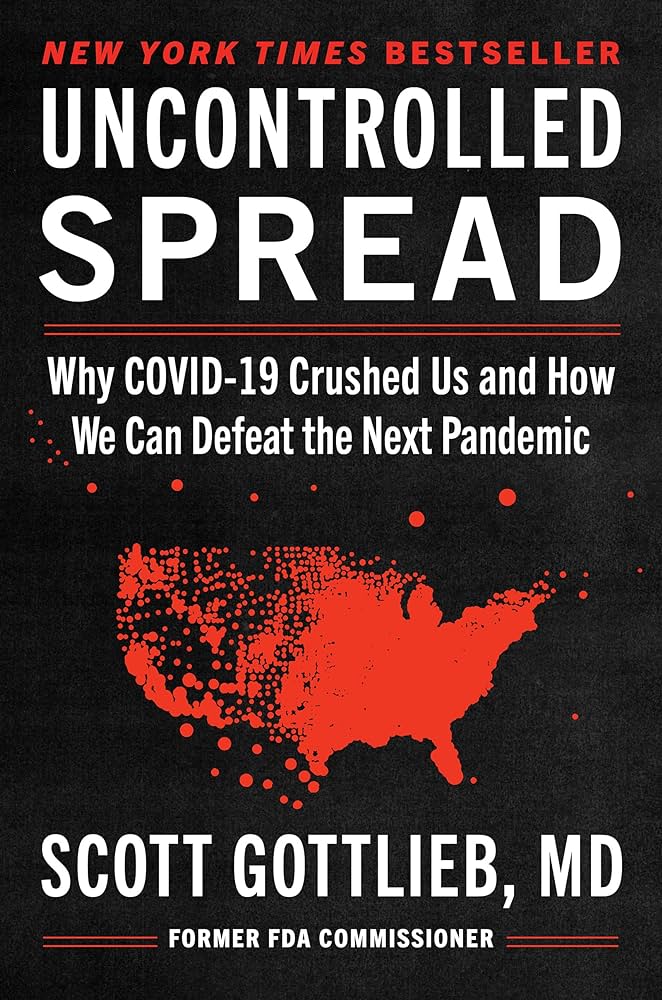
In the upcoming key points, you’ll discover:
– Why the US CDC was unprepared to handle the crisis;
– How South Korea successfully managed its outbreaks;
– The reasons public health is increasingly viewed as a national security issue.
Handling a highly contagious coronavirus pandemic was inherently challenging, but it didn’t have to be insurmountable. There were ample warnings in the years before 2020, with outbreaks of Zika, avian flu, SARS, and Ebola. Some countries heeded these warnings and prepared for future crises. The US, however, was among those that did not.
Several factors contributed to the US’s struggles with the pandemic. Some were the result of poor planning and decision-making, while others were beyond officials’ control. Combined, these issues created a perfect storm that enabled the new coronavirus to spread across the country largely unchecked for months.
In the upcoming key points, you’ll discover:
– Why the US CDC was unprepared to handle the crisis;
– How South Korea successfully managed its outbreaks;
– The reasons public health is increasingly viewed as a national security issue.
On January 18, 2020, Scott Gottlieb and Joe Grogan of the White House’s Domestic Policy Council exchanged concerned messages about a novel viral pneumonia outbreak in China. Both had prior experience at the Food and Drug Administration (FDA), with Gottlieb having served since 2003 and recently stepped down as commissioner in April 2019.
Over his years at the FDA, Gottlieb had monitored numerous outbreaks like SARS, MERS, Ebola, and Zika, each with varying degrees of impact. However, on January 18, he expressed to Grogan that he had serious concerns about the current outbreak they were confronting. He admitted he was worried.
The main point is that obtaining initial information about the COVID-19 outbreak was challenging.
One of the initial concerns Gottlieb identified was the unreliability of information from China. It was unclear how many patients were infected, and there was uncertainty about whether the virus could spread from person to person. China and the World Health Organization (WHO) maintained that the outbreak was limited to individuals who had contact with an animal source at an outdoor food market in Wuhan. Essentially, they suggested that the virus was transmitted directly from animals to people.
The CDC in the United States had begun to gather indications that the virus was spreading among the family members of those affected and others who had not visited the food market. Gottlieb wasn’t shocked by China’s reluctance to disclose information. In 2005, the Chinese government had attempted to conceal the SARS-1 outbreak from the global community and its own citizens.
It appeared that history was repeating itself. In mid-December, several individuals arrived at hospitals across Wuhan exhibiting severe pneumonia-like symptoms of unknown origin. Unable to pinpoint the cause, doctors sent samples of lung fluid for genomic sequencing analysis.
On December 27, one of the initial findings confirmed the presence of a new respiratory virus resembling SARS-1, which had previously claimed approximately 800 lives globally. Despite the alarming discovery, Beijing’s National Health Commission chose to suppress all sequencing data instead of alerting the public.
Weeks later, both China and the WHO persisted in downplaying the threat, reiterating the assertion that there was “no definitive evidence” of transmission between people.
Fortunately, some members of the Chinese medical community defied the directive against publishing the sequencing data for the virus, known as SARS-CoV-2. The urgency of the situation was evident: this was a novel coronavirus with apparent high transmissibility. Despite efforts by concerned doctors to share the genetic sequence on social media, there was continued reluctance to issue widespread alerts and warnings.
The WHO continued to rely on Chinese authorities’ stance, who resisted categorizing the outbreak as either a Public Health Emergency of International Concern, which would have indicated the need for global attention, or an official pandemic, prompting health protocols worldwide. This declaration was delayed until March 11, 2020, by which time it was already too late.
The main takeaway is that delays, lack of transparency, and inadequate testing led to significant challenges in the United States.
By the beginning of March, the virus had spread beyond China, reaching Thailand by January 13, the US by January 15, and South Korea by January 20. Even small delays in responding to outbreaks can significantly impact containment efforts. When the WHO eventually declared a pandemic, the virus had already spread widely. Additionally, due to China’s underestimation of the virus’s seriousness, many in the US initially believed it would not pose a major threat there.
Yes, it was indeed spreading. Shortly after the first infected patient was found in Seattle, cases emerged in Chicago and California, sparking immediate worries about testing capabilities. Doctors and health officials were concerned about how to test their patients and those who had been in contact with them to prevent further spread. At that moment, the only method available was through the CDC.
The CDC was the sole organization in the United States with samples of the virus needed for testing new cases. However, they maintained strict control over these resources for a significant period. Individuals seeking a test had to send their samples to the CDC and wait for the results, a process that involved considerable delay.
Before long, there was an overwhelming number of submissions that surpassed the CDC’s ability to process them, indicating trouble ahead for the US.
In the beginning, the US government’s strategy was to handle the pandemic similarly to a flu outbreak, a strategy first introduced during President George W. Bush’s administration in 2005. Back then, concerns focused on the potential threat of the H5N1 avian flu virus. President Bush was influenced by the book “The Great Influenza,” which underscored the cyclical nature of pandemics occurring roughly once a century. This prompted him to swiftly convene a team to devise an improved national strategy.
In the subsequent administrations, the focus continued to be on preparing for a pandemic flu or a bioterrorism incident, such as a chemical or anthrax attack. However, as the US later found out, SARS-CoV-2 and the illness it leads to, COVID-19, do not behave like either of these scenarios.
The main point is that the United States was prepared for influenza-like outbreaks and bioterrorism but was not ready for a coronavirus.
Central to combating any novel virus is comprehending and identifying it. However, due to the limited information about SARS-CoV-2, there was little understanding during the initial phase of the outbreak—primarily speculation prevailed instead.
Because the US had prepared for a virus similar to influenza, early government guidance emphasized handwashing and surface cleaning. However, the virus responsible for COVID-19 behaves differently from influenza, especially in terms of its transmission and spread.
It wasn’t until almost a year later that the CDC revised its guidelines to acknowledge that this virus is mainly transmitted through respiratory pathways, rather than primarily through touching contaminated surfaces and then touching one’s face.
The US heavily depended on a system originally intended for detecting flu outbreaks. The CDC utilized the Influenza-like Illness Network (ILI) to track the prevalence and locations of individuals experiencing flu-like symptoms. Initially, this was the sole national mechanism for identifying COVID outbreaks. However, it has become evident that many individuals infected with the virus show no symptoms yet can still transmit it.
More testing was essential. Officials required a method to efficiently test individuals, obtain rapid results, identify contacts of positive cases, and share this data across a national database. However, none of these capabilities were available. The US was rapidly descending into a COVID-19 crisis.
In April 2000, President Bill Clinton identified the worldwide spread of AIDS as a risk to US national security, marking a significant milestone as the first time an infectious disease received such recognition. However, this declaration did not result in the establishment of a federal program that treated other diseases similarly.
For years, experts had cautioned that the United States could no longer assume immunity from diseases that had previously been considered rare or limited to distant regions. Then, in 2006, following a significant SARS outbreak that drew attention, Congress allocated funding to establish a public health awareness network.
The funding was intended to empower the CDC to disseminate information across the country, facilitating swift responses and management during pandemics. However, the CDC did not fulfill this intention.
Key takeaway: The CDC was inadequately prepared to handle the COVID-19 crisis.
The CDC has traditionally focused on reviewing past events. It gathers data, analyzes it, and provides recommendations for managing or preventing issues that are already in progress. Its internal infrastructure is not equipped to detect a new virus like the novel coronavirus or to halt its transmission. Nevertheless, the US government relied on the CDC to take the lead in responding to the quickly deteriorating crisis.
When it comes to testing, the government tasked the CDC with creating a quick COVID test, despite the agency lacking a track record in this area. The CDC specializes in thorough investigations and research, not in rapid design and production. Consequently, the effort to produce the urgently needed rapid tests turned into a debacle.
In hindsight, the CDC should have recognized the significance of events in February, when the first community transmission was detected in California. This development underscored that the CDC’s centralized control over testing was impeding progress and exacerbating the situation. At that juncture, new protocols could have been established, allowing the CDC to authorize testing capabilities to clinics nationwide.
Instead, the CDC was overwhelmed by the dual challenges of handling the tests submitted for analysis and attempting an unprecedented task: developing a widely manufactured testing kit.
During a pandemic, two types of tests are essential: PCR tests and antigen tests. Initially, the CDC was responsible for both but struggled to fulfill the demands for either.
In general, PCR tests, which are conducted in laboratories, are considered more accurate between the two types. The CDC aimed to handle all these tests itself to effectively monitor the virus, but this led to significant delays due to the high number of cases.
Antigen tests provide faster results without needing a lab, often delivering them within 30 minutes. Although they may be less precise, their convenience and rapid turnaround are vital during a crisis. However, the CDC encountered another setback: their antigen testing kits were found contaminated and ineffective after months of anticipation, resulting in further delays.
The main point is: The issues during the crisis weren’t solely caused by the CDC; government leadership also played a role.
Eventually, the government sought assistance from the private sector. On May 9, 2020, the FDA started approving the first antigen tests.
The government became the largest purchaser of these new tests. By September, it had invested approximately $760 million in more than 150 million tests. However, challenges continued to arise.
There is an art to selecting the appropriate tests for different individuals. Without a unified strategy, numerous antigen tests were sent to places such as nursing homes, where the more precise PCR tests would have been more suitable for their high-risk residents. As a result, 30 percent of the 13,000 facilities that received antigen tests did not utilize them.
Next, there were conflicting signals from the White House. Due to the danger posed by asymptomatic carriers and the absence of widespread testing, some of the most effective defenses in the US arsenal were “nonpharmaceutical interventions” — actions such as wearing masks, practicing social distancing, closing non-essential businesses, and encouraging remote work. Researchers had employed modeling studies to demonstrate that these measures could greatly reduce disease transmission, contingent on their promptness, speed, and coordination.
However, the reaction did not embody any of these elements: lockdown regulations were delegated to individual states and governors to determine, and even within the White House, adherence to safety measures like masks and social distancing lacked consistency.
As we’ll explore in the next main point, this situation could have been different.
In sharp contrast to the disorganized and poorly planned reaction of the US, one country emerged as a notable exception. South Korea’s response to the COVID crisis unfolded distinctly differently. Both the US and South Korea detected their initial COVID-19 cases in mid-January. However, unlike the US, South Korea was well-prepared in all the necessary aspects.
Part of this readiness stemmed from its handling of a severe MERS outbreak in 2015, which resulted in 82 cases, the largest outbreak outside the Middle East. Learning from this experience, South Korea implemented a set of decisions that demonstrated a model of pandemic preparedness to the world.
The main point is: South Korea possessed the testing capabilities, reserves, and surveillance infrastructure required to effectively handle a pandemic.
Following the MERS outbreak, South Korea established numerous testing locations. They also ensured there was a supply of equipment readily available, ensuring each facility had the necessary resources to operate fully during any subsequent crisis.
They also established an expedited procedure for approving, producing, and distributing testing kits. Consequently, when the first COVID cases were confirmed in late January, developing these tests became the top priority. Despite there being only four cases initially, two companies promptly began full-scale production. Additionally, the South Korean CDC was prepared to provide viral samples to ensure the manufacturers could verify the accuracy of their tests independently.
In contrast, the CDC in the US retained its samples as if they were proprietary information. It took several months before testing kits were manufactured and distributed. Furthermore, even after distribution, the US stockpile did not have enough testing swabs to meet the demand.
Within a few weeks, South Korea increased its testing capacity to 20,000 tests per day. In contrast, it took the US four months to achieve the same level of testing. Consequently, South Korea successfully contained its outbreaks to a large extent.
South Korea had established a comprehensive national testing and tracking database. While it involved some privacy-infringing surveillance measures that wouldn’t be feasible in the US, America could have utilized a workforce consisting of numerous epidemiological investigators effectively. If these investigators had been able to trace even a portion of the cases early on, it’s probable that the outcome would have been considerably improved.
If there’s been a positive aspect to the COVID-19 crisis, it’s that vaccine production technology has shown readiness to meet the challenge. Traditionally, vaccines are cultivated using a process that heavily relies on chicken eggs. However, in the case of Moderna, all that was needed was the RNA sequence of the virus. Within six weeks of obtaining this information, Moderna had developed a vaccine ready for testing.
The Moderna and Pfizer-BioNTech vaccines, along with others, utilize mRNA technology. This type of vaccine stimulates the immune system to generate antibodies against a particular virus. What is particularly remarkable is that mRNA vaccines can be produced rapidly in large quantities and can be easily modified to address virus mutations.
While scientists worldwide received praise for developing vaccines swiftly, the entire process was increasingly revealed to be deeply intertwined with politics and perceived as a matter of national security.
The main point is: The US should prioritize public health similarly to how it values other forms of intelligence.
During the US vaccine development phase, both Russia and China were discovered engaging in espionage and attempts to steal information. Additionally, Russia launched a smear campaign against the Pfizer vaccine to promote its own Sputnik vaccine.
Moreover, considering the widespread implementation of travel bans during the pandemic, it’s difficult to envision countries refraining from acting in their own interests or, like China, being reluctant to disclose information about future outbreaks. Facing isolation from other countries can clearly have multiple detrimental effects. However, as observed, withholding crucial information can also be harmful.
Because China declined to provide virus samples, numerous countries found themselves vulnerable and disadvantaged. The exact origin of the outbreak may never be definitively known, but substantial evidence points to a possible accidental release from a Wuhan lab handling coronaviruses.
All these aspects underscore the idea that public health is a national security issue. The US requires a federal program capable of handling outbreaks and preventing them through global awareness. Just as the US gathers intelligence on other threats, it must start treating issues like coronaviruses with equal seriousness.
The main takeaway:
The US faced severe impacts from COVID-19 due to multiple factors. Initially, insufficient information from China left Americans unaware of the virus’s contagiousness and lethality. Additionally, the US was ill-prepared, lacking plans or systems for producing tests, tracking infections, or having a strong central agency to manage the crisis. Although tests and vaccines were eventually developed, the delays allowed the virus to spread extensively. To better handle future pandemics, the US needs to establish a robust federal agency to manage supply stockpiles and coordinate effective testing and tracing responses.