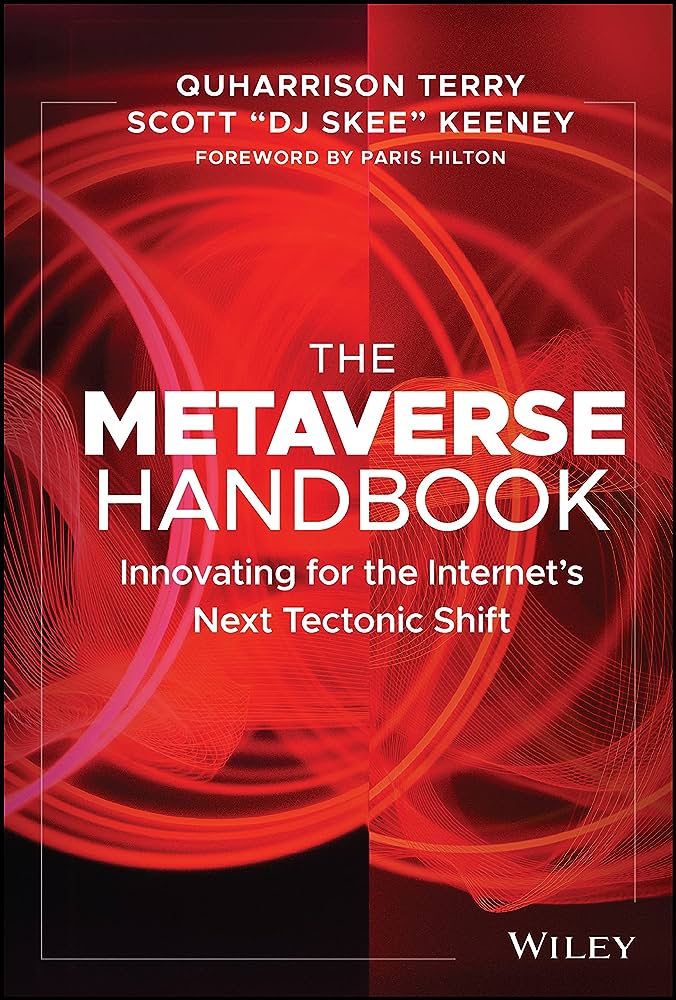
This book aims to explore what the Metaverse can offer business leaders and creators. It will shed light on how the Metaverse has expanded beyond just a realm for gaming and social interactions, and how the new technologies underpinning it create vast commercial possibilities. Moreover, the book will provide insights into how to incorporate the Metaverse into your business strategy.
In recent years, there has been significant excitement surrounding new digital technologies and their potential for commercial success. Terms like NFTs and Metaverse have emerged, particularly in discussions about digital artworks and valuable pixelated graphics. This trend has caught the attention of many, and it’s evident that a major transformation is underway in the tech industry. Notably, Facebook has even rebranded itself as Meta and is heavily investing in virtual reality software.
The Metaverse, a novel digital space, holds immense commercial promise and is rapidly gaining momentum. Even if you aren’t directly involved in a tech company, it is likely to present opportunities akin to what the internet offered when it became accessible in our homes and workplaces.
This book aims to explore what the Metaverse can offer business leaders and creators. It will shed light on how the Metaverse has expanded beyond just a realm for gaming and social interactions, and how the new technologies underpinning it create vast commercial possibilities. Moreover, the book will provide insights into how to incorporate the Metaverse into your business strategy.
In 2020, an exciting phenomenon occurred as digital experiences thrived during mandatory lockdowns and stay-at-home orders, not only providing entertainment but also generating substantial profits. People of all ages sought solace and connection in the virtual world, exemplified by the immense success of Nintendo Switch’s Animal Crossing: New Horizons, which sold an impressive 37 million copies in just two years.
The trend wasn’t limited to gaming; combat game Fortnite expanded its user base to 350 million since 2017, and in 2020 alone, these users contributed to a staggering $5 billion in revenue from the sale of digital accessories for their in-game characters.
Moreover, the Metaverse hosted major virtual events, like Fortnite’s digital concerts that attracted over 10 million attendees, and Paris Hilton’s digital New Year’s Eve party, which outpaced the number of people at Times Square. The potential of the Metaverse as a platform for extensive audience reach, as demonstrated by these events, is noteworthy.
While some might be impressed by these figures, others could feel a bit skeptical, assuming that the Metaverse is only suitable for fun and entertainment-related brands. However, the truth is that all sectors and brands have opportunities to participate in the evolving Metaverse. From utilizing it as an immersive digital workplace to enabling customers to virtually test real-world products using simulation technology, there are diverse possibilities. Brands could even create social spaces within the Metaverse to gather market feedback, or explore innovative ways that have not yet been imagined. As the Metaverse continues to develop, it presents a promising landscape for businesses across the board.
So, what exactly is the Metaverse?
Put simply, it is a virtual realm consisting of various worlds created by builders. While some of these worlds can be accessed through web browsers, like Decentraland, others require gaming consoles, such as Fortnite on PlayStation, and still, others offer a deeply immersive experience through virtual reality headsets, like Mark Zuckerberg’s company Meta with its Horizon Worlds VR experience.
Meta envisions the Metaverse as a sophisticated communication tool, allowing people to fully immerse themselves socially, professionally, and commercially. In this virtual reality, individuals can work remotely or even virtually, with their office in the Metaverse and meetings conducted within its immersive environment. Many believe that the Metaverse has the potential to surpass the internet as we know it today.
The concept of virtual realms isn’t entirely new; it was previously depicted in Neal Stephenson’s novel Snow Crash back in 1992. The novel introduced the term “Metaverse” and the concept of avatars, representing digital versions of individuals existing in virtual worlds. However, the recent momentum behind the Metaverse comes from a shift in attitude towards digital assets.
Digital assets refer to various elements in the digital world, including files, emails, and videos, essentially bundles of data. Until 2021, these assets rarely had any defined monetary value. However, the advent of non-fungible tokens (NFTs) changed this perception. NFTs are unique bundles of data, representing items like avatars, artwork, songs, trading cards, and virtual furniture for virtual houses. Coded to prevent copying, NFTs became highly sought-after Metaverse items, resulting in an impressive $11 billion worth of NFT trades in 2021 alone.
Owning an NFT is now seen as owning something exclusive, akin to possessing a luxury item like a Rolex or a Porsche. This shift in perception has created significant earning potential for companies involved in digital asset creation, as well as architects and designers who create virtual spaces to house these digital collections.
Now that you understand what the Metaverse is, we’ll explore the technology behind it. Don’t worry; you don’t need an engineering degree to grasp this. We’ll explain how the available assets in the Metaverse can be commercialized and why personalization is a fundamental aspect.
Currently, we are in what the authors refer to as Metaverse 1.0, but technology will continue to advance with versions 2.0, 3.0, and beyond. Despite these developments, certain fundamentals will remain unchanged. One crucial principle is the ability for users to personalize their Metaverse experience, such as customizing their avatars’ appearance and wardrobe, or the design and style of their virtual houses. To achieve this, the Metaverse must be built with tools that work across different platforms and allow for endless variations to meet users’ preferences, ensuring that every user’s experience is unique and tailor-made.
The primary tools used by builders to create the Metaverse’s foundation are Unity and Unreal Engine, along with 3D modeling tools like AutoCAD or Cinema 4D. Creators can design various elements, such as houses, animated pets, or jetpacks, using these programs and then integrate them into the Metaverse using Unity or Unreal Engine.
Now, let’s explore how commercial digital products are created within the Metaverse and how their uniqueness is ensured. The Metaverse is based on the blockchain system, which acts as an incorruptible ledger that records information about avatars, assets, commercial activities, and event participation. Blockchain enables the development of one-of-a-kind digital assets, like NFTs, which cannot be copied, making their authenticity verifiable. This system protects the integrity of virtual world assets, just as manufacturers and retailers protect physical products.
To engage in transactions and acquire digital assets, users need an e-wallet linked to their blockchain address, which acts as their ID in the Metaverse. The wallet stores cryptocurrency used in various Metaverse worlds, facilitating transactions without the need for external payment apps like PayPal.
In the Metaverse, assets fall into four main categories: avatars (digital identity), accessories (clothing or wearable items), objects (vehicles, artwork, or furniture), and real estate. Similar to the physical world, users can buy land, build homes, workplaces, or social spaces, and furnish them with digital assets.
As the Metaverse expands, the demand for designers and architects to create these digital assets and spaces will increase. Upskilling in these industries could be a wise move, as entire industries dedicated to Metaverse products and offerings will emerge, with no limitations like physics or resources in the digital world.
Up until now, we’ve been discussing the Metaverse as a digital location, but it’s also helpful to view it as a software program, akin to Microsoft Office. For those who experienced the analogue era, they’ve witnessed numerous software upgrades over the years. Just like how you can still use Microsoft Office for typing reports and creating budgets, the Metaverse is also continuously evolving. Currently, we are in the era of Metaverse 1.0, and while we can’t predict the exact features of future versions like Metaverse 2.0 or 3.0, it’s crucial not to wait and instead integrate it into your business strategy now.
Think of this process like cultivating a fruit tree. To reap the rewards in the future, you must prepare the ground, plant the sapling as soon as possible, and nurture it for growth and fruitful outcomes. Depending on your identity and profession, there are various ways to incorporate the Metaverse into your business strategy. We’ll now explore three sectors that can benefit from embracing the potential of the Metaverse.
Brands and corporations with Intellectual Property (IP) face a significant challenge if they want their products or brand to thrive in the future Metaverse. As this digital realm continues to expand and evolve, it’s already filled with abundant activity that keeps its users engaged and occupied. For smaller brands that aren’t on the scale of behemoths like Disney, gaining enough visibility and traction to reach potential customers in the Metaverse can be difficult.
However, being an early adopter of the Metaverse presents a fantastic opportunity for brands with a solid and loyal customer base. Rather than solely focusing on selling to the general Metaverse user population, these brands can take their existing customers on a journey into this new virtual realm, making them the first users of their Metaverse offerings.
For example, if a brand is known for producing jackets with cool prints, they can venture into selling digital jackets that avatars can wear within the Metaverse. Since their customers already appreciate and love their physical jackets, they become ideal Metaverse ambassadors. Building trust with customers is vital during this transition, and honesty, openness, and vulnerability are essential in creating that trust. Brands can share their excitement and curiosity about entering the Metaverse while being transparent about any worries or concerns.
To support customers effectively, brands will need to educate them about the Metaverse, including concepts like blockchain, digital wallets, and assets. Understanding their customers’ preferences and what makes the brand unique (Unique Selling Propositions – USPs) will enable them to create exclusive Metaverse assets that align with their customers’ identities.
Purchasing a virtual parcel of land can serve as a fantastic initial step, particularly for brands that don’t have a strong association with physical products. Giving the plot the same name as the brand can turn it into a widely recognized gathering spot, akin to saying, “meet you outside the Chrysler Building.” Additionally, creating a basic social space on the plot where people can interact and spend time can be a clever move. It offers an opportunity for the brand to reimagine itself as tech-forward, especially if it’s often perceived as being resistant to adopting new technologies, colloquially referred to as a Luddite.
Entertainers
Our second sector, entertainers, have a unique opportunity before them. If your profession involves performing in front of audiences, the Metaverse offers a boundless platform that is not constrained by geography, time zones, or even gravity. With the assistance of builders, you can create a digital replica of yourself, programmed to perform on your behalf.
To begin, reflect on your most successful performances. Whether it was a hilarious comedy routine that had the audience in fits of laughter or a DJ set that got even the most reluctant dancers grooving, use these standout moments as the foundation for your digital twin’s performance. Collaborate with your builder to develop a Metaverse-friendly digital experience.
A great example of this is how rapper Travis Scott performed in Fortnite, where the concert was a massive success. Fortnite players engaged in the experience, with their avatars immersed in water before floating off into space. With the right builder on your side, your performances can take on an entirely new dimension.
Metaverse Geeks
Now, let’s turn to our third sector, the Metaverse Geeks. If you find yourself in this category, you are in an exciting position as you have the potential to become a Metaverse founder.
As the Metaverse continues to grow, every interest and culture, no matter how niche, will find its place. Consider your personal interests and passions to see if they currently have a presence in the Metaverse. If not, this is an opportunity for you to pioneer and introduce your passions to this digital realm. You never know where this journey might lead. Take inspiration from the best-selling novel “Fifty Shades of Grey,” which originally started as installments published on Twilight fan fiction websites and has now earned its author, E.L. James, over $90 million.
Chances are, you are already part of a community that shares your passion. Enlist the support of fellow members to join you in paving the way into the Metaverse. Enhance your skills by learning tools like Unity or Blender, positioning yourself as a leading founder. This will establish you not only as an authority in your passion but also as an expert on its place and potential in the ever-expanding Metaverse.
Who knows, you might make a mark in the annals of Metaverse history.
The Metaverse is no longer confined to being solely a space for children and gamers; it is transforming into a vast market that will encompass a wide range of industries. As it continues to evolve, there is ample opportunity for learning and strategizing how to adapt products and marketing campaigns to establish a strong presence in the emerging Metaverse marketplace.