You’ll discover in the following key ideas:
Comparing mutual funds to chocolate bars, there are countless options, and more seem to appear regularly. Where do you even begin to look for potential investments?
Safety is one method. Combine your resources with those of others and put your money to work in a fund that is highly diversified to reduce exposure to market fluctuations. You could also include funds that take on a lot of risk in the hopes of a big payoff, or funds that focus on betting on specific statistical outcomes.
It’s easy to feel overwhelmed, and you don’t want to waste your money on a bad choice just because you’re unsure of what to do.
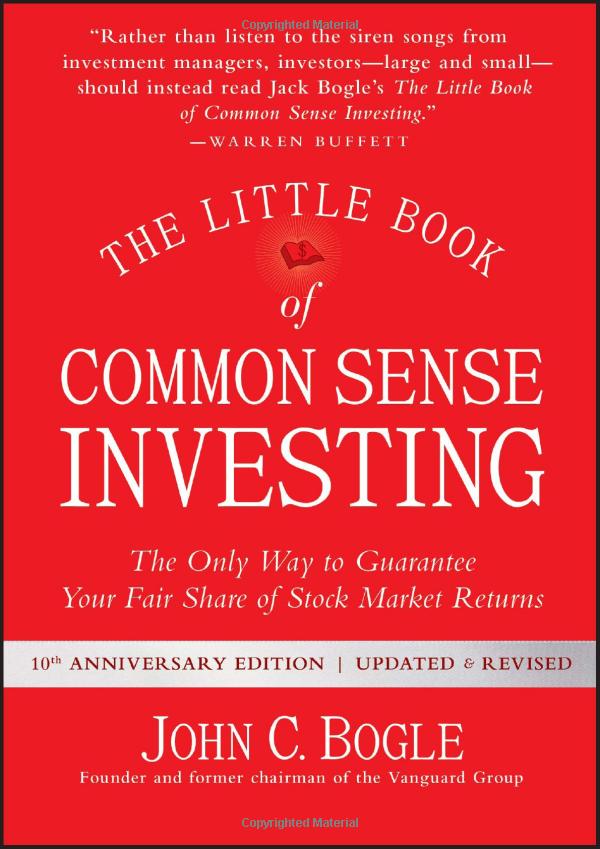
In this book, we’ve laid out a clear argument for one type of mutual fund -the index fund- that will reduce your risk and increase your potential reward. All mutual funds are not the same, and these sound bites explain why index funds are your best bet against being fleeced by high management fees and other hidden costs.
You’ll discover in the following key ideas:
Do you have any experience investing in the stock market? If so, you may already know how difficult it is to judge a stock’s potential return on investment.
And that’s why a lot of people put their money in a mutual fund rather than the stock market directly. There, several investors’ funds are combined and managed by a professional fund manager who makes stock market investments based on ongoing analysis and adjustments to reflect market conditions.
Investment of that nature is risky, unfortunately.
Why?
Due to the high transaction costs associated with buying into such a fund. You, the investor, would be responsible for covering costs such as brokerage fees, management costs, and other expenses. All those costs will eat up a sizable portion of your anticipated earnings.
You may not mind the fees if the funds perform exceptionally well, but over time, actively managed funds typically underperform the market as a whole.
Why is that even possible?
To begin with, you can’t make a living off of stock market speculation. It’s tempting to believe that a fund can make huge profits by, say, buying stocks when they’re undervalued and selling them when they’ve reached their true higher value. However, over the long term, this strategy can’t produce more income than what the underlying businesses are earning, which is evidenced in the overall growth of the stock market.
When you factor in that risk and the high fees associated with actively managed funds, you end up with significantly less return on investment (ROI) than you would with a low-cost index fund that simply replicates the market’s performance. When compared to an index fund, the returns on an active fund investment of $10,000 made in 1980 would be 70% lower in 2005.
You may still be considering an investment in an actively managed fund despite the information you now have about their high fees. But before you do, you might want to think about how those funds fare compared to the market as a whole.
Sadly, I doubt that they do. The vast majority of funds either fail completely or produce insufficient returns.
When it comes to the stock market, investors typically pay huge fees to funds run by financial experts. Unfortunately, only 24 of the 355 mutual funds that existed in 1970 have consistently outperformed the market, despite the fact that most of them had industry knowledge or expertise at the time.
If you already know this information, it’s clear that hiring financial experts to manage your fund is a waste of your money.
Not even the most successful funds can guarantee future success.
You could choose to put your money into the funds that have consistently outperformed the market despite the odds being stacked against them. Even if you look at the fund’s performance record, it’s possible that the factors that led to its success over the past 35 years won’t be present in the years to come.
If a fund has significantly outperformed the market over the past 35 years, for instance, the fund manager likely played a significant role in that achievement. The manager will retire, but it will happen eventually. How can you be sure that the success rate of the next one will be the same?
Also, the investment possibilities of the next 35 years won’t be the same as those of the last 35. Can you tell me how I can gauge the potential of future investments? Actually, no, you can’t say.
Now that you have an idea of how poorly most funds perform, you may be wondering why anyone would still put their money into them.
To begin with, the true cost of actively managed funds is often overlooked by investors.
You now know that the costs associated with actively managed funds are invariably higher. Fund managers, however, are notoriously tight-lipped about the exact sum. Instead of being honest about what an investor will actually make after deducting performance and portfolio fees, they simply boast about the high returns.
Surprisingly, this omission occurs frequently; in the late 1990s, 198 of the 200 best funds falsely claimed higher returns for their investors than they actually received.
Secondly, investors have a tendency to let their emotions and the direction of the market dictate their choices in many areas of investing.
A large portion of the investing public falls prey to marketing gimmicks and herd mentality, resulting in poor decisions and poor returns.
Consider the risky investments that were popular in the late 1990s as an illustration. After only investing $18 billion in the market in the first half of the 1990s, investors poured $420 billion into it in the decade’s second half, when the market was booming and stocks were overvalued. When the bubble burst, everybody was left wondering why they believed the hysteria.
Similarly, investors pour money into actively managed funds because everyone else is doing the same thing.
Where should one put their money if not in actively managed funds? Let’s keep reading to find out about some viable choices.
Don’t hide your cash because of what you’ve learned about actively managed funds. You should consider switching to an index fund.
In comparison to mutual funds managed by professionals, index funds are much more economical.
An index fund is a type of mutual fund that, by definition, holds a diversified portfolio designed to replicate the performance of a market or market segment. Index funds are similar to mutual funds, as they invest in a basket of securities rather than making individual market bets, but they hold onto those holdings indefinitely to avoid the volatility and short-term losses associated with trading.
Passive funds are another name for index funds because they do not make stock picks but instead follow the overall performance of the index.
You won’t have to pay for things like stockbrokers, consultants, or fund managers because they simply hold shares across various market sectors. Nonetheless, you’ll be able to gain from commercial net returns.
Index funds also have the potential to outperform actively managed funds over the long term, which is an advantage for many investors.
One could argue that there is a loss of opportunity when investors hold shares indefinitely rather than buying when prices are low and selling when prices are high. However, as you know by now, the stock market’s ups and downs always balance out to the stock’s true value in the long run. Index funds typically outperform actively managed funds over the long term as a result of this net effect, as they provide returns at the true value of the stocks and do not incur any fees associated with active management.
You can select the appropriate index fund with the help of the upcoming key idea.
Each index fund has a different expense ratio that accounts for the fund’s management costs and other administrative overhead. Even though the sum of these costs is usually less than one percent, it can add up in a long-term investment.
The expense ratio for the Fidelity Spartan Index Fund is just 0.007% per year, while the expense ratio for the J.P. Morgan Index Fund is 0.53% per year. Though both funds have expense ratios of less than 1 percent, even fractions of a percent can add up over investment horizons of a decade or more.
Choose the fund with the lowest cost structure, knowing that a company’s expense ratio does not correlate with its level of performance, as index funds’ fluctuations mirror those of the market as a whole.
Be skeptical of the newest investment trends whenever you’re deciding where to put your hard-earned money.
Index fund companies are constantly innovating and adapting to stay competitive. Since their inception in 1975, index funds have exploded in number; there are now 578 of them on the market. Long-standing funds compete by offering lower expenses to win over picky investors. Meanwhile, new funds competing for investors use innovative stock-picking strategies to promise higher returns. As a result, their prices also increased.
The New Copernicans, for instance, don’t use conventional portfolio construction techniques like weighted market capitalization, in which stocks are purchased in relation to each company’s market capitalization (the total number of shares multiplied by the average share price). The proportions of stocks in the portfolio could be determined, instead, by factors such as the profit or dividends generated by each company.
However, it is nearly impossible to know which stocks are over- or undervalued, so you should stick to funds that maintain a normal portfolio despite the fund’s claims about how it operates.
You can’t know for sure which emerging investment strategies will pay off, so it’s best to proceed with caution and focus on keeping costs to a minimum.
Summary of the book’s main idea:
Actively managed funds are a poor investment choice because they waste your money while enriching financial middlemen. Investing in an index fund is a great way to grow your wealth.
Advice that can be put into practice:
Stop and think about where your money is going.
Put the bulk of your money into an index fund and, if you’re feeling risky, invest a small portion in actively managed funds. Bet no more than 5% if you still want to experience the thrill of actively managed funds despite what you’ve read. You should keep the bulk of your money in a safe long-term investment and only risk this modest sum.
Suggested further reading: The Intelligent Investor by Benjamin Graham with comments by Jason Zweig
Benjamin Graham, an investor who did well after the stock market crash of 1929, is the author of The Intelligent Investor and offers sound advice on investing. The author shares the lessons he has learned the hard way and lays out a clear path to becoming a successful investor in any market.