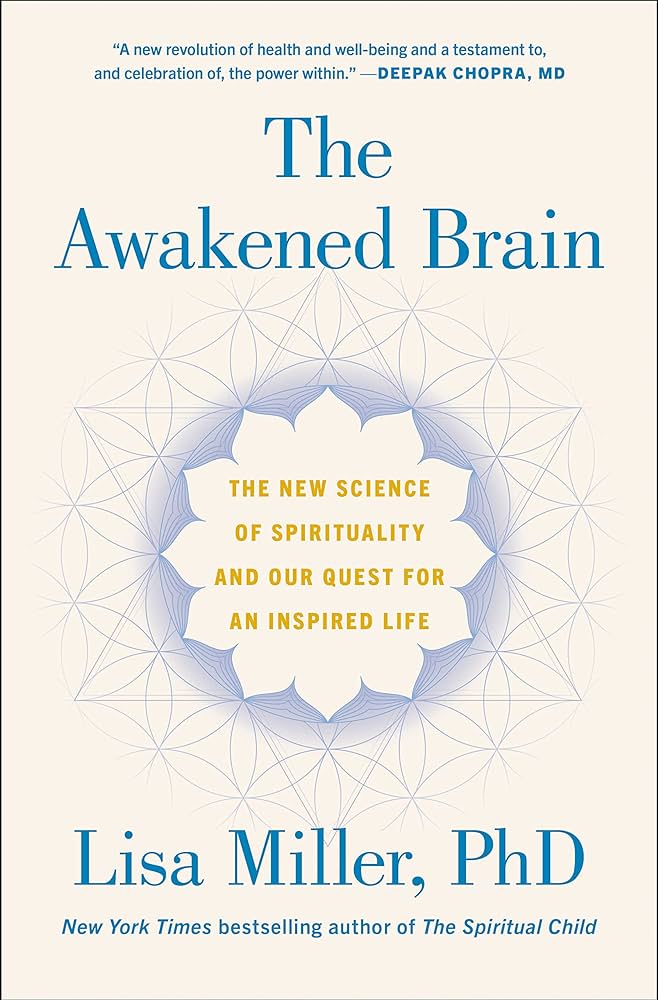
A pandemic of depression is spreading. Nevertheless, conventional methods of treatment are ineffective, leaving patients overmedicated and overanalyzed. Conventional treatments require us to revisit our suffering in order to comprehend it, after which we are asked to develop new, wholesome beliefs. But what if this strategy is flawed?
This book explores the science of spirituality and reveals the biological basis for spiritual awareness, which, if allowed to, may lead to the development of whole new perspectives on the world.
You’ll learn the following essential concepts.
A pandemic of depression is spreading. Nevertheless, conventional methods of treatment are ineffective, leaving patients overmedicated and overanalyzed. Conventional treatments require us to revisit our suffering in order to comprehend it, after which we are asked to develop new, wholesome beliefs. But what if this strategy is flawed?
What if depression is a natural part of human development that manifests itself at certain phases of life? What if the want to interact with a higher awareness is really a calling? This is the precise result of decades of scientific investigation, therapeutic practise, and personal experience, according to the author, Dr. Lisa Miller.
This book explores the science of spirituality and reveals the biological basis for spiritual awareness, which, if allowed to, may lead to the development of whole new perspectives on the world.
You’ll learn the following essential concepts.
Dr. Lisa Miller’s first job after graduating from graduate school presented her with the first challenge to her conception of conventional psychology.
The inpatient unit in Manhattan where she worked was empty on Yom Kippur, the holiest day in the Jewish calendar. It was the autumn. She thus planned the supper on her own in the little rear kitchen of the ward.
The four patients that were there were typically restless and explosive. Yet, something shifted as soon as they all began to sing and pray together. They settled down. They grinned and said thanks.
Miller was incredulous. This was the largest behavioural change she had ever seen during her stay there, and it wasn’t the result of therapy. She questioned what the key to this moment was. What did that signify in terms of treating depression, too?
The main takeaway from this is that spirituality guards against depression.
When Miller found a position at Columbia University the following year, she had the opportunity to learn more about what had led to the patients’ rapid improvement.
She travelled to university each morning and spent hours poring over the results of her research. She was looking at the things that make kids more susceptible to depression and more resilient to it.
The information comes from 15 years of patient tracking at a depression clinic in New Haven. Everyone was paired with a control individual who wasn’t sad and had a comparable demographic.
The study uncovered important trends, such as how loving parenting approaches may reduce a child’s risk of depression while poverty and having a mother who suffers from depression raise that risk.
Yet she couldn’t quit wondering if a spiritual experience had anything to do with the healing change she had seen during the Yom Kippur supper. How could she quantify the link between sadness and spirituality?
She took another look at the poll results. Did a mother’s statement that religion or spirituality was essential to her and her kid shield the youngster from depression? She contrasted them to mother-child pairings that either disagreed on the importance of spirituality or felt it wasn’t significant.
The outcomes were astonishing. When a mother and her kid had a high level of spirituality, the youngster was 80% shielded against depression. In fact, she had discovered that the transmission of spirituality between generations was by far the most effective antidepressant.
Miller had started his lifetime quest to understand the science of spirituality.
One morning in 1997, Miller was reading the American Journal of Psychiatry while having breakfast with her husband when she saw an article. Dr. Kenneth Kendler’s ground-breaking research at Virginia Commonwealth University examined the link between spirituality and adult mental health.
Miller was shocked by the outcomes. It was the first scientific research to demonstrate that spirituality is ingrained in our DNA as well as being handed down via culture.
Humans have an inbuilt, biological ability for spiritual growth, which is the main takeaway from this.
Kendler has utilised identical twin sibling pairs as his study subjects. Due to their ability to distinguish between features affected by heredity and environment, such as culture and upbringing, twin studies considered the gold standard in science. For instance, they have been used to examine the heritability of IQ, different mental diseases, and personality characteristics.
Kendler made three significant discoveries.
Secondly, someone could be spiritual but not religious, or the other way around. Religion requires rigorous devotion to religious laws and customs, but spirituality stresses a feeling of a personal contact with a higher force.
Second, whether or not religious commitment was present, the existence of spirituality was proven to protect against depression, alcoholism, and unfavourable stressful situations.
Finally, the research discovered that a person’s level of spirituality is influenced by their surroundings 71% of the time and their genes 29% of the time. Spirituality is innately possible for humans from birth. Although everyone has a spiritual propensity, some individuals have it more strongly than others, similar to singing or other intrinsic abilities.
Miller was enthralled. If spirituality is an inherited ability, then it must also evolve, and she wanted to know how, she wrote to Kendler. He urged her to work with a Harvard researcher who had access to statistics on teenagers that were typical of the country.
Miller concluded from those research that there is an individuation process wherein the two get disentangled since the line between religion and spirituality isn’t as sharp in adolescence as it is in maturity. Also, kids who practise spirituality are twice as likely as adults to be protected against depression.
It seems that finding your own particular spiritual views is an important element of human growth, regardless of whether you were reared in a religious culture or not.
Does depression have a physiological basis? When Dr. Brad Peterson and his colleagues at Columbia University started comparing the brain scans of those who were at high risk for depression to those who were at low risk, they had that question in mind.
High-risk individuals, or those with a family history of depression, exhibited altered brain architecture, with the right cortex’s outer surface being up to 28% thinner in these individuals.
The area is in charge of how we see ourselves and the environment. In other words, a mistaken vision of how we fit into the world and an inability to comprehend the larger picture are linked to despair.
Miller was enthralled. What if spirituality also has a physiological foundation?
The main takeaway from this is that spirituality and depression are two sides of the same coin.
Miller, like Peterson, utilised brain imaging methods to identify the regions of the brain that are associated with spirituality. She gasped in shock at the outcomes. She discovered that the same parts of the brain that are thinner and weaker in a depressive brain are thicker and more strong in a spiritual brain. Those that are spiritual have thicker cortexes.
But there was more: compared to individuals who are spiritual but low risk for depression, those who are both had cortexes that are thicker. Why is it the case? Her research group postulated that those who are more prone to depression are also more receptive to the advantages of spirituality. Might a desire for spiritual enlightenment underlie certain types of depression?
Miller expanded on a research project from 10 years previously. At the time, the participants were 16; they are now 26. She discovered that those 26 and older with strong personal spirituality were 2.5 times more likely to have been depressed at the age of 16.
The findings seemed to demonstrate that times of difficulty and suffering serve as catalysts for spirituality. Was it feasible that our biology had a built-in capability for spiritual awakening? According to the study, we are ready for spiritual growth at various phases of our lives, reacting to difficulties with spiritual awareness at one stage might benefit us throughout the next, and failing to do so increases the risk of developing depression.
Miller was learning that people are predisposed to spirituality and that a spiritual brain is a healthy brain, building on the research of her colleagues in the psychology area.
Miller had been trying to conceive for several years—first naturally and then with IVF. Yet it was in vain. As she became more and more aware that she would never have children, she started to experience depression.
Afterwards, she returned home to discover an egg — or more precisely, a fertilised duck embryo — waiting for her. She lifted the embryo gently, setting it on the ground, then entered, hoping to preserve it.
She opened the front door later when she heard a knock and saw a mature female duck waddling away. A worm was laying at her feet as she glanced down. It was a gift from the mother duck and a message from the cosmos for Miller.
The main takeaway is that attuning to a greater awareness and the significance it exposes is essential to spiritual recovery.
Miller was able to see additional synchronicities in her life after meeting the mother duck. They quickly spread everywhere. The hotel TV became fixated on a programme that portrayed an orphan living in a Brazilian rubbish dump while I was feeling depressed before starting another IVF round. The youngster said that not being loved was what pained him the most.
A few weeks later, Miller’s mother phoned to inform her about a person she had met who had just adopted a kid from Russia. And this was after a total stranger on the bus had casually brought up international adoption to her.
Miller claims that she began to pay heed to these assistants’ messages after feeling as if she was getting instruction from them. She had renewed optimism. After discussion with her spouse, they decided to seek adoption.
She considered studies on the two forms of attention as a result of these occurrences. Top-down attention occurs when we have an idea in mind and then scan the surroundings for data that will help us achieve our objective. While it restricts our view, it offers the advantage of keeping us focused. While paying attention top-down, you often overlook other factors.
Yet, bottom-up attention is less selective and more open than the other kind of attention. You are able to see things that you would not have otherwise seen. similar to the synchronicities and other signals Miller was receiving from life around parenthood.
She started to question if healing was more about tuning in to what life was revealing to us than it was about placing meaning on our lives, as psychology emphasised. Maybe we are path-seekers rather than path-makers, she reasoned.
The willow trees bent inward to form a dome and were covered in animal hides. A fire burned inside and filled the inipi with smoke. Within minutes of stepping in, Miller was drenched in sweat and questioning her decision to come.
Still reeling from the pain of childlessness, she’d been invited to this Lakota healing ceremony by her cousin, who worked closely with the Native American community. When it was their turn to share, her cousin asked the women healers to help Miller find her child.
The next morning there was a message on her phone from the adoption agency. They’d located a six-month-old boy in a Russian orphanage. A few weeks after that, Miller was pregnant.
The key message is: The awakened brain enables us to see the world reaching out to us.
Through both her fertility journey and her research, Miller was coming to understand that when we live with spiritual awareness, we walk through life differently, and see meaning where we otherwise wouldn’t.
Spirituality activates the brain’s ventral attention network, the bottom-up awareness that allows us to see beyond our conscious control. Our brains are wired to perceive a larger consciousness.
Miller was beginning to see herself in relationship with life, and it had things to tell her, starting with a series of synchronicities: a documentary about a Brazilian garbage dump; a gift from a mother duck.
By listening to those messages, she believes she was guided toward her son in the Russian orphanage. And it’s through dialogue and connection with the universe and others like the Lakota healers that Miller also believes she was finally able to conceive naturally. She eventually gave birth to two daughters.
This is the power of the awakened brain, and how it can help you heal from suffering. Healing happens not by simply reliving trauma and getting stuck in a cycle of rumination, but by aligning with a larger meaning that life reveals to us.
Remember the Kendler twin study from earlier? That showed that genes are responsible for 29 percent of spirituality’s impact, but that means 71 percent is up to you.
Whether you make more space for inner listening by using meditative practices, noticing the synchronicities in your life, or spending time in nature, whatever you choose, you need to cultivate your spiritual capacity.
Miller was finally solving the scientific riddle of spirituality after years of study. She first discovered that spirituality guards against mental disease, addiction, and depressive disorders.
She later learned that spirituality is biological and affects the same brain areas as sadness, but has the opposite impact. She learned that spirituality is an essential component of human growth and that the first step towards spiritual awakening may be overcoming mental obstacles.
She was now interested in learning what was going in the brain during a spiritual encounter while it was occurring. She found that there are two distinct states of consciousness that have quite different perspectives on the world and how we fit into it.
The main takeaway from this is that spiritual experiences turn off your accomplishing mind and turn on your enlightened mind.
In their subsequent research, Miller and her colleagues observed the brain activity of young people while they recounted stories of stressful events and spiritual experiences, in that order.
Talking about the upsetting experience would cause the frontal lobe of the brain to glow. This section is in charge of rewarding and motivating people. Miller observed that every single story included putting a lot of effort into gaining control of a precarious circumstance.
The accomplishing mind, which she refers to as a style of consciousness that focuses on planning and managing our lives, is activated by stress. How do I obtain and maintain the things I desire in life? is the question that the accomplishing mind poses.
The frontotemporal network, which is linked to love, the parietal lobe, where we feel a sense of oneness and belonging, and the ventral attention network, where we see the environment as alive and speaking to us, were all stimulated when the participant described a spiritual experience, in contrast.
Participants reported a sensation of their borders melting and being able to experience a separate self but one that was a part of a larger oneness. They experienced a warm connection with others, the environment, or a greater force. Miller refers to this as the enlightened consciousness.
The awakened mind utilises several brain regions that make us more receptive to knowledge from various sources as opposed to being constrained, uptight, and dominating like the accomplishing mind. In addition to making us feel more sociable and less alone, it enables us to understand the significance and connections between events.
Dr. Jacobo Grinberg conducted a series of tests at the University of Mexico in 1987 that helped to begin unravelling the riddles of human connection. He had two participants meditate for 20 minutes together, and discovered that their brain wave patterns were coordinated thereafter.
Next, in protected chambers where they couldn’t see or hear one another, the meditators were divided. In this experiment, scientists shone light into a subject’s eyes while monitoring the related brain wave activity. They discovered that, although experiencing no physical flashes, the second individual, who was in a totally different room, mentally perceived the light flashes roughly 25% of the time.
The link was too strong to be the result of random chance. It seemed as if despite being apart, their minds were still linked.
The main takeaway from this is that an awakened brain helps us to see our interdependence on others, nature, and a larger oneness.
Resonance is a term used to describe the brain-to-brain synchronisation that Grinberg’s experiment showed to exist. In another research, it was shown that holding your partner’s hand helped to lessen the amount of discomfort they were feeling.
While examining scans for hand-holding couples, interbrain resonance is mostly seen in what are referred to be high-amplitude alpha waves. Miller discovered that persons who had overcome despair via spirituality emitted these frequencies. Moreover, monks in meditation produce them.
It turns out that this alpha wavelength can be found everywhere, even in the natural world. It is the dominant frequency of the electromagnetic field that totally envelops us on the planet. It has come to represent the wavelength of life’s unity in Miller’s mind. And maybe because of this profound connectivity, spending time in nature is so therapeutic.
In sure, some individuals get advantages over others. According to University of Melbourne research, spiritual individuals gain from nature’s advantages on their well-being substantially more than nonspiritual people do.
According to Miller’s study, this relational part of spirituality has the highest correlation with the brain’s cortical thickening, which guards against depression. It may also be traced across several religious systems, including Buddhism, Islam, and both Hinduism and Christianity.
Human love and divine love are intertwined. The brain that has woken may recognise its relationship to the source of all life.
The main idea of this work is:
Spirituality is a biological ability that we are born with and it plays a role in our growth. Nonetheless, we still have the option to utilise or not use this gift. We may deal with life’s difficulties by exercising restraint, reflecting, seeking out benefits, and living a small-minded existence. Perhaps we may become aware of something more profound, such as our close alignment with a world in which all living things possess a shared understanding. We are shielded against despair and anxiety and lay the groundwork for lifetime wellbeing when we practise spiritual awareness.
Practical suggestions:
Give the “three doors” practise a try.
This practise was created by Miller to increase alert attention. On a piece of paper, sketch a route to reflect your life. Draw the obstacle, setback, or difficulty you faced as a closed door. Next, consider what resulted from that occurrence. What fresh understanding, route, or link was made? Imagine this as a door that is open to a different route. You could possibly recall a messenger or a mentor who came to your assistance at the moment. Repeat the procedure, pointing out two additional closed doors and how they resulted in the opening of two more.