By adopting the Longpath mindset, we can enhance our personal experiences while contributing to a more balanced global community. This book will delve into why Longpath thinking is particularly relevant today, as well as offer insights on reshaping our perspectives to effect positive change and implementing those ideas into action.
When you think of a “futurist,” the Iroquois Confederacy probably isn’t your first thought. However, these First Nations people were futurists in their own way, over five centuries ago.
The Iroquois practiced long-term thinking. Their founding document emphasized the importance of considering the well-being of the entire community with every decision. It also encouraged them to reflect on how their choices would affect future generations.
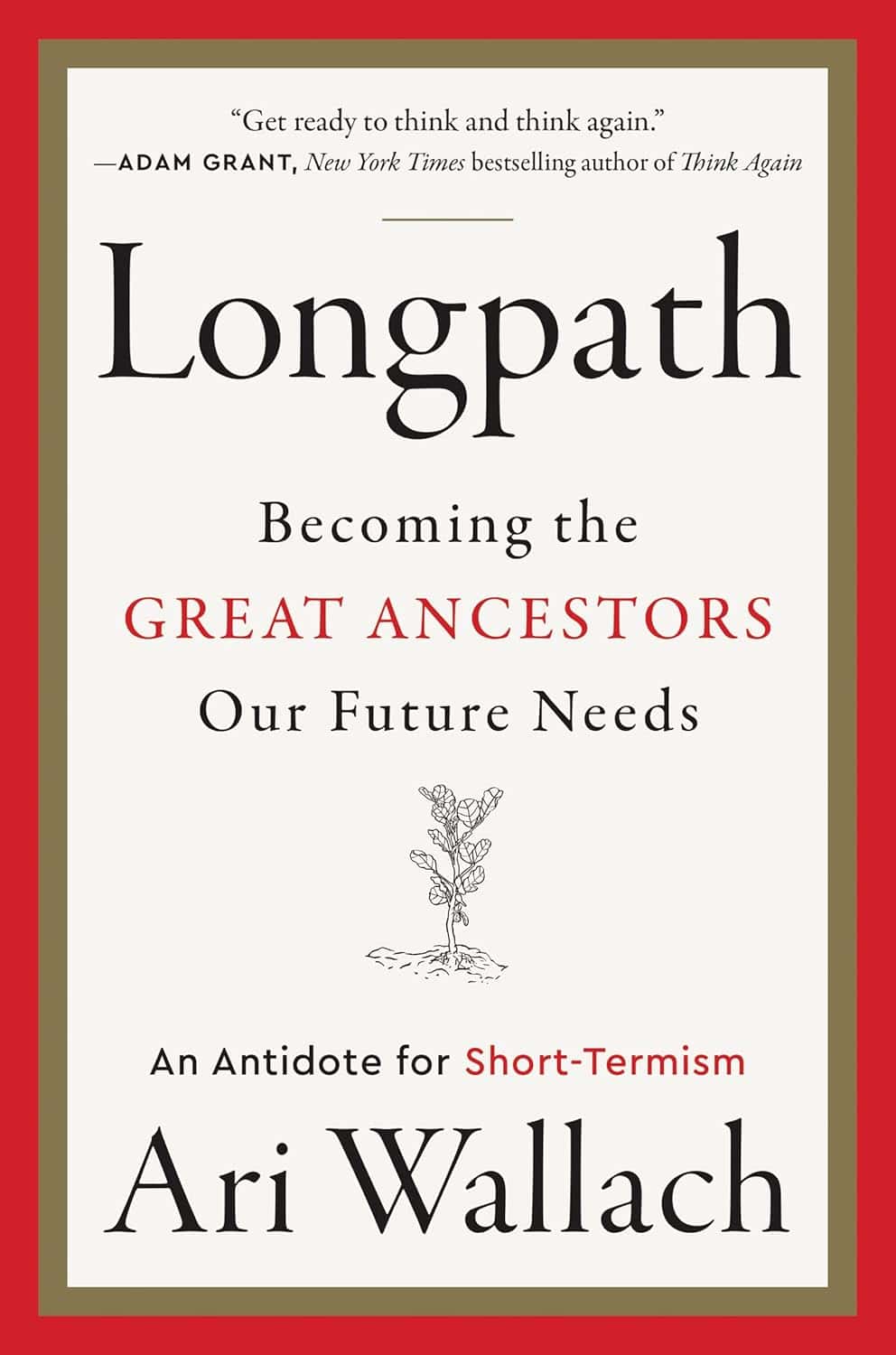
Ari Wallach, a writer and scholar, encourages us to adopt the “Longpath mentality,” akin to the perspective of the Iroquois. By reshaping our mindset, we can pave the way for a brighter future, moving away from immediate concerns towards a more forward-thinking approach for humanity.
The consequences of our present decisions will extend well into the future, influencing everything from the environmental footprint of our vehicles to the manner in which our parenting shapes the interactions of future generations. To adequately grasp these enduring outcomes, we must widen and elongate our viewpoint.
By adopting the Longpath mindset, we can enhance our personal experiences while contributing to a more balanced global community. This book will delve into why Longpath thinking is particularly relevant today, as well as offer insights on reshaping our perspectives to effect positive change and implementing those ideas into action.
Humanity is currently experiencing an “Intertidal” period, a term coined by author Ari Wallach to signify a critical phase of profound transformation. Comparable to the Enlightenment and the Industrial Revolution, these are monumental shifts that reshape the world for centuries. If we are in the midst of such an Intertidal, how did we arrive at this point?
One reason is globalization. Another is climate change, along with the rapid advancements in technology. However, it’s not just these factors; there’s also a significant shift in cultural attitudes. The longstanding perspectives people have held about the world are evolving.
The influence of organized religion is diminishing, leading to a search for what might replace it. Foundational concepts such as freedom, justice, and equality are being re-evaluated from a 21st-century perspective.
This moment offers a rare chance to redefine the principles of civilization. While this might seem unsettling, it need not be.
Indeed, Intertidal periods are chaotic. However, it is this very chaos that provides a unique opportunity for lasting change. Nobel Laureate and complexity theorist Ilya Prigogine suggests that systems often transition from intense chaos to order and equilibrium. Whether this new equilibrium is an improvement or a regression depends on our actions.
Some Intertidal periods mark a regression, such as the fall of the Roman Empire, which led to the bleakness of the Middle Ages—an outcome we likely wish to avoid. Others, like the Scientific Revolution, have driven humanity forward.
How can we transform today’s chaos into a better world? We need to abandon short-term thinking and embrace empathy, cooperation, and foresight. Recognizing that our decisions today will impact future generations, we must acknowledge our role in the larger narrative of humanity.
Embracing the Longpath mentality can enhance our happiness. However, Longpath is not just about self-improvement; it also focuses on creating a better future for future generations. By rejecting harmful short-term thinking and prioritizing the future, we can achieve both goals. Here’s how to create a future that our descendants will appreciate.
Short-term thinking pervades society, driven partly by our innate instinct to prioritize immediate gains for survival, a trait beneficial to ancient hunter-gatherers. However, in contemporary times, this impulse often obstructs progress.
This detrimental form of short-term thinking impacts individuals, societies, and the surrounding systems. It drives individuals to consume unhealthy foods, encourages businesses to harm the environment, and leads developers to construct entire neighborhoods in areas prone to flooding.
In numerous aspects, technology has further amplified the prevalence of short-term thinking. Take, for instance, the impact of social media on adolescent behavior. While young people have always sought acceptance and validation among their peers, today, their social status is often quantified by likes, clicks, and views.
Every thumbs-up or thumbs-down emoji triggers a surge of chemicals in the brain, momentarily bringing either pleasure or distress. Pursuing this immediate feedback is not conducive to cultivating the habits necessary for becoming a productive and empathetic member of society.
Fortunately, there exists a three-step approach that everyone can employ to identify and interrupt various forms of short-term thinking.
Initially, focus on recognizing how the detrimental habit of short-term thinking affects your emotions. Reflect on how your actions influence your mood and the consequences they have on others. For instance, if a tweet you’ve just posted won’t serve any purpose in the long run—be it in a week, a month, or a year—it likely wasn’t essential.
Next, have confidence in your ability to improve. Recent studies have revealed that the brain is more adaptable than once believed. This neuroplasticity implies that altering our mindset about something can lead us towards beneficial changes. For instance, believing that we can enhance ourselves as students, parents, or partners increases the likelihood of actual improvement.
Thirdly, nurture your Longpath mindset. It’s crucial to foster feelings of gratitude, awe, and empathy. These emotions enable us to forge stronger connections with others, spanning from our ancestors to future generations. Thus, take time to appreciate a timeless piece of art or reflect on the sacrifices your grandparents likely made for the benefit of their descendants.
Practices such as these cultivate a deeper appreciation for others. This enables us to resist short-term thinking and concentrate on making choices that yield enduring positive outcomes.
In the preceding section, we outlined the Longpath mindset. Now, we’ll elaborate on the significance of empathy in our redefined approach.
To embrace the Longpath mindset, cultivating transgenerational empathy is crucial. This involves acknowledging the interlinkages among humanity’s past, present, and future, and caring about the impact of our current actions on reshaping the world. By exercising this form of empathy, transitioning from short-term thinking to long-term goals becomes more attainable.
How can we embody this mindset? Initially, we need to empathize with our ancestors. This entails recognizing that the past has played a role in shaping our present selves. It also involves confronting the darker chapters of human history to glean lessons and evolve.
Think about South Africa’s Truth and Reconciliation Commission. Instead of avoiding the atrocities of racial apartheid, South Africa confronted them head-on. The commission provided a platform for survivors to share their experiences and allowed the perpetrators to acknowledge their wrongdoing, seek forgiveness, and progress. This instance demonstrates how honesty and empathy can unite to facilitate healing.
The second element involves self-compassion. This entails recognizing our imperfections and acknowledging our potential for improvement. Rather than reacting defensively to our errors, we can take responsibility for them and use them as opportunities for growth.
To fully embrace transgenerational empathy, we must also take into account future generations. Our actions shape the future, including distant generations, through the legacies we leave behind. By contemplating the well-being of future generations in our current decisions, we can leave a beneficial legacy for our descendants.
It’s crucial to recognize that this form of empathy can manifest on various scales. For instance, certain nations, such as Sweden, have established a Ministry of the Future. In some companies, like Amazon, an empty chair is reserved at board meetings as a symbolic representation of future generations. Similarly, some families set a place at the dinner table for the next generation. These actions all demonstrate a significant consideration for the future and the individuals who will inhabit it.
Caring for the well-being of future generations fosters an interest in shaping a positive future. However, what mindset should we adopt to improve the future? Every culture is inundated with visions of the future portrayed in art, literature, and politics, each suggesting the direction the world is expected to take. Scholars label these narratives as the “official future.”
However, the reality is that society cannot be confined to a single predetermined future. Instead, we must recognize that numerous potential paths lie ahead of us. We have the ability to decide our direction, rather than having the future of civilization imposed upon us.
Once we acknowledge our capacity to influence the future, we must be purposeful in our mindset. Merely rejecting undesirable outcomes, such as the dystopias depicted in science fiction, is insufficient. We must think imaginatively to envision the world we aspire to create. These envisioned futures are referred to as the contemplated, desired outcomes.
Alongside purposefulness, inclusive thinking is essential. We must envision a world where everyone has the chance to thrive, where success extends beyond material wealth, and where the well-being of future generations is also taken into account.
To grasp how this mindset translates into action, let’s examine the village of Hogewey, located near Amsterdam. At first glance, Hogewey appears to be like any typical village, with its houses, shops, restaurants, and public parks. Seems quite ordinary, doesn’t it?
What sets Hogewey apart is its role as a community for individuals with Alzheimer’s disease. Instead of confining patients to hospital-like settings, the staff and volunteers at Hogewey prioritize enabling residents to sustain a sense of normalcy in their daily lives, despite their condition.
Hogewey challenged the conventional notion that Alzheimer’s patients should be placed in nursing homes. Its founder, Yvonne van Amerongen, opted for deliberate and inclusive thinking to create a place where residents’ dignity was paramount. This exemplifies what a contemplated, desired future entails in action.
Embracing the Longpath mindset individually is commendable. However, to truly reshape the future for generations to come, collective effort is essential. To expand the Longpath mentality beyond individual adoption, we must influence our respective spheres of influence, which encompass our families, friends, and colleagues.
Here are four approaches to fostering Longpath collaboration: envisioning, dialogue, facilitation, and behavioral approaches. Let’s explore each of these strategies in detail.
Having an innovative vision for the future can disrupt the existing norms. No matter how far-fetched your vision may appear, it has the potential to motivate someone to turn it into reality. Consider the ubiquitous iPhone in everyone’s pocket; Steve Jobs revealed that it was partly inspired by the futuristic video-calling technology depicted in shows like Star Trek and The Jetsons.
If you don’t naturally lean towards visionary thinking, initiating a conversation can be just as effective. Whether it’s over dinner, in a meeting room, or anywhere else, don’t hesitate to engage in discussions about improving the world. However, remember to communicate and listen with empathy.
If possible, you could take on the role of facilitating a platform for sharing ideas. While it may seem intimidating, it’s achievable. For instance, in 2008, Aruba organized a gathering of 50,000 residents to deliberate on the future and devise a national sustainability strategy. You could initiate a similar program on a smaller scale within your own community.
We can also promote connection and collaboration through our everyday behaviors. These small gestures can set off chain reactions with significant effects. Therefore, aim to be courteous and considerate towards others. Maintain eye contact during conversations. Initiate friendly chats with neighbors. Engage in actions that convey a sense of unity, because ultimately, we are all in this together.
The choices we make today, both individually and collectively, will shape the future of humanity. To forge a better world, we need to move away from short-sightedness and embrace a fresh perspective called Longpath, focused on long-term human well-being. This shift requires cultivating empathy not only towards our ancestors and future generations, but also towards our own limitations. It demands creative and inclusive approaches to tackling urgent global challenges such as hunger, disease, and climate change. By collaborating, we can craft a future that will inspire pride in generations to come.