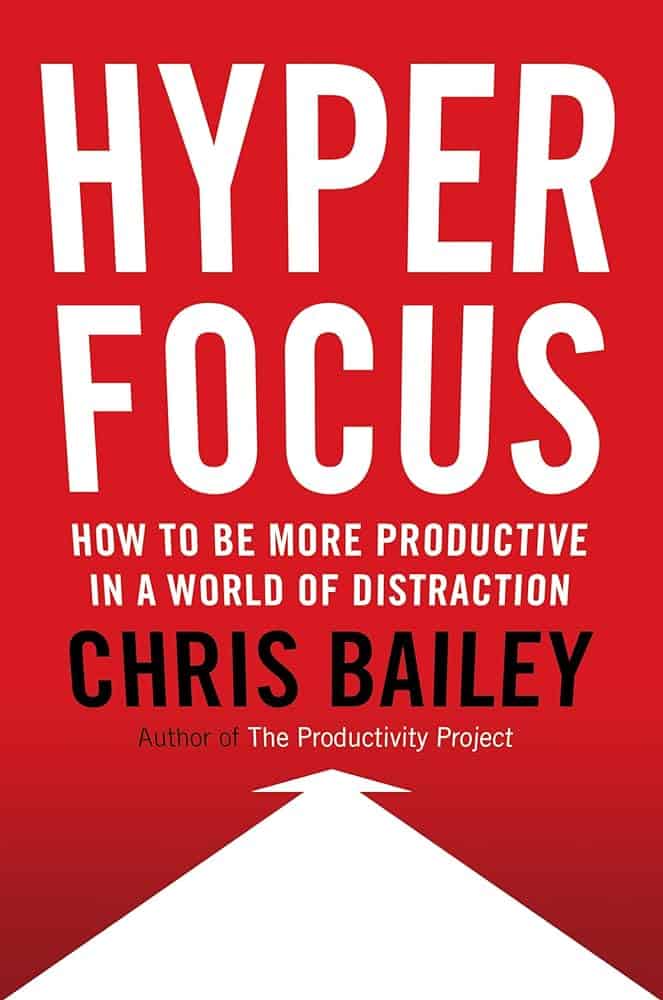
In this book, you’ll discover:
Can you recall a time when your attention span lasted longer than just a few minutes? When you could effortlessly complete tasks without getting sidetracked, and finish in hours what now takes you days? You likely can, but it was probably before the era of smartphones and the advent of Facebook. In other words, it’s been quite a while.
That’s where this book comes in. By revisiting a few basic principles and applying some simple techniques, you can improve your focus and boost your creativity.
In this book, you’ll discover:
Reflect on the last time you experienced an exceptionally productive workday, when you were performing at your best and completing tasks with unusual ease. While these days may be rare, they are worth analyzing. What sets them apart? How do you achieve such efficiency and speed?
The key to this productivity lies in your capacity to concentrate fully on the task at hand. Rather than feeling like a burden, your work becomes engrossing, so much so that hours seem to fly by when you check the time. During these moments, your mind is fully engaged, free from distractions, and highly sharp—this state is known as hyperfocus.
The main point is: Learn to cultivate and appreciate hyperfocus.
While many people experience hyperfocus occasionally, the challenge is to make it a consistent and dependable part of your routine. How can you transform it from a sporadic occurrence into a regular and reliable state? To find out, we need to examine what happens when you are in a state of hyperfocus.
To begin with, you concentrate your attention on a single task without multitasking. Instead of frantically switching between different tasks, you focus solely on one task and maintain that focus until it is completed.
You also eliminate distractions. While it’s common to be tempted to spend 20 minutes browsing social media on a typical day, when you’re in a state of hyperfocus, you cut off such time-wasting behaviors before they begin. Although you may still experience moments of distraction or the urge to check your phone, your hyperfocused state makes it easier to refocus and return to your task rather than giving in to these temptations.
In essence, achieving and sustaining hyperfocus involves four key steps. First, select a single, important task to concentrate on. Second, remove all potential distractions, including internal ones such as daydreaming. Third, direct your attention solely towards the chosen task. Finally, actively bring your focus back to the task whenever your mind starts to wander.
If that sounds challenging, don’t be concerned. In the upcoming key ideas, we’ll explore various concepts and techniques that will help you achieve hyperfocus more easily.
Almost everything you do in life demands some level of attention. To perform at your highest level, it’s essential to focus closely on the task at hand.
However, there’s a significant challenge: your attention is quite limited. You can only focus on a limited number of things simultaneously. According to Timothy Wilson, a psychology professor at the University of Virginia, the human brain absorbs around eleven million bits of information per second. Yet, you can consciously process only about 40 of those bits at any given moment.
If that limitation weren’t challenging enough, short-term memory has an even tighter capacity. You can retain roughly seven items at most, such as names, dates, or tasks that need completion. Given these inherent constraints, how can you optimize your performance?
The main point is: Meta-awareness and intentional focus are crucial for managing your attention.
Imagine your attention as a limited, defined space that can quickly become full. Given its size, it’s important to be deliberate about what occupies this space.
For instance, during a meeting, your colleague’s presentation should be the focus of your attention, not your lunch plans. However, you often become so engrossed in your own thoughts that you fail to assess them. You unintentionally allow your attentional space to be overtaken by any thought that catches your interest.
This is where meta-awareness becomes important. Meta-awareness involves stepping outside your own thoughts to observe what you’re thinking. For example, you might notice yourself daydreaming about your lunch and then consciously shift your focus back to your coworker’s presentation.
As illustrated by this example, whenever you need to concentrate, you should set a clear intention to follow. Whether it’s listening to a colleague, completing a report, or simply reading a novel, you need to have a precise understanding of where you want your attention to be at that moment.
That’s why meta-awareness and intentions work together. Meta-awareness helps you monitor your attentional space, while intentions guide you on where to redirect your focus when necessary.
Set an hourly alarm and, when it sounds, ask yourself, “What was occupying my attention just now? Did it align with my goals?” Over time, this practice will become a habit, helping you achieve hyperfocus more regularly.
Imagine this: You’re at your desk, deeply engrossed in your work, and you’re on the verge of achieving hyperfocus. Suddenly, your phone chimes.
If you’re like most people, you’ll instinctively reach for your phone to check the notification. Even if you don’t, the interruption has still disrupted your flow. Your attentional space has been invaded by your phone, bringing with it a wave of unrelated thoughts.
Interruptions and distractions are major barriers to achieving hyperfocus. While it’s impossible to avoid every potential disturbance, that doesn’t mean you should resign yourself to being constantly interrupted by every distraction that arises.
The key takeaway is: Achieve hyperfocus by eliminating distractions from your environment.
Instead of trying to resist distractions as they arise, it’s more effective to prevent them by removing potential sources of distraction beforehand. To identify these risks, carefully examine your surroundings and pinpoint anything that might be more engaging or appealing than the task at hand.
Here, “environment” encompasses more than just your physical space. For example, if your browser’s homepage directs you to social media sites, think about blocking those sites or changing your homepage. If your phone is a source of distraction, try leaving it in another room.
It’s understandable that not everyone can ignore their phone for extended periods, as clients, coworkers, or family might need to reach you. If that’s your situation, try setting your phone to airplane mode and checking it at regular intervals. This approach allows you to stay reachable while reducing the temptation to constantly check your phone every time it alerts you.
The same principle applies to your emails. If you’re working with colleagues, completely ignoring your inbox isn’t practical. Instead, establish a routine for checking your email at set intervals, such as every hour or even every half-hour if necessary. The goal is to minimize disruptions from constant notifications that could break your hyperfocus.
If you notice that irrelevant thoughts are disrupting your focus, take a moment to jot down everything on your mind. Whether you end up with a simple to-do list or an intriguing idea, writing these thoughts down helps clear your mind, allowing you to better concentrate on the task at hand.
Hyperfocus is a valuable asset, allowing you to devote sustained and intense attention to a task, which can give you a significant advantage in various situations. However, while hyperfocus is beneficial, it’s not sufficient on its own. Your mind requires regular breaks to rest and rejuvenate, and, even more crucially, you need to create opportunities for creativity.
Hyperfocus excels at tackling long and demanding tasks, but it works best when you already have a clear plan of action. When the situation demands creativity and innovation, however, you should switch to a different strategy: scatterfocus.
The main takeaway from this chapter is that scatterfocus is crucial for planning and creative thinking.
While you might view daydreaming as a distraction, it actually shares similarities with scatterfocus. Unlike hyperfocus, which requires intense concentration, scatterfocus allows for a more relaxed and open-ended form of thinking, essential for future planning and generating new ideas.
One key distinction between scatterfocus and hyperfocus is their relationship with time. While hyperfocus is effective for handling current tasks, scatterfocus is primarily concerned with the future. In fact, your mind tends to focus on future possibilities 48 percent of the time when it wanders. This forward-looking bias, or inclination to think about what’s ahead, makes scatterfocus particularly valuable for planning and developing future strategies.
To understand scatterfocus better, it’s helpful to break it down into three distinct types of thinking. The first type is capture mode. This is the most fundamental and, for many, the least exciting. It involves assessing and noting whatever thoughts are currently occupying your mind.
A few times each week, take some time to sit down with a pen and paper and jot down whatever comes to mind—such as unfinished tasks, overlooked chores, and pending messages. Recording these thoughts helps you address important issues and clears mental space for more significant concerns.
Next is problem-crunching mode. As the name suggests, this involves focusing on a single issue and allowing your thoughts to revolve around it, exploring different perspectives, ideas, and potential solutions.
The last type of scatterfocus is habitual mode. This occurs when you’re engaged in a simple, repetitive task that occupies some of your attention while still allowing room for reflection. If you’ve ever found yourself contemplating ideas while doing dishes, you’ve already experienced habitual scatterfocus.
Have you ever observed the pattern of your thoughts while meditating or attempting to fall asleep? If so, you may have noticed that randomness is a prominent feature of a relaxed mind. When your mind is at ease, unrelated memories, images, and ideas surface spontaneously, often without any clear logic or pattern.
When you’re trying to fall asleep or concentrate on your breathing, these random thoughts can be bothersome. However, if you’re aiming to think creatively, they can sometimes be incredibly valuable.
This random stream of thoughts is a result of your brain’s default network, which activates when you’re not concentrating on a specific task. When the default network is active, a broad neural network across various brain regions collaborates, often leading to insightful and innovative ideas.
The main takeaway is: Utilize scatterfocus to link seemingly unrelated pieces of information.
Scatterfocus can spark innovative ideas and creative breakthroughs due to the Zeigarnik Effect, which explains the brain’s inclination to dwell on tasks that are still ongoing rather than those that are completed. Essentially, your mind tends to focus on current issues rather than on problems that have already been resolved.
In practice, the Zeigarnik Effect suggests that when you leave a problem unresolved, your mind continues to work on it subconsciously. When you later come across relevant information, your brain can automatically integrate it into the problem-solving process, often leading to surprising insights.
Consider the case of Archimedes. According to a well-known anecdote, he noticed the water level rise when he stepped into a bath and instantly understood how to determine the volume of irregularly shaped objects. The Zeigarnik Effect kept the problem active in his mind, unresolved, until a new observation provided the breakthrough he needed.
How can you leverage this phenomenon? Should you simply wait for inspiration to hit? Not exactly. Instead, regularly jot down the problems you’re working on and review the list frequently. This practice will keep your issues at the forefront of your mind, allowing them to stay connected with new ideas and experiences.
Scatterfocus enables you to make insightful connections between various observations and ideas. It helps you link new experiences with past challenges and can occasionally lead to finding solutions.
However, it’s not just about pondering and waiting for inspiration to strike from your surroundings. Since scatterfocus involves connecting disparate ideas, gathering quality information is crucial. The insights you gain depend on the quality of the information you collect.
In simple terms, scatterfocus relies on high-quality input to generate valuable ideas.
The key point here is: Feed your mind to fully leverage scatterfocus.
Unlike a phone, which periodically runs out of storage, your brain has virtually limitless capacity. However, creating memories requires a more restricted resource: your attention.
As you’ve likely realized, your attention is quite limited; there are only so many things you can concentrate on in a day. To truly enrich your mind, it’s important to be selective about the media you engage with.
A useful approach is to deepen your knowledge in your field of interest and build a network of related concepts in your mind. For instance, if you’re an architect, it would be beneficial to explore the designs, biographies, and methodologies of renowned historical architects.
However, it’s important not to let one topic dominate your attention entirely. The strength of scatterfocus lies in its ability to integrate various types of information. What truly matters is that the information you consume is of high quality, regardless of the subject area. Engaging with biographies and taking online courses are excellent ways to enrich your mind, whereas binge-watching TV and endlessly scrolling through social media offer less value.
To be more discerning about the information you consume, think of each option as a bid for your attention. If that TV show had to make a pitch for your focus, what would it propose, and how would it compare to the pitch from a podcast? Consider which option would better enhance your scatterfocus.
Just as you select nutritious foods to benefit your health, you should choose reading, viewing, and listening materials that offer genuine intellectual value to foster your creativity.
This book emphasizes two essential points:
First, you can maintain focus on a critical task by using hyperfocus. This involves eliminating distractions from your environment and being mindful of what’s on your mind. Additionally, whenever your attention drifts, make a conscious effort to bring it back.
The second key takeaway is that scatterfocus can assist with complex problems that need creative solutions. By letting your mind wander, you enable it to form unconventional connections. You can encourage scatterfocus by keeping your mind stimulated and giving yourself time to reflect.
Practical tip:
Grab a cup of coffee to boost your hyperfocus.
Caffeine and hyperfocus complement each other perfectly. Caffeine enhances alertness and concentration, helping you push through tedious tasks. Most importantly, it can boost your performance on various cognitive activities. So, the next time you need to focus intensely, make sure you have a coffee nearby – and as a bonus, it tastes great too.