In the following key concepts, you’ll discover:
For many individuals, utilizing the internet equates to using Google. When we search for something, it essentially means we’re Googling it. Watching online videos often entails using YouTube, a subsidiary of Google. Moreover, emails are frequently sent to or from Gmail accounts, if not both.
However, despite our extensive reliance on this company, we possess very limited knowledge about it. Zach Vorhies argues that this is a significant issue. As a former Google employee, he asserts that the company has been clandestinely attempting to influence political matters ever since the election of Donald Trump.
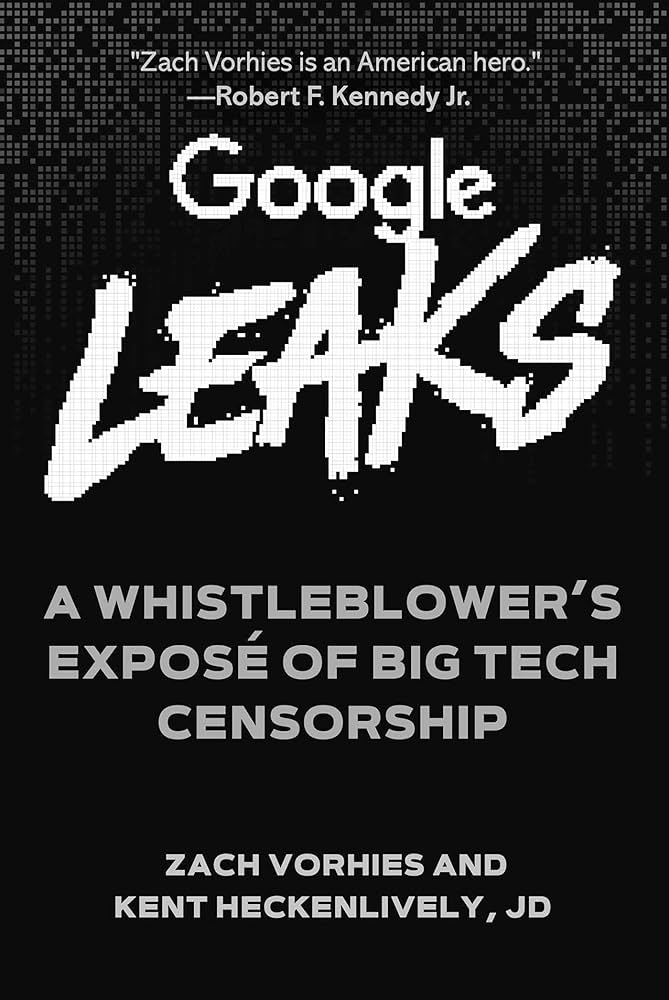
This book delves into Vorhies’s journey, spanning from his time as a Google employee to his role as a whistleblower, where he makes severe allegations against his former employers.
In the following key concepts, you’ll discover:
One morning in November 2016, when Zach Vorhies arrived at the Google offices in San Bruno, California, he was taken aback by what he witnessed. The previous night, Donald Trump had been elected as the US president, and it appeared that many of his colleagues at Google were reacting quite dramatically.
Some were visibly upset, shedding tears and talking as if they had experienced a personal loss. Others had chosen to take the entire day off from work. In Vorhies’ perspective, it seemed that these individuals lacked a fundamental understanding of how democracy functions. In the United States, the democratic system involves regular elections, where you strive to win, but if you lose, you accept the outcome gracefully and concentrate on improving your approach for the future.
However, this rational response did not appear to be the prevailing sentiment among some Google employees.
The key message here is: Donald Trump’s election marked a political turning point for Google.
Everywhere Vorhies went, he overheard employees discussing the perceived unfairness of the election and emphasizing the need for a resistance movement against Trump. Initially, it sounded like casual conversation, but the situation took a more serious turn when employees were instructed to attend a weekly meeting broadcast live from Google’s headquarters in Mountain View, California.
Right from the beginning, the atmosphere at the meeting felt unsettling. Many Google employees sported the company’s quirky trademark hat – a brightly striped beanie with a small propeller on top. Typically, this attire was seen as harmless and playful. However, as Vorhies observed rows of employees, many adorned with identical hats and seemingly aligned in their political objectives, the uniformity began to appear ominous.
During the broadcast meeting, Sergey Brin, Google’s co-founder and CEO of its parent company Alphabet, expressed his strong disapproval of Trump’s election, describing it as “deeply offensive.” Kent Walker, the Vice President for Global Affairs, attributed Trump’s victory to xenophobia and hatred. Ruth Porat, the Chief Financial Officer, encouraged employees to offer consolation to one another through hugs.
Later in the meeting, a Google employee inquired about what actions the company could take to address the purported misinformation and fake news that were believed to have contributed to Trump’s election. Sundar Pichai, Google’s CEO, provided a response that Vorhies found both vague and concerning. Pichai suggested that this presented an opportunity to advance in the fields of machine learning and artificial intelligence. While these technologies had previously been employed to combat issues like bullying and offensive comments, Pichai hinted at their potential for broader applications once scaled up.
For the first time, Vorhies began to glimpse Google’s intentions and the direction it might be headed.
Vorhies had been raised with a strong belief in the importance of free speech, considering it a fundamental element of any democracy that deserved the title. Throughout his entire life, he had developed his opinions by actively seeking information from a wide range of sources, spanning the entire political spectrum. In fact, his own perspectives often evolved when he encountered fresh arguments and previously unconsidered information – a testament to the value of free speech.
However, in Vorhies’s perspective, Google appeared to be targeting this very approach. He believed that they did not endorse the principles of free and open dialogue. According to Vorhies, Google seemed to have preconceived notions about which opinions were correct, and their role was to subtly steer individuals in that predetermined direction, one search at a time.
Here’s the key message: Vorhies saw a disguised form of censorship in Google’s campaign against fake news.
In Vorhies’s view, Google appeared to be embarking on a campaign against what they referred to as “fake news,” with the aim of restricting public access to news and arguments. Essentially, their plans seemed closely aligned with the concept of censorship.
However, at this stage, Vorhies only possessed a rather vague understanding of the company’s intentions. Thus, he decided to conduct some investigative work. Conveniently, Google was an “open” company, which meant that most of its internal documents were accessible to all employees. Vorhies initiated a search for “fake news,” and the first document he came across provided valuable insights into their proposed actions.
The report began by presenting five instances of purported fake news, with four of them criticizing Hillary Clinton and the remaining one supporting Trump. Notably, some of the news stories labeled as “fake” were, in the author’s opinion, not definitively false. For instance, one headline read: “Wikileaks CONFIRMS Hillary Sold Weapons to ISIS.” Vorhies argued that the veracity of this claim was not entirely clear. Nevertheless, he contended that certain news reports did suggest a potential connection between Clinton’s foreign policy decisions and the arming of hostile insurgents.
To Vorhies, the choice of examples highlighted a distinct pattern. These stories consistently leaned in favor of Trump and against Hillary. The selections did not appear to be made with complete objectivity and free from political bias.
Given his background as an engineer, Vorhies recognized that the differentiation between fake and real news would likely need to be automated rather than done manually. Consequently, he began to ponder how this new system would operate.
In the early stages of President Trump’s administration, Vorhies came across a document outlining the system that Google intended to implement to filter its search results. Interestingly, they had given it a name designed to sound reasonable to most people – they called it “machine learning fairness.” However, the actual implications of this term required further examination.
Machine learning involves the use of algorithms that analyze real-world data, such as human decision-making patterns, to make decisions autonomously. But what did “fairness” mean in this context? Google’s notion of “fair machine learning” referred to a system capable of learning from human input while avoiding the acquisition of human prejudices and biases.
This concept may initially appear unobjectionable, but it raises significant concerns and controversies.
The key message is this: Google planned to reshape the internet in a bid to make it “fair.”
Continuing to read the document, Vorhies discovered more about Google’s approach. Alongside the concept of “machine learning fairness,” there was another related idea known as “algorithmic unfairness,” which machine learning fairness aimed to address.
The document provided an example to illustrate algorithmic unfairness: If a search for “CEOs” yielded more images of men than women, Google considered this as algorithmic unfairness, as it could be seen as prejudicial against women.
Vorhies began to feel uneasy about this concept. What if there were indeed more male CEOs than female CEOs in reality? Wouldn’t accurately reflecting this fact be fair rather than “algorithmically unfair”?
The document suggested that Google didn’t necessarily agree with this viewpoint. It implied that real fairness might involve portraying things as they should be, rather than as they currently are. In other words, even if the search results accurately reflected the world, they could still be deemed algorithmically unfair if they perpetuated harmful stereotypes about gender roles and leadership.
Google appeared to prioritize the goal of making society fairer and more equitable over reflecting the objective state of affairs. However, this raised questions about how websites with different perspectives would be treated. It seemed that they might be pushed down in search rankings or deprived of advertising revenue.
According to the documents Vorhies disclosed, Google planned to establish a team of evaluators to work alongside artificial intelligence (AI) in assessing the trustworthiness of various websites. Vorhies had serious doubts about whether this process would be impartial. He suspected that websites aligned with Google’s views would receive preferential treatment, while those with differing opinions would be relegated.
Vorhies perceived this as a potent program capable of significantly impacting American politics, and he found it deeply troubling.
Shortly after midnight on May 31, 2017, Donald Trump posted a tweet containing a six-word phrase that unexpectedly gained immense fame: “Despite the constant negative press covfefe.”
The term “covfefe” left the world puzzled, prompting speculation about its meaning. When questioned by reporters, Trump’s press secretary, Sean Spicer, added to the intrigue by stating that the president and “a small group of people” comprehended its significance. But did they? Was this truly the case?
Remarkably, thanks to Google, decoding Trump’s tweet turned out to be relatively straightforward. Vorhies and others observed that Google’s translation service identified “covfefe” as an Arabic word that meant “we will stand up.” Therefore, the tweet could be interpreted as “Despite the constant negative press, we will stand up.” This interpretation seemed quite plausible to Vorhies, but Google’s response was far from favorable.
The key message here is: Google’s response to the “covfefe” affair made Trump look particularly bad.
The New York Times was the first to challenge Google’s translation of “covfefe” after President Trump’s tweet. A journalist named Liam Slack, writing for the Times, criticized the notion that the president had intentionally used an Arabic word.
Slack’s article pointed out several reasons why this interpretation seemed unlikely. Firstly, Trump had previously proposed a ban on Muslims entering the United States, which appeared incongruous with using an Arabic word. Secondly, Trump had never publicly claimed to speak Arabic. Lastly, a professor of Arabic asserted that the word “covfefe” had no meaning in the Arabic language.
These circumstances prompted Google to take action. Vorhies later uncovered internal documents revealing the company’s response. Google employees decided to alter the initial translation system and play a prank on the president. Consequently, “covfefe” would no longer be translated as “we will stand up.” Instead, entering this word into Google Translate would yield an emoji of a man shrugging, symbolizing bewilderment.
This incident may not have been the most serious or concerning action taken by Google, but Vorhies found it significant. He was struck by the company’s rapid and enthusiastic response to alter the translation, which raised both impressive and troubling questions in his mind.
The covfefe incident was one matter, but what truly prompted Vorhies to take action was his discovery of Google maintaining several “blacklists.” These blacklists were collections of terms and websites that he suspected the search engine was intentionally trying to suppress.
Despite Google publicly asserting that political considerations didn’t influence its search results, Vorhies found documents on the company’s internal servers that had “blacklist” in their titles. These files appeared to target conservative media, including well-known right-wing websites such as True Pundit, Louder with Crowder, and GlennBeck.com. Vorhies believed these lists were created to prevent content from appearing in Google Now newsfeeds. This discovery marked a turning point for him, leading him to make his concerns public.
Here’s the key message: Discovering “blacklists” prompted Vorhies to blow the whistle.
Following some inquiries, Vorhies reached out to Project Veritas, an investigative news group known for its right-wing focus on dramatic political exposés. Vorhies engaged in detailed discussions with a Project Veritas employee, outlining his belief that Google was systematically suppressing conservative content. Speaking to the reporter brought him a sense of relief.
However, much to his dismay, Vorhies’ claims did not lead to any action from Project Veritas. There were no investigations, news reports, or even a single tweet addressing his concerns. For several months, the organization did not take any action on the information provided by Vorhies.
During this time, Vorhies reached a point where he felt he could no longer continue working for Google. He believed that the company had violated its original motto of “Don’t be evil.” Disheartened by his work and the lack of response from Project Veritas, Vorhies decided to leave Google for good.
Suddenly, the situation took a turn. Project Veritas secretly recorded a Google executive who mentioned that smaller digital organizations lacked the resources to “prevent another Trump situation.” This statement raised questions about Google’s mission in Vorhies’ eyes. It seemed to validate all his suspicions, and Project Veritas shared this perspective.
The group compiled a report on alleged political bias at Google, including an anonymized interview with Vorhies. Finally, his disclosures were gaining traction and making an impact.
Vorhies had achieved it. After harboring concerns for years, he had finally managed to reveal his findings to the public. It was a relief, but paradoxically, his disclosure brought him new worries.
Even though he had maintained his anonymity during the Project Veritas interview, Vorhies understood that Google could potentially uncover his identity quite easily. The company would have digital records indicating the identity of anyone who accessed and stored the internal documents he had come across, and connecting the dots wouldn’t be a difficult task.
Therefore, when Vorhies received a cease-and-desist letter from Google shortly after the exposé was published, it didn’t come as a surprise to him.
The key message is this: When Google took action against Vorhies, the situation escalated – but finally, the word was out.
Google’s letter didn’t only request that Vorhies cease sharing confidential information; it also demanded the return of his company laptop, which contained all the documents forming the basis of his controversial allegations.
However, Vorhies believed that the public needed to have access to the documents he had uncovered. Instead of complying with Google’s request to return his laptop, he decided to send it, along with 950 pages of internal documents, to the US Department of Justice. Additionally, he reached out to a contact at Project Veritas, instructing them to publicly release the documents should anything untoward happen to him. Vorhies shared this agreement with the world via Twitter.
Some might view his actions as paranoid, but Vorhies soon found himself in a distressing situation. In August 2019, Google contacted the San Francisco police and asked them to conduct a “wellness check” on Vorhies, which he claims was an intimidation tactic.
When Vorhies initially refused to meet with the police, the situation escalated dramatically. His apartment was surrounded by police officers with their weapons drawn, and a helicopter monitored the scene from above. There was even a bomb-disposal robot stationed at his front gate. Eventually,
Vorhies decided to comply with the police, and he emerged from the incident unharmed.
Since Google was already aware of his identity, he chose to abandon any semblance of anonymity. He recorded a new interview with Project Veritas, this time using his own name. Furthermore, Project Veritas published the documents he had obtained – all 950 pages of them.
About a week after the police incident, Project Veritas released the second interview. This time, it featured Zach Vorhies, the former Google employee, rather than an anonymous whistleblower.
The key message in this book is:
During his time as a Google employee, Zach Vorhies grew concerned about what he perceived as the company’s gradual shift towards political bias and deliberate censorship. Following Donald Trump’s election, he became progressively disheartened by the perceived political agenda that the tech giant appeared to be embracing. According to Vorhies, this campaign included the use of “blacklists,” artificial intelligence (AI), and the dismissal of opposing views as “fake news.” Eventually, Vorhies reached a breaking point and decided to make his allegations public, sharing internal Google documents to support his claims.