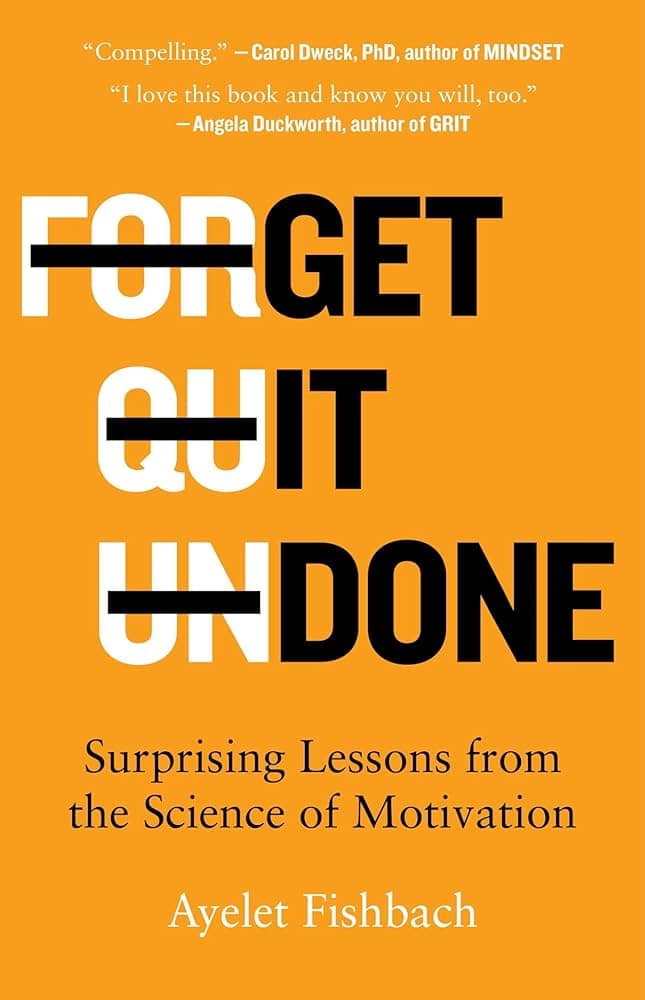
How effective are you at getting things done, I ask you? Do you put things off? Or maybe you struggle to finish tasks, like learning a new language, for instance? or filing taxes? Because you choose this book, I assume you have the same difficulties that I do. Despite the fact that I do not have a master’s degree from a university, I consider myself to be a master procrastinator and a passionate project starter but non-finisher. I want to start with a Baron Munchhausen tale to kick off our shared exploration of how to get better at just doing things. If you are unfamiliar with him, he is the main character in an ancient story about a military soldier who is an expert liar. His most well-known tale goes like this: One day, while he is galloping his horse across the countryside, he suddenly finds himself trapped in a bog. As minute by minute, the horse begins to fall more and further. Yet the Baron of Lies finds a clever solution instead of losing his cool. He extricates himself (as well as his horse) from the bog by grabbing hold of his own head ponytail.
The Baron’s tale may defy the rules of physics, but its symbolism is crystal clear: the secret to progress is self-motivation.
And just so happens to be one of the key things I need assistance with. And you also need assistance, right? But, really, why should it be so difficult to establish a new habit or complete a task? Tell me I’m not the only one who puts off dull life administration duties for months on end because you believe it would just take a few hours. Then, when you sit down to complete things, it just takes an hour to do everything. Why are we the way we are?
Maybe you’ve successfully navigated a significant life shift in the past, such as terminating a toxic relationship or changing jobs. Even if finding the motivation to do them might be difficult, they are all tasks that must be done.
Demands, diversion, and worry are all characteristics of life. Your motivation (and ambitions) often gets put on hold when they take effect.
So how can you inspire yourself to go for your goals when life is already busy? The first step is picking the appropriate objective.
The right objectives may be effective motivating tools. Keep these three elements in mind while setting a goal to get you to the finish line.
Start by presenting it as a goal in itself rather than a means to another. Say, for instance, that your objective is “finding a job” as opposed to “applying for a job.” Your objectives should be fun, not a job.
Second, keep your objectives vague. But be cautious not to be too hazy. Better than “be happy” is “improve my mental health,” for instance, since it directs you towards taking the next step, which in this case may be beginning counselling.
Focus thirdly on “do” rather than “don’t” objectives. In other words, instead of setting objectives around what you want to avoid, like disease or failure, think about what you want to approach, like success or good health.
Like recipes, goals usually function best when they are quantifiable. Establishing a hard, quantifiable, and achievable goal can motivate you to reach your objective and allow you to track your progress. Just be sure that you, and not someone else, set the objective. Because doing so will make you more devoted.
Also, try to avoid selecting too optimistic objectives. Everyone admires an optimist like Ted Lasso, but excessive optimism might result in plenty of fantasy rather than genuine effort.
You need to consider two different sorts of numerical goals: how much (for instance, you want to save $10,000) and when (within one year? six months? two years?).
Hence, if your aim was to “excel at your new job” or “get more sleep,” try changing it to “finish a work assignment by the end of the week” and “get eight hours of sleep every night.” Set a goal like “run the next Chicago Marathon in under five hours” if you want to start running.
What additional tool should you have in your toolbox for self-motivation? Incentives. an essential concept in behavioural research that has its roots in Pavlov’s salivating dogs. Incentives essentially take the shape of rewards and penalties.
Rewarding and punishing behavior by establishing short-term, attainable objectives leads to action. Let’s go have a coffee at your favourite coffee shop for this little illustration. How much are your flat white, latte, or anything else you prefer these days? Does a voice inside of you warn you that this is too much?
Many have been accused of not saving enough money because of pricier coffees. Some people make fun of millennials for being unable to afford homes, yet here we are, purchasing flat whites and lattes. Do you understand the reason? For the simple reason that they feel like a prize, whether it is for the sometimes-difficult job of getting out of bed or for having a fruitful morning at work. We’ll undoubtedly always be able to justify our actions.
Make sure you ultimately reward the appropriate activity if you want to get the most out of your incentives. If you don’t, you run the danger of “the cobra effect.” It’s a crazy tale. Check it out. It includes persons growing cobra snakes in India with the intention of later receiving compensation for capturing them.
That’s obviously easier said than done. You must distinguish between the two in order to keep on track: Does your incentive genuinely result in movement towards your objective, or is it simply a pointless benchmark that is simple to measure?
Let’s take the example of seeking to be promoted. Incentivizing the quantity or quality of your work instead of rewarding yourself for how much time you spend at your computer will be more beneficial for you. You may thus establish a goal for yourself to produce one spontaneous report in the next three months for something that would really benefit your team. Instead, try to submit one solid product concept in writing each month so you can keep track.
But we want to maintain the suspense. And to achieve so, make an effort to welcome uncertainty and occasionally put your motivations on hold. Simply said, take a break. Breathe. It is not a race. It’s a long race. By pausing, you may make sure that you’re working towards your objective only for its own purpose and not just for the reward.
Fun is the last and most important component of goal-setting. I know. I essentially just went through a ton of homework that has to be completed. I’m now advising you to enjoy yourself as well? Adapt to me. “Work consists of anything a person is compelled to do, and that play consists of everything a body is not obligated to do,” says Tom Sawyer in Mark Twain’s novel The Adventures of Tom Sawyer. In essence, it is another definition of intrinsic motivation. When you act out of pure motivation, this is called intrinsic motivation. according to your own desire. because doing it is enjoyable. It’s your dream, after all. Because. Sometimes there isn’t even a good excuse. It just feels fantastic.
So, the greatest indicator of participation in any endeavour is intrinsic motivation. Let me quickly dissect this. What I’m trying to say is that when you set a goal for yourself, particularly if it’s something like work, exercise, or cleaning that you may not have first thought was very enjoyable, you need to make sure you can find some enjoyment in it. Because intrinsic motivation, which results in achievement, is only possible if you’re having fun. Of course, there are exceptions. For instance, what if you’ve been putting off ending your relationship? Finding enjoyment in it is difficult. Yet, consider how you could feel in the long term. You could feel more liberated and quit harming yourself or your spouse. Thus, when it’s challenging to enjoy an activity, simply go back on why you want to do it and connect the benefits to it in your mind.
Nonetheless, the fundamental approach is straightforward: make your objectives enjoyable! Bundling temptations is one approach of doing this. This implies that you might watch your favourite programme while exercising. The best way to do this is to just give in to that little desire while working towards your objective. You might also make an effort to recognise any existing sentiments of enjoyment and delight. Try to pay attention to that brief period of elation that follows your run, for instance, if you’re attempting to get into early runs. Or the sensation of your skin and heart warming up when the sun is shining and the breeze is ruffling your hair. when a rhythmic breathing pattern develops. when everything is quiet and peaceful in the morning. Take it all in. Think about it.
Setting a goal, such as finishing a marathon or getting to inbox zero, is one thing; following through on it is quite another. At point A (couch potato or 500 unopened emails), you must go to point B. (surviving 26.2 miles or seeing a big, fat 0 on your screen). And keeping track of your progress is one of the best ways to remain motivated as you go from point A to point B.
Monitoring your progress boosts your motivation because it strengthens your commitment to your objective in two different ways.
One benefit is that it gives you more reason to believe that you can accomplish your objective. You must have gotten this far, right?
And two, by simply investing the time and effort necessary to achieve your objective, you prove to yourself that it is worthwhile.
Making progress is crucial, but monitoring it is also important. Should you concentrate on how much you’ve accomplished so far or how much work remains? The quick response is both.
Here’s a nice illustration: You must have already received one of these little loyalty stamp cards that, after ten purchases, entitles you to a free coffee, smoothie, pizza slice, or other item. Hence, you probably don’t give the card much thought at first. Nevertheless, if you get a few stamps, you could notice that you are standing in line for pizza, smoothies, or coffee more often.
You start to want your complimentary slice more and more as time passes. The way our minds work is peculiar.
The “target gradient effect” is what motivational scientists refer to as this. That simply implies that you are more eager to go on the farther along you have gotten. In essence, the glass-half-full principle.
But, adopting a “glass-half-empty” perspective might also be beneficial to you.
Here’s another illustration. Assume you are doing yoga. On your mat, you are at home. Then when you’re in downward dog, a huge dust ball suddenly appears in front of you. It may be the last straw. Maybe you now realise that it has truly been a very long time since you last cleaned. Hence, you get up and grab the vacuum. Right. Now. Your concern about slipping behind in this situation ultimately inspired action.
While neither method is inherently superior or worse, it is helpful to be able to choose one over the other at certain times.
Here is some advise from the book for those who are unsure about making a commitment or are just starting out: strive to remain motivated by seeing the situation from a “glass-half-full” perspective.
The glass-half-empty attitude, however, may help you cross the finish line if you are an expert or already aware that you have committed to a goal.
Start keeping track of the days you’ve spent at the gym if you’re new to it. That’s wonderful — maybe you visited the gym three times last week! Nevertheless, consider all the days you’ve missed if you’re a serious fitness enthusiast and you sort of strayed from your programme. Let that little whiff of shame to do its job.
In each of these situations, paying attention to your feelings can help you choose how to monitor your development. You’ll know you’re making progress towards your objective when you feel wonderful. And you’ll know you’re falling behind when you feel lousy.
Yet, you’ll discover that maintaining motivation is simpler at the beginning and finish of your trip, regardless of how you monitor progress. I’m an authority on this. I’ve begun numerous new interests, including studying the guitar, painting, crocheting, and foreign languages. At first, everything is simple and enjoyable, and I am driven and enthused about it. After a month, it’s as if nothing ever occurred.
There are distinctive, conspicuously defined times in time, which is why that is the case. As you start performing anything for a longer period of time, it is tougher to keep your excitement. The “middle difficulty” is this.
The small-area theory may be used to explain the middle issue.
You’ll likely compare each subsequent action to whichever is smaller—the progress you have previously made or the progress you still have to make—in order to remain motivated towards your objective. In other words, you’ll start by taking stock of your past actions. You’ll check forward after the halfway mark to see what’s still lacking. And you’re inspired each time you look. Nevertheless, when you’re in the midst of it all, each path appears to feel as lengthy. No region seems smaller than the other, whether you are looking forward or back. Because of this, there isn’t much incentive to complete the task or do it well.
To be honest, I think this is my hardest struggle yet. So how can we prevent becoming bogged down? Keeping the midsection brief is a rather straightforward method. Consider that we have a sporting objective. A weekly fitness goal is preferable than a monthly one. Nevertheless, if the task at hand is a big job project with a distant deadline, you can attempt to divide it into manageable weekly tasks. Another trick is to frame the present as either the beginning or the conclusion of anything. This suggests that you could just eat more healthily if you consider lunch to be something that occurs at the start of the afternoon rather than in the midst of the day.
Consider both the instances you’ve succeeded and failed in the past at accomplishing your objectives. Success is pretty of simple to think about, right? Yet we’ve all made mistakes before. Indeed, I have. I’ve tried, failed, tried again, and failed each time. So how about taking a lesson from their mistakes? You are not alone if you find it difficult to accept your errors, but you are overlooking a wealth of crucial knowledge.
Try again, famous writer Samuel Beckett once penned. Another fail. Failing better Serena Williams, widely regarded as the finest tennis player in the world, has said, “I’ve gained most not from successes, but defeats.” Both of them are making a very significant point: there is no way to ensure your success or failure in whatever endeavour you are attempting to complete. Yet the one thing you can count on is that you’ll take something away from it.
I can only affirm that the greatest approach to learn from failure is to practise fostering a growth mindset since I’m pretty excellent at failing. This implies that you should make a sincere effort to absorb the idea that you can develop and enhance your skills, intellect, and talents. you can always get smarter if you put effort, commitment, and persistence into it. It has been shown that having a development mentality makes you more resilient to setbacks and difficulties. Negative comments won’t seem like a personal assault after you’ve mastered that. In fact, you could begin to see it as a tool to figure out what you need to improve on.
Giving advise is a last way to remain motivated even when you’re failing. Even if you don’t feel equipped to provide advice on a subject you haven’t yet mastered, like managing your anger or conserving money. Nevertheless, when you provide counsel, you’re drawing on what you’ve discovered to do—or not to do—while attempting to achieve your objective. And you could be reminded of exactly how informed you are when you provide advise.
Yet you may also start looking for a prospective role model, someone you could imitate in order to reach your objective, in addition to being the one offering guidance. Really, it may be a friend, parent, teacher, or coworker. But you need to be acknowledged by your role model. Why? Because a strong role model is someone who doesn’t merely set an example; they help create expectations for you.
Once upon a time, I had a professor I really looked up to, and they kept assigning me assignments I didn’t feel equipped to handle. Hey, I don’t believe I can do this, I remarked. They added, “Jasmin, I wouldn’t assign you these jobs if I didn’t trust you’d be able to complete them and to do them effectively. I’ll probably need your assistance. I don’t want you to fall short. But I believe you’re capable of much more. The greatest motivator I could have hoped for was a role model who had more faith in my skills than I had. I gave the lecturer my all-out effort.
Moreover, there are anti-role models, who might be just as crucial to your success. Anti-role models essentially exhibit behaviours that we would never want to imitate. I don’t want to end up like my parents is a sentence you’ve probably heard a lot. And when you encounter situations like these, you can be inspired to “supplement” their conduct with your own, furthering your objectives.
Being physically surrounded by people might also help you feel more motivated. According to an 1898 research, cyclists who competed against one another were quicker than those who just battled the clock. “Social facilitation” is the term used to describe the behaviour of wanting to work more while others are looking.
You may take advantage of it by working somewhere public like a café, for example. There’s still hope if you’re a bit of a recluse with a lot of goals. But even a fictitious representation of someone else’s presence, such as a photo of a close friend or—this one’s a touch creepy—a pair of eyes looking at you, may motivate you to exert additional effort and urge you to be your best self.
This is the main idea:
It might sometimes seem like an insurmountable endeavour to attempt to remain motivated and make significant progress in whatever it is you’re trying to do in life. But it’s not necessary to be. There is a straightforward solution, and it just so happens to be within your power. The first step is to alter your circumstances. You must outline your objectives first and foremost. Maintaining momentum is important. You also need to include your friends and family and retain focus despite having a tonne on your plate. Your objective of receiving that raise, having a strong, healthy body, completing that tax return form, learning a new language, etc., will be within reach as soon as you understand how to make your behaviour and surroundings work for you rather than against you.
Here is some additional useful guidance:
Use the “new start effect” to try to solve the middle issue.
Hence, following a temporal landmark, which is essentially a day in your calendar like a Monday, a birthday, or a new year, individuals tend to work more. If you wish to move over the terrible midway slump, you may benefit from this truth. The secret is to portray the current situation as a noteworthy new beginning. So, make June 23 your new type of birthday if you want to start exercising. And once you achieve that, you’ll feel more inspired to keep working for your objectives. Telling yourself that today is the beginning day of the rest of your life can be all it takes to get through the midway difficulty.