Picture the end of a long day. After what seems like endless hours of work, you finally arrive home, feeling a bit aimless. You sink into the couch and turn on the TV. What happens next?
In the upcoming main points, you’ll discover:
– The advantages and disadvantages of Infinite Browsing Mode
– Techniques for transitioning to its alternative: commitment
– Strategies for embracing commitment and becoming a steadfast achiever.
Picture the end of a long day. After what seems like endless hours of work, you finally arrive home, feeling a bit aimless. You sink into the couch and turn on the TV. What happens next?
If you’re similar to author Pete Davis, or just like most individuals, you probably find yourself scrolling through Netflix or another streaming service, browsing through various shows and movies, finding it difficult to choose something to watch.
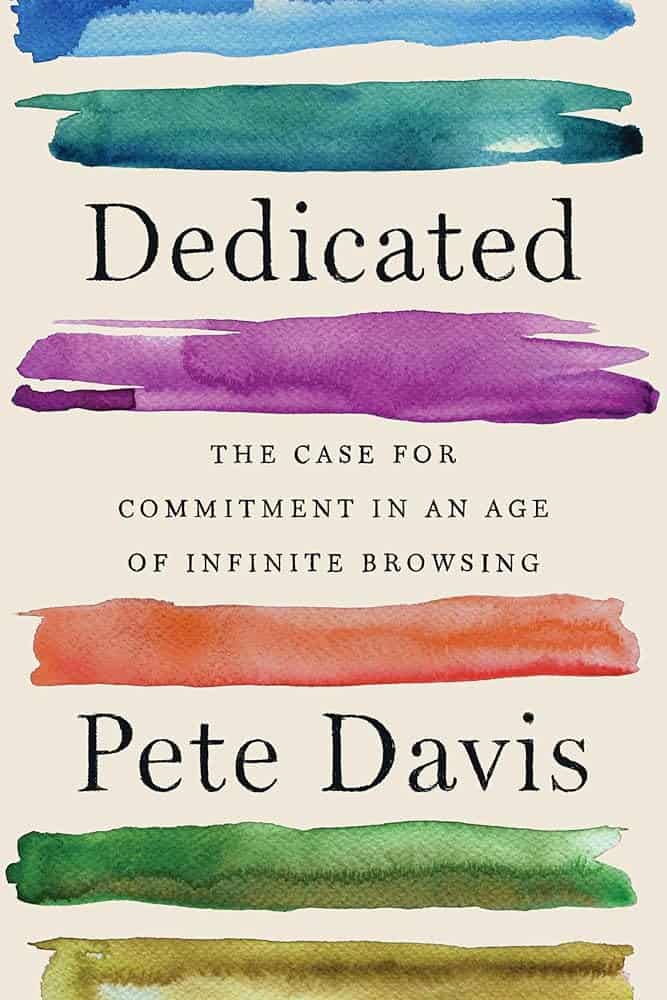
Davis was intrigued by the perpetual browsing habit many of us engage in, prompting him to delve deeper into the phenomenon. This exploration led to the creation of his book, Dedicated. When we find ourselves spending more time scrolling through choices than actually consuming content, Davis refers to this as being trapped in “Infinite Browsing Mode.”
This book delves into the concept of Infinite Browsing Mode, examining its significance in our lives, its origins, and the emerging trend of breaking free from it, which author Pete Davis refers to as a “counterculture of commitment.”
In the upcoming main points, you’ll discover:
– The advantages and disadvantages of Infinite Browsing Mode
– Techniques for transitioning to its alternative: commitment
– Strategies for embracing commitment and becoming a steadfast achiever.
Infinite Browsing Mode, characterized by avoiding commitment and maintaining open options, stands as a hallmark of contemporary society.
Zygmunt Bauman, a notable Polish philosopher, introduced a compelling concept: “liquid modernity.” From his perspective, by avoiding commitment to identities, locations, or communities, we exist in a fluid state, mirrored by our world. Long-term job security, steadfast groups, institutions, ideas, or causes are no longer dependable. Neither can we count on them, nor they on us. Everything remains fluid.
You may start questioning whether the multitude of “options” at your disposal are truly as beneficial as they seem. Perhaps it’s worth considering the benefits of making commitments, such as consistently meeting your friends every Thursday, regardless of other potential distractions or opportunities.
Before delving into the arguments against Infinite Browsing Mode, it’s important to acknowledge its advantages. Take its flexibility, for instance. The lesser weight of our decisions stems from the fact that we can easily change our minds and revert to browsing mode. Particularly in our youth, this flexibility enables us to delve into self-discovery and uncover our true selves and aspirations.
Furthermore, there’s the aspect of authenticity to consider. Thomas Merton, an American Trappist monk and mystic, discussed what he termed as the “false self” – the persona you believe you should embody to appease your parents, partner, or the popular group you aspire to belong to. Browsing provides an opportunity to shed this false identity and uncover the genuine, authentic version of yourself.
Browsing also offers novelty, which brings a thrill of excitement when we embark on new experiences. Today, with the ease of travel, we have more chances than ever before to explore new lands, encounter different cultures, and connect with unfamiliar faces. Moreover, the internet has significantly expanded the realm of novelty, introducing us to a vast array of new experiences.
In the past decade, two terms have emerged to encapsulate this craving for novelty: YOLO and FOMO. YOLO, short for “you only live once,” serves as a reminder that we have just one life to experience all the excitement the world has to offer. Conversely, FOMO, or “fear of missing out,” lingers as a concern that drives us to seize every opportunity in our limited time on earth.
Now, let’s consider the drawbacks of Infinite Browsing Mode. Once you surpass the stage of constructive exploration, you may find yourself facing paralysis, a sense of disconnection, and superficiality.
In his book “The Paradox of Choice,” psychologist Barry Schwarz explores how in our daily lives, we’re now confronted with the need to make decisions about every detail – from what we eat and wear to even the color of the plastic container for storing leftovers. With an abundance of options, we tend to grow increasingly dissatisfied with our choices and less confident in committing to them. Schwarz suggests that while choices are essential for our well-being, an excess of options can overwhelm us, leading to decision paralysis. In essence, the multitude of choices can hinder our ability to make decisions effectively.
In the 1890s, sociologist Émile Durkheim identified a phenomenon he termed anomie, wherein individuals who died by suicide experienced a distinct set of emotions. Anomie arises from a sense of despair stemming from the absence of societal norms or standards, leaving individuals without guidance on how to behave or what to believe, as well as lacking a sense of community. Similarly, Infinite Browsing Mode can induce similar feelings, as it often results in a lack of connections and a void of external expectations. Davis proposes that we can become excessively laid-back regarding our tasks, projects, and employment responsibilities. While we may desire our partners or roommates to adopt a similar relaxed attitude, the truth is, we rely on them to remind us to complete mundane chores like washing dishes or taking out the trash. We depend on individuals who demonstrate concern for our well-being and our actions. What we truly require is a sense of warmth, genuine community, mutual expectations, and shared aspirations. These elements provide us with a sense of purpose and significance.
When we decide to commit to something, we might risk passing up on the newest trends. However, when we refrain from committing, we certainly miss out on the satisfaction derived from investing ourselves in an experience, whether for a decade or just a few minutes. In the end, constantly pursuing novelty may leave us feeling superficial, as we hastily shift from one thing to the next to avoid confronting shallowness. What’s essential is to proceed at a slower pace, allowing ourselves to rediscover depth.
The issue lies in our desire to enjoy the benefits of Infinite Browsing Mode—such as flexibility, authenticity, and novelty—while avoiding the drawbacks of paralysis, anomie, and shallowness. This tension is not a recent phenomenon; it has persisted throughout history, spanning various times, regions, and societies. However, what has changed is the proliferation of choices, particularly in the twentieth and twenty-first centuries. A century ago, many aspects of our lives were predetermined—our place of residence, social circles, communities, and even career paths and marital partners. Choices were limited, and the concept of keeping options open was not feasible.
Today, we enjoy the liberty to explore any place and encounter various experiences. However, we’ve come to realize that mere freedom isn’t sufficient; dedication is also essential. We require the freedom not just to be liberated, but to engage in meaningful pursuits. While we may have been released from involuntary obligations, we struggle to commit voluntarily. Our lives reflect this “liquid modernity” in every aspect: our careers, relationships, consumption habits, mobility, and behavior. We remain in a state of flux, failing to solidify; there’s a longing for a more stable existence.
Therefore, the inquiry remains: what actions can we take to address this issue, and how can we achieve a more favorable equilibrium?
During New Year’s Eve in 1863, a multitude of abolitionists congregated at the Boston Music Hall to commemorate the impending enforcement of the Emancipation Proclamation at midnight. After a period of anticipation, Lincoln’s proclamation finally arrived and was proclaimed aloud, declaring, “I do order and declare that all persons held as slaves… henceforward shall be free.”
This event wasn’t merely a solitary, pivotal instance; it marked the culmination of numerous years of effort. The gathering comprised well-known figures—writers, orators, and activists renowned for their contributions to the abolitionist cause: Harriet Beecher Stowe, Ralph Waldo Emerson, William Lloyd Garrison, among others. Meanwhile, at the Tremont Temple Baptist Church nearby, additional abolitionists like Frederick Douglass were also commemorating this significant moment in American history. Each of these individuals, along with many others, had dedicated decades to working towards this moment.
These individuals were committed for the duration. Their dedication and perseverance serve as a testament to the fact that hard work can yield results. They, along with others of their ilk, inspire hope that by devoting ourselves to contemporary challenges, we too can embody what Pete Davis refers to as “long-haul heroes.”
Frequently, we assume that becoming a hero demands grand, noble acts, akin to something from a Hollywood script involving slaying dragons. However, genuine heroism and effecting tangible change typically involve a gradual process, often spanning a considerable duration. The true obstacles hindering our ability to commit are our fears of regret, judgment, and the fear of missing out.
Long-haul heroes have conquered those anxieties, dedicated themselves to a cause, and contributed significantly over an extended period. You might be pondering, “I’m not a champion of civil rights—or a dragonslayer, for that matter—so where do I belong?” Fortunately, neither of these roles is obligatory.
Let’s briefly explore the various individuals who embody this culture of dedication—the everyday citizens, patriots, creators, caretakers, craftsmen, and companions whom we all recognize.
Citizens assume accountability for society, guiding it toward what they perceive as advantageous—such as Evan Wolfson, who waged a 32-year campaign for the constitutional recognition of same-sex marriage.
Next, we have patriots—not the stereotype of fervent nationalists, but rather individuals who dedicate themselves to specific locales and the inhabitants therein. In our contemporary society, many opt for mobility, yet there exist those who opt to remain and establish enduring connections. They possess an understanding of the interplay between various elements—climate, flora, fauna, populace, enterprises, customs—and utilize this insight to address local issues and foster community cohesion.
Builders, conversely, are individuals who construct. They possess a vision and diligently strive to manifest that vision—such as Irene Li and her siblings, who launched Mei Mei Street Kitchen in Boston. Within a year, they expanded to include a restaurant. Over the ensuing years, Li has established herself as a seasoned figure within the culinary realm.
Not everyone is suited to be a creator or a reformer. Stewards are also vital—the individuals who sustain the functioning of systems. Innovation is crucial, but maintenance is equally important. Consider technology or a community’s infrastructure—bridges, subways, roads. Think about healthcare and IT professionals. Furthermore, our social and legal frameworks, as well as smaller organizations like clubs and associations, require stewardship. Writer Mark T. Mitchell asserted that stewardship is an essential element of a flourishing society. Without the dedicated maintenance crew—the stewards who uphold these systems—everything would rapidly deteriorate.
Developing a skill or craft requires time and dedication. Artisans are committed for the long term as well. A baker, for instance, invests years in perfecting the art of making bread. Similarly, a guitarist devotes countless hours of practice—often around 10,000—before achieving virtuosity. Artisans not only refine their abilities but also persistently engage in their chosen craft, consistently honing their skills day after day.
Lastly, companions are individuals who pledge themselves to others and provide unwavering support throughout their journey. This commitment extends beyond romantic partnerships to encompass relationships like teacher-student, mentor-mentee, and pastor-congregant connections. Companions stand by us through challenges and triumphs, aiding in our learning and offering guidance as we navigate life’s complexities. Companionship epitomizes commitment, perhaps ranking as the most significant form of all.
If commitment isn’t as challenging as previously assumed, what impedes us all? As noted earlier, it’s fear. However, there are strategies to alter our perspective on these fears. Firstly, there’s the fear of regret. What if, after dedicating the next two decades to something, we wake up one day lamenting the opportunities we missed out on?
Philosopher Roberto Unger asserted that despite our potential to pursue numerous paths, we must select a singular direction for our personal growth. In this process, he suggests, we must “discard many aspects of our humanity.” Hence, our fear of regret holds significant sway. To conquer it, we must recognize that commitments are not always permanent; outcomes may vary. Ironically, acknowledging this uncertainty often fosters a willingness to commit in the first instance.
Certainly, you still face the task of making a decision—and that decision-making process can induce paralysis. Ultimately, you might need to rely on intuition, heartfelt inclination, or logical analysis. There’s no universally correct or incorrect method for decision-making. However, once you’ve made your choice, it’s crucial to take action. Failure to do so may allow your fear of regret to resurface. Ultimately, the success of your decision hinges less on the decision itself and more on your commitment to follow through with it.
Commitment frequently entails conforming to the rules, needs, and issues of others, which can lead to feelings of unease and apprehension. This manifests as a fear of association—a concern that our own identity, reputation, or autonomy may be compromised by such associations.
Consider an individual who declares themselves as “not the marrying type.” Essentially, they’re expressing that such a commitment would challenge their sense of self. Similarly, think of employees who perceive themselves as individuals who don’t voice grievances, hence they are hesitant to join a labor union.
Regarding reputation, we may be reluctant to pledge allegiance to an institution or organization if it entails defending not only the entity itself but also its past actions or political affiliations. If we do decide to commit, it’s likely because we appreciate certain aspects of that institution. However, what about the aspects we don’t approve of, such as ceremonies, regulations, or other practices? Ultimately, committing also means relinquishing some level of control.
To conquer these apprehensions, it’s essential to alter your perspective. View yourself as fluid and adaptable rather than fixed and inflexible. By embracing this mindset, your identity and reputation aren’t jeopardized by external entities. Instead, they contribute to forming an integrated self that evolves from your commitments. Furthermore, being part of a cohesive community grants you the added control that arises from collective strength.
Recall YOLO? That’s what triggers our encounter with the third fear: FOMO, or the fear of missing out. After all, if we only have one life, why would we choose to spend it trapped in a local committee meeting?
As per Felix Biederman, there are two motivations that propel us out of bed each morning: novelty and purpose. We yearn for either fresh experiences or endeavors that provide us with meaning. To grasp the concept of FOMO, it’s crucial to recognize the distinction between novelty and purpose. A perpetual pursuit of novelty often leads to chronic FOMO—we continuously seek new encounters to feel invigorated. However, when we have a sense of purpose in our lives, we come to understand that true fulfillment stems from commitment, enriching our experiences with depth rather than mere novelty.
Occasionally, it’s necessary to maintain flexibility and keep our options available. However, it’s valuable to contemplate the consequences if we were to leave all our options open indefinitely—continuously browsing without making commitments. The proof of these repercussions is readily observable in our surroundings.
Primarily, there’s a sense of neglect. We’re witnessing communities where civic engagement and interaction have dwindled. Neighborly relations have faltered, and collective efforts to address issues and envision futures are scarce. Instead, community affairs are often overseen by hired professionals. Entire cities have been forsaken by corporations prioritizing flexibility, resulting in deserted communities and widespread unemployment. This pattern extends globally. When we fail to commit to our local communities, how can we expect to engage in global initiatives such as addressing the climate crisis?
In the absence of communities, what becomes of our sense of self? Numerous individuals experience a sense of displacement, no longer feeling connected to a broader narrative with a lineage stretching across generations. All they can focus on is mere survival, pursuing experiences and embracing transient pleasures. Without roots, we’re not only disconnected from our past but also from our future.
We have the power to refuse this dismal culture of endless choices. By doing so, we become part of a lively “counter-culture of dedication.” It’s a realm where values hold significance—where individuals, rather than corporations, operate businesses and prioritize the well-being of their employees, customers, and communities.
In the end, it’s crucial to determine the kind of societies we envision. Do we prefer a world characterized by fluidity, where individuals pursue their own interests, or do we aspire to a stable environment with steadfast individuals?
Previously, we discussed the desire for the benefits of Infinite Browsing Mode without enduring its drawbacks. Let’s revisit this notion.
Commitment rescues you from the decision paralysis that often results from endless browsing. By making a firm decision initially, subsequent choices become more straightforward. Simply committing to attending your book club on the first Sunday afternoon of each month streamlines your decisions for all future first Sunday afternoons. Each small commitment conserves your energy for more significant decisions. Your actions and decisions will naturally align with your commitments.
Regarding authenticity without feelings of alienation, the mere act of committing renders that commitment authentic in itself. When you find yourself not inclined to address your friend and their concerns, yet you do so anyway out of genuine care, that epitomizes authenticity.
In conclusion, commitment offers a form of novelty that satisfies our innate desire for new experiences. It’s not the superficial novelty of browsing but rather the profound novelty that arises from dedication. Completing a marathon, mastering the art of baking the perfect loaf, or truly comprehending your friend’s perspective—all of these represent instances of profound novelty. As Davis asserts, “depth is the ultimate novelty.”
As we approach the conclusion of Pete Davis’s book “Dedicated,” there are several important points to keep in mind.
We’ve observed the benefits of Infinite Browsing Mode, yet being trapped in it leads to suffering and detachment. To combat this, we must embrace commitment. We don’t all need to be extraordinary figures like civil rights activists or Hollywood heroes. Rather, we can be everyday individuals: citizens, patriots, creators, caretakers, craftsmen, and friends. By conquering our inhibitions, we can retain the advantages of exploration without enduring its drawbacks, through steadfast commitment.
If you’re eager to dedicate yourself to something but feel unsure about where to begin…
Get a trowel!
Gardening serves as a powerful metaphor for both life and commitment. When you cultivate a garden, you embrace a significant amount of labor without immediate rewards. You diligently care for your plants, nurturing them consistently as they take root. Additionally, when you need respite from tending to the garden, you can enlist the help of your community to maintain it. At times, you’ll reap the benefits of a “fulfilling harvest.” This harvest, akin to the satisfaction derived from commitment and perseverance, brings immense joy.