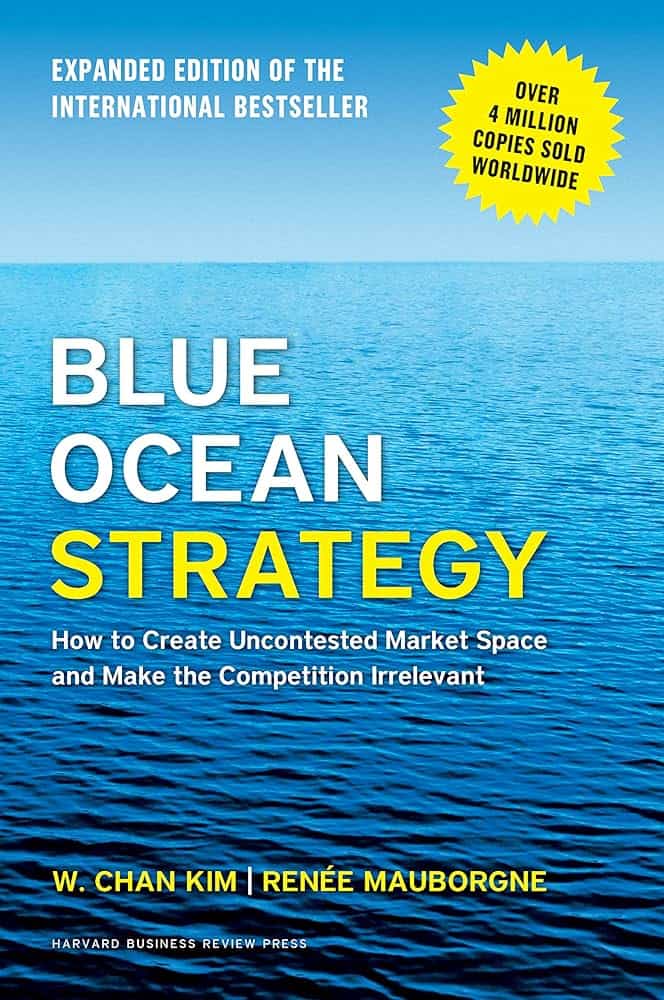
Every business grapples with a common inquiry: how can we surpass our competitors? The typical response across industries is a desire to expand in size, enhance quality, and accelerate operations to outshine rivals. Yet, envision a scenario where your business isn’t compelled to outdo competition simply because there isn’t any. What if you could experience boundless expansion without concerns about constrained demand? This isn’t a mere daydream but an actual strategic approach already adopted by a select few prosperous businesses. How did they achieve this, and how can your business replicate their success? This brief book will provide you with insights into this paradigm.
Conquer uncontested market space.
Every business grapples with a common inquiry: how can we surpass our competitors? The typical response across industries is a desire to expand in size, enhance quality, and accelerate operations to outshine rivals. Yet, envision a scenario where your business isn’t compelled to outdo competition simply because there isn’t any. What if you could experience boundless expansion without concerns about constrained demand? This isn’t a mere daydream but an actual strategic approach already adopted by a select few prosperous businesses. How did they achieve this, and how can your business replicate their success? This brief book will provide you with insights into this paradigm.
When launching a new business, the competition can be fierce, regardless of the product or service you offer. Whether it’s wine, audio books, or life insurance, the market’s capacity is limited, and numerous companies vie for a share of that finite demand. This intense competition is vividly portrayed in popular business shows like “Shark Tank,” emphasizing the cutthroat nature of today’s markets, often referred to as “red oceans” due to the metaphorical bloodshed.
Occasionally, however, certain businesses manage to rise above the competition, growing rapidly in uncontested spaces where they appear to operate under their own rules. These businesses venture into what is metaphorically termed “blue oceans” – markets that are yet to be discovered, offering products or services that do not currently exist. Unlike red oceans, where companies battle over limited demand, blue oceans represent untapped potential where demand needs to be created. This shift from a scarcity mindset to viewing it as an opportunity is crucial, as unlimited growth and profits become possible when the market size is not constrained.
In blue oceans, there is no ruthless competition staining the waters with blood. Instead, it is a vast, clear expanse filled with undiscovered opportunities. The blue ocean strategy provides the tools and methodology to conquer these untapped markets. The underlying principle is challenging the notion that an industry’s space is inherently limited, suggesting that a business has the capability to create an entirely new industry.
A compelling example of this strategy in action is the renowned Canadian circus company Cirque du Soleil. Departing from traditional circus practices, Cirque du Soleil eliminated animal acts, reduced costs, and enhanced its performances with live music and captivating storylines. This strategic shift created a blue ocean for the company, carving out a new market for artistic theater experiences. Despite initial skepticism, Cirque du Soleil not only entertained millions globally but also achieved record profits, demonstrating the potential success of navigating uncharted waters.
Maybe you find the circus company example a bit too unconventional? No worries. Numerous other businesses have effectively applied the blue ocean strategy, such as Ford, Nintendo, Netflix, Nespresso, Yellow Tail, Southwest Airlines, and even The Body Shop. In this section, we’ll delve into how they achieved success.
Before we explore these examples, let’s touch on red oceans a bit more. In established industries, everyone adheres to agreed-upon rules. Not long ago, these rules might have included statements like “Movies can be bought or rented,” “Wine needs to exude sophistication,” or “Air travel is costly.” However, in blue oceans, none of these rules are binding. Blue oceans are actively shaped by the actions of industry players who contribute to their creation.
It’s important to note that you don’t necessarily need to revolutionize your industry to establish a blue ocean. Often, making subtle adjustments can suffice to distinguish a product and create a new market. The process is straightforward: assess your industry’s current state and contemplate which factors you can Raise, Eliminate, Reduce, and Create. Let’s break down these points step by step with examples.
Considering these questions can ideally help you achieve two things: reduce costs and set your business apart from competitors. This approach is all you need to create a blue ocean. Moreover, consistently addressing these four factors—raise, eliminate, reduce, and create—will keep your company consistently ahead of the competition.
In this concise guide, you’ve gained insights into the distinction between red and blue oceans. Instead of contending for restricted market space, thriving businesses frequently seize untapped markets that offer boundless potential. By strategically adjusting industry factors—raising, eliminating, reducing, and creating—your business can lower costs and distinguish itself from competitors. So, why wait? Step away from the competitive fray and embark on a new journey.