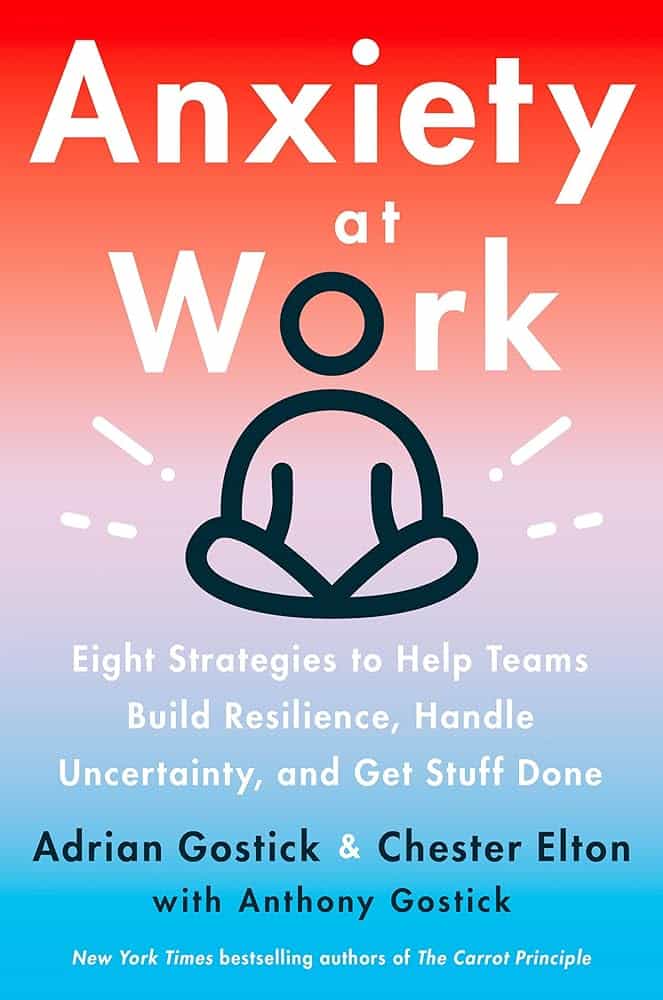
In the upcoming essential points, you’ll discover:
– The reason firefighters who share meals achieve better life-saving results;
– The basis for millennials frequently being dubbed “generation paranoia”; and
– Strategies for supporting employees belonging to minority groups.
Lately, the discussion around mental health has gained prominence, with more individuals openly discussing their mental well-being. This book explores how companies and those in leadership roles can engage in this important dialogue.
Filled with straightforward methods for team managers to pinpoint the origins and catalysts of workplace anxiety, this book serves as an essential resource for comprehending the impact of contemporary work environments on mental well-being. It also provides practical strategies for mitigating anxiety, ensuring that your team members remain as free from stress as possible, thereby boosting their productivity.
In the upcoming essential points, you’ll discover:
– The reason firefighters who share meals achieve better life-saving results;
– The basis for millennials frequently being dubbed “generation paranoia”; and
– Strategies for supporting employees belonging to minority groups.
How do you deal with the unknown? If you’re like most people, uncertainty probably makes you feel uneasy. This is increasingly becoming an issue for the current workforce, as the contemporary work environment is riddled with uncertainties. The challenge for leaders is to reduce unpredictability wherever possible – and to assist their team members in managing it when it’s inevitable.
What’s at the root of this feeling of uncertainty? The answer lies in concerns over job stability. Almost two-thirds of workers in the United States express worries about the security of their employment. While the COVID-19 pandemic has certainly shaken up the job market, these anxieties aren’t new; they also stem from past occurrences. The economic downturn of 2008, along with the looming threat of automation and robotics replacing human jobs, continues to impact the younger workforce.
The main takeaway is that younger employees are feeling overwhelmed by situations outside their influence.
Unfortunately, many millennial employees feel taken advantage of. They’ve invested in their own education and skills, often accumulating student loans along the way. Yet, despite their efforts, they frequently find themselves in unstable, freelance, or contract roles. This is largely because such employment models favor the employers financially. Consequently, millennials often feel they could be easily substituted.
This distressing truth inevitably results in significantly elevated stress levels. Observers have labeled millennials “Generation Paranoia,” noting their perpetual concern over competition and feeling compelled to outwork their peers with increased intensity and longer hours. This pressure to remain perpetually connected and available stems from these anxieties.
How can managers alleviate the anxiety and the underlying uncertainty experienced by their employees? Often, the uncertainty is beyond their control. The thrilling yet daunting fact is that disruption is occurring rapidly across nearly all sectors. Therefore, change and uncertainty are permanent fixtures.
However, leaders are not entirely powerless; they can assist their teams in managing this uncertainty. For example, when the COVID-19 pandemic hit, the optometry company FYidoctors had to shut down nearly all of its clinics, causing widespread panic and confusion among its staff. Despite this, the senior leadership team committed to maintaining openness about the situation. In regular Zoom meetings, the leadership team updated their employees on any recent developments and challenges, along with their strategies for addressing them. Gradually, the company’s atmosphere shifted from one of panic and confusion to one of collective comprehension, significantly reducing anxiety levels among all staff members.
How at ease do you feel when it comes to voicing dissent? You might find it easy to disagree with a friend or family member, but the thought of conflict in a professional setting could be daunting. The idea of entering into a disagreement with colleagues or a supervisor might provoke anxiety. However, it’s important to distinguish between constructive discussion and destructive aggression in the workplace.
A frequent grievance among managers is that their team members avoid conflict. Employees tend to dodge challenging discussions and feel upset when faced with critical feedback. Understandably, this avoidance behavior can be exasperating for managers.
The essential takeaway is: A certain amount of conflict is vital for the growth and efficiency of a team.
Debate and discord are frequent among the most successful teams, fostering improved problem-solving and potentially inspiring team members to deliver superior performance.
The reason is simple: when individuals feel listened to, they become more invested and confident, gaining a stronger sense of responsibility for work tasks. This is because people naturally value and commit to something more when they believe their input has contributed to it.
To foster productive discussions within their teams, leaders should start by promoting open dialogue during meetings.
Often, certain team members might hold back from expressing their opinions, leading to a situation where only a handful of individuals who are more at ease with conflict get their voices heard. A solution to this problem is to dedicate a few moments at the conclusion of every meeting to directly inquire about each participant’s thoughts. This approach motivates individuals to step out of their comfort zones and voice their genuine opinions. However, its effectiveness relies on team members feeling a sense of psychological safety that allows them to express their thoughts without fear.
To foster a safe environment, leaders need to highlight the value of always sharing candid feedback. While it might appear beneficial to soften opinions, doing so can actually harm the organization as a whole. Optimal decision-making for both individuals and teams hinges on access to accurate information. Withholding genuine thoughts means depriving others of insights that could lead to more informed choices.
Certainly, there are constructive and destructive approaches to engaging in debates. Managers can foster a higher caliber of discussion by urging their team members to back up their dissenting views with factual evidence.
Workplace anxiety varies significantly, and unfortunately, it can be influenced by personal identity. This refers to the mental strain experienced by individuals belonging to marginalized groups, such as ethnic minorities, LGBTQ+ community members, and people living with disabilities, among others.
Some executives continue to deny the impact of bias in the workplace, dismissing it as an overemphasis on political correctness. However, the data is undeniable; certain groups have consistently faced differential treatment and have endured negative consequences because of it.
The essential point is: It’s crucial for leaders to engage in courageous discussions on discrimination and systemic bias.
Reform is long overdue. Research indicates that, in the United States, individuals who are Black are 20 percent more susceptible to serious mental health issues compared to other demographics. However, despite these statistics, Black adults are also less likely to seek and receive mental health support and treatment compared to the general American population. Specialists suggest that the disproportionate impact of mental health issues on Black individuals can be attributed to the racism and injustices they encounter in their everyday lives, including their work environments. Likewise, individuals from the LGBTQ+ community face anxiety and depression at rates more than double those of their heterosexual counterparts.
How can managers play a supportive role in combating workplace discrimination and bias?
First, promptly address all complaints, including those that might seem trivial. Second, create a culture where everyone feels safe to be their authentic selves. Admittedly, achieving this is more challenging than it sounds, as numerous individuals struggle to fully express themselves in the workplace. However, leaders can pave the way for a genuine atmosphere by being open about their own experiences and demonstrating authenticity, thereby encouraging others to follow suit.
In conclusion, some leaders might feel compelled to react as Howard Schultz, the ex-CEO of Starbucks, did in a 2019 company-wide meeting. Facing allegations of racial prejudice, Schultz stated that he “does not see color,” an approach taken by Starbucks during its controversy. While it might seem appealing to demonstrate one’s lack of bias in this manner, it’s ultimately misguided. Pretending not to “see” someone’s race or sexual orientation doesn’t negate these aspects of their identity, nor does it lessen the discrimination they might encounter because of them.
Have you ever felt the heavy disappointment of exclusion? Maybe there was a gathering, and somehow, you were the only one not invited. While we often associate such feelings with childhood, they can persist into adulthood, particularly within professional environments.
Research indicates that employees work more efficiently when they perceive themselves as part of a unified team. Therefore, the issue of team members feeling left out is not only a personal concern but also a detriment to organizational performance.
The central idea is that individuals in successful teams experience a strong sense of inclusion and community.
A study from Cornell University discovered that fire stations where firefighters share meals are more effective at saving lives compared to those where firefighters eat individually. When questioned about their solitary dining habits, firefighters felt ashamed, indicating an awareness of underlying issues in their team dynamics.
Sadly, workplace exclusion is a common experience, with a University of British Columbia study finding that 71% of professionals felt left out by their colleagues at some point. This exclusion is not only detrimental to mental health, leading to anxiety, but it also negatively affects productivity.
Ensuring team inclusivity presents a challenge for managers, primarily because acts of exclusion, such as not returning calls or excluding someone from lunch plans, involve the absence of action and are therefore harder to detect. A practical approach to address this issue is to conduct regular individual meetings with team members, utilizing these opportunities to inquire about their relationships and interactions within the team.
Adopting the ten-ten routine can be a straightforward yet effective strategy. This ritual, conducted first thing in the morning and again just before leaving for the day, involves leaders taking a brief walk around their team’s workspace. The purpose is to greet each team member personally and inquire about their well-being. Implementing these strategies ensures that each team member feels like an integral part of the group, fulfilling their fundamental human desire to be seen as an important component of a larger entity. Additionally, fostering a sense of inclusion can be further enhanced by establishing a buddy system, where experienced employees take on mentoring roles and engage in social activities with less experienced colleagues.
In today’s work environment, while your employment stability may be up in the air, there’s one aspect many can count on: an overwhelming workload. Supervisors are increasingly expecting their staff to handle more responsibilities within tighter deadlines. However, these heightened demands are driving employees to their breaking point.
In a startling 2019 poll, an overwhelming 91 percent of American workers indicated they experienced burnout at some stage in the preceding year. Burnout leaves you feeling physically or emotionally drained. It can lead to a growing sense of cynicism towards your job and colleagues; you might become easily irritated or begin to harbor negative feelings towards yourself for tolerating excessive demands from others.
The main takeaway is: The prevailing culture of excessive work is causing burnout and a decline in productivity.
Burnout not only harms the employee but also poses significant drawbacks for their employer. Employees experiencing burnout are likely to take more than 60 percent additional sick days annually compared to others, and they’re over twice as likely to switch to another company.
Considering this, numerous organizations have begun to acknowledge the dangers of employee burnout. However, their approach is often misguided. Instead of addressing the underlying issues, they are merely treating the symptoms of the problem.
Numerous employers advocate for employee wellness programs, including stress reduction workshops, nutritional programs, and advice on managing time effectively. Some even offer training aimed at enhancing resilience, with the expectation that employees will become more resistant to burnout. However, such measures fail to address the core issue: the fact that a significant number of today’s employees are overwhelmed with their workload. Practicing yoga won’t solve this problem. Considering resilience, the health-care sector, known for its high burnout rates, has demonstrated through the COVID-19 pandemic that its workers are remarkably resilient and perform well under stress. Nevertheless, burnout remains prevalent among them, indicating that resilience training is unlikely to make a significant difference.
What steps can organizations take to address the issue of burnout?
One approach is to lighten employees’ workload. While some leaders might argue it’s unfeasible, it is achievable. For example, health-care workers face excessive administrative tasks. Each patient visit requires them to dedicate significant time to paperwork and compliance checks. Numerous health-care organizations have discovered that lessening their employees’ digital responsibilities, or delegating paperwork to team members who prefer such tasks, results in employees feeling more at ease and significantly less burdened.
Have you ever felt FOMO, or the fear of missing out? Maybe while browsing social media, you’ve fretted that your friends appear to be enjoying themselves more and leading a superior life compared to yours? If that sounds familiar, you’re in good company. Countless young Americans share this sentiment, leading to widespread anxiety.
It’s not only leisure activities and social events that stir up feelings of missing out. Especially among younger generations, there’s a deeper concern about significant life milestones, such as securing a desirable job, advancing in their careers, or acquiring a home. What’s at the root of all this FOMO? Ultimately, it boils down to uncertainties surrounding employment.
The main takeaway is: Workers from the millennial generation are anxious about potentially missing out on more favorable job prospects.
Engaged in temporary and gig-based roles, numerous workers perceive themselves as more expendable than the previous generation. Consequently, younger workers frequently switch companies proactively, driven by the concern of missing out on superior opportunities. They transition between jobs rapidly; for example, while 40 percent of baby boomers have remained with the same employer for more than twenty years, over 75 percent of Generation Z workers anticipate staying with their current employer for just two years before seeking new opportunities.
What drives the relentless job hopping among younger employees? Remarkably, 87 percent of them are in pursuit of opportunities for learning and development to advance their careers. Unfortunately, such opportunities are rare. A study by the global research firm CEB reveals that merely 10 percent of organizations foster a culture that emphasizes learning and development.
However, the disparity between what employees expect and the reality they face also opens up an opportunity for employers.
Organizations can address the concerns of their younger employees regarding career advancement and lower staff turnover by launching employee development programs. These could range from standard training programs available to all employees to more innovative strategies like fast-tracking promotions. For example, Ladders, a recruitment company in the US, provides its junior employees with a promotion, encompassing both a salary increase and a new job title, every four months. To qualify for these incremental promotions, employees are required to meet certain educational goals. This approach not only increases employee motivation but also contributes to the company’s success. It’s not unexpected, given that organizations that support employee learning and development are almost 30% more likely to be industry frontrunners.
Do you possess traits of a perfectionist? Do you set unattainable standards for yourself or others? Are you overly critical of yourself, or do you see things in black and white? If any of these characteristics sound familiar, you could be creating needless stress for yourself in your professional life.
While certain jobs, like those of airline pilots or medical technicians, demand exceptional precision and thoroughness, perfectionism isn’t really about achieving flawlessness or extreme carefulness in one’s duties. Rather, perfectionism often revolves around the appearance of being flawless. Frequently, perfectionists experience a strong sense of scrutiny from others and perpetually strive to meet what they believe are the expectations of those around them.
This may seem beneficial, and indeed, perfectionists are often more driven and diligent. However, perfectionism comes with significant drawbacks. Not only are perfectionists likely to be rigid in their approach, but they might also paradoxically abandon challenging tasks more readily. The reason? If they anticipate that they cannot achieve perfection in a task, they might lose interest in attempting it at all.
The main point is: Young individuals are increasingly exhibiting traits of perfectionism.
A 2017 research conducted by the University of Bath, focusing on college students from Britain, the United States, and Canada, revealed a significant rise in perfectionist tendencies compared to earlier generations. Social media is likely to blame for this trend, as it facilitates constant comparison with others and intensifies the pressure to meet the unrealistic benchmarks often showcased online.
To prevent perfectionism from causing anxiety among employees, especially the younger ones, companies can adopt a straightforward approach: clearly define what constitutes “good enough” work. This is crucial because issues often emerge when employees do not receive positive reinforcement for work that meets acceptable standards, and feedback is only provided when the work falls short. This implies that employees find it challenging to understand the limits of what’s required and are unsure about the amount of effort necessary for a task. This situation is particularly stressful for everyone, but it’s especially so for perfectionists, who have a heightened fear of critical judgment. Therefore, it’s important for managers to offer ample praise, even if the work’s quality isn’t outstanding.
It’s beneficial for supervisors to understand how perfectionism manifests in a work environment to pinpoint employees who may require additional support. Typically, perfectionists are those who frequently seek detailed instructions on assignments, as they often request significantly more guidance. Additionally, if an individual hesitates to embrace even minor risks and reacts defensively to criticism, it’s likely they possess perfectionist tendencies.
The core insight from this book is:
Today’s workforce, especially the newer generations, is navigating a labor environment markedly more volatile and precarious than that encountered by previous generations. This shifting landscape has engendered widespread feelings of unease, agitation, and anxiety among employees. Nevertheless, employers, through demonstrating understanding and compassion, have the power to mitigate these anxieties, assuring young professionals they are appreciated and guiding them towards a promising career path.
Here’s another practical tip:
Remember to acknowledge and commend your top achievers.
No matter how swamped you are in your managerial role, it’s crucial to carve out moments to show appreciation for excellent work. Interestingly, it’s often the underperforming team members who end up getting the bulk of a manager’s focus and time. Managers, preoccupied with addressing the needs of the least performing team members, often neglect to provide feedback to their top performers. Paradoxically, this lack of communication can cause high achievers to feel uneasy, interpreting the silence as a sign that their contributions may not be meeting expectations.