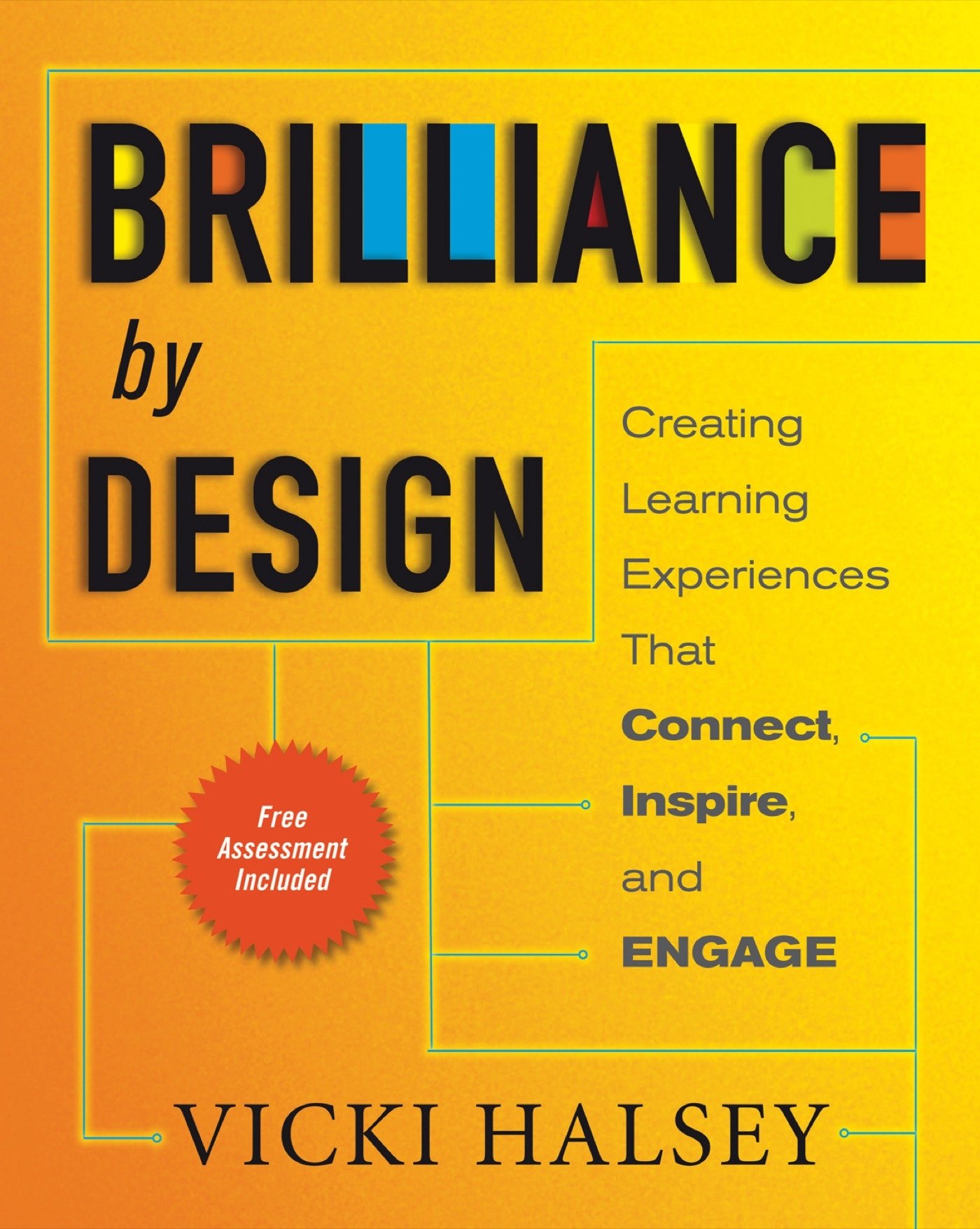
In her college years, Vicki Halsey was a quiet student who played it safe, echoing what she thought professors wanted to hear. However, one day after a class, her professor, Professor Wilson, asked her a life-changing question: “How are we going to bring out the brilliance in you?” This question, though surprising and unsettling, made Vicki realize her own potential. Professor Wilson explained that he saw two versions of her: one who played it safe and another who revealed her brilliance through her writing. This conversation marked a pivotal moment for Vicki, inspiring her to embrace her true capabilities.
The book aims to help educators inspire similar transformations in their students by uncovering their hidden brilliance, igniting their passion, and encouraging them to recognize and fully realize their potential. It highlights the importance of seeing and nurturing the true potential of every learner, just as Professor Wilson did for Vicki.
During her college years, Vicki Halsey had perfected her routine. She’d sit quietly in a corner of the classroom, complete the assigned readings, and when asked a question, simply echo back what she believed her professors wanted to hear.
One day, after a class with Professor Wilson, Vicki stayed behind with some other students to ask about an upcoming assignment. As usual, she kept to the background, listening as her classmates spoke. In her mind, they were smarter and more articulate than she was. But as she prepared to leave, Professor Wilson called her name and asked to speak with her privately. Startled and nervous, Vicki managed a quick, “Yes, sir.”
Once the other students had gone, Professor Wilson posed a striking question: “How are we going to bring out the brilliance in you?”
Vicki was caught off guard. She gave a safe, rehearsed answer—the kind she thought he expected. But the professor slapped the desk and said firmly, “I’m not interested in what you think I want to hear; I want to know what you think. You.”
At that moment, Vicki felt a wave of emotion, her throat tightening and tears beginning to form. Professor Wilson offered her a tissue and described his perspective of her. He saw two versions of Vicki: the one who attended class, concealing her talents and playing it safe, and the one who let her brilliance shine through in her written work. It was time, he told her, for her to fully embrace and reveal her genius.
This simple yet profound interaction was transformative. For the first time, Vicki saw herself through new eyes, and her outlook on learning—and life—shifted dramatically.
Now it’s your turn to inspire such transformations. This book will guide you in uncovering the potential brilliance in your students, igniting their passion, and showing them the extent of their capabilities. After all, how many countless Vickis are out there, quietly waiting for someone to help them recognize their true potential?
Meet Dale Chihuly, a glass sculptor celebrated for his striking, creative works of art. However, his most groundbreaking innovation wasn’t the sculptures themselves but his strategy of assembling teams of skilled glassblowers to craft extraordinary large-scale installations. By leveraging the collective talent and synergy of the group, Chihuly and his collaborators achieved what no single artist could have accomplished alone.
In a similar way, classrooms thrive on the synergy between teachers and learners. While this collaboration doesn’t result in elaborate glass sculptures resembling sea creatures or cacti, it produces a different kind of masterpiece: shared knowledge, empowerment, and newly honed skills within the minds of students.
When synergy exists in the classroom, teachers and students work together to achieve remarkable outcomes. As the teacher, it’s your role to cultivate and nurture this synergy, just as Chihuly does with his team of glassblowers.
This is the essence of Vicki Halsey’s Brilliance Learning System, which comprises three key components. The first is centered on people – specifically, fostering relationships that bring out the best in both teachers and learners.
Becoming a Teacher Who Creates Synergy
To create such relationships, consider adopting the 70/30 principle. This approach suggests that you, the teacher, should speak only 30 percent of the time, leaving 70 percent of the talking to your learners. By doing so, learners feel they are at the heart of the session. Remember this essential rule: the person who is talking is the one doing the learning.
Encourage learners to spend 70 percent of their time actively practicing and building skills, while allocating just 30 percent of their time to absorbing information from you.
Get to know your learners personally. What are their aspirations, passions, and areas of expertise? Reflect on your own behavior, too. Could your tone, facial expressions, body language, or demeanor unintentionally inhibit their learning? Is your classroom a safe, welcoming environment?
Assume that every learner enters your class with a genuine desire to learn. Those who appear disengaged or resistant might be carrying baggage from negative past experiences – not necessarily related to your class. Instead of becoming frustrated, approach them with curiosity about their backgrounds and feelings.
Investing in Yourself
While your primary focus is on your students, you must also invest in yourself to unlock your full potential as an educator. This enables you to better support your learners in reaching their potential.
One critical way to do this is through self-care. Many instructors, caught up in busy schedules, neglect their own well-being. But if you’re not regularly replenishing your energy and feeling your best, you’ll struggle to help others shine.
Self-care might include getting enough sleep, taking time to eat well, enjoying walks in nature, going on mini-vacations, or spending quiet moments with loved ones. Whatever rejuvenates and inspires you, make it a priority. By maintaining your health and energy, you’ll not only bring out your own brilliance but also be better equipped to illuminate the brilliance in your students.
When Vicki Halsey taught her first full lesson, she was determined to leave a lasting impression on her students. She wanted to create a meaningful experience that would resonate deeply. This key concept is all about how she achieved that goal.
To prepare, Vicki printed copies of Kahlil Gibran’s poem “On Giving” on elegant parchment paper. She then wrapped each copy in a unique and beautiful package, arranging them in a basket. As the lesson began, she moved through the classroom, personally handing each student a package. As she offered each gift, she made eye contact, smiled warmly, and said, “I have a gift for you.”
Once everyone had received their package, she asked the students to write about how it felt to be given a gift. Next, she divided them into small groups of four or five to discuss their past experiences with giving and receiving gifts. Afterward, the students opened their packages, read the poem aloud, and explored its ideas in their groups. Finally, the whole class came together to share their collective insights.
In this lesson, Vicki actively engaged her learners by connecting with their personal experiences, designing creative activities, and giving them the autonomy to explore the lesson’s ideas independently. She adhered to the 70/30 principle, allowing students to generate the core concepts themselves rather than directly teaching the material. The outcome? A deeply impactful lesson where students truly owned their learning.
The Importance of Content Design
Vicki’s thoughtful content design was central to the success of her lesson. Content, the second component of the Brilliance Learning System, is all about creating a context that inspires learners to uncover insights on their own. Had Vicki not made the effort to personally connect with her students, integrate physical gifts, and employ a variety of engaging activities, her lesson could have failed to make an impact.
The question for you is: How can you apply these principles to your teaching? How can you craft content that truly resonates?
Here are Vicki’s key tips:
With well-designed content, you can empower your students to discover brilliance within themselves.
Looking Ahead: The ENGAGE Model
Now that we’ve covered the importance of crafting effective content, it’s time to move on to the third component of the Brilliance Learning System: the ENGAGE model. This framework provides tools to help you bring out the brilliance in your students. Let’s start with the first letter: E.
Imagine walking into your office one morning to find a small chocolate bar on your desk. Attached to it is a note from your manager. The letter invites you to a leadership seminar happening in two weeks, thanks you for your hard work, and expresses her excitement about your participation in the upcoming session.
A couple of days later, you receive an email containing a link to an online tutorial that introduces the topics you’ll be covering at the seminar. The tutorial asks you to create a list of projects you think could benefit from the session. You’re then encouraged to share the list with your manager within two days to get her feedback.
This is an example of how an instructor can effectively use pre-event engagement to energize learners. (The chocolate doesn’t hurt, either!) Before the class even begins, learners are already thinking about the content and how they’ll apply it. This initial spark of enthusiasm and curiosity is what the “E” in Vicki’s ENGAGE model stands for: Energize. The goal is to get learners excited about the session and keep them engaged throughout.
Personalizing Pre-Session Engagement
A personalized invitation, like the letter with the chocolate bar, is one way to generate excitement. Another option could be sending participants a book, article, or study guide related to the session. Reading about the topic in advance not only primes learners for the upcoming content but also allows them to connect their prior knowledge to the new material.
However, it’s essential to strike a balance. Don’t overwhelm learners with too much pre-session material, as this can create unnecessary stress and diminish their enthusiasm.
Setting the Tone in the Classroom
Pre-class engagement is just the first step. What happens when learners arrive in the classroom is equally important.
To create a stimulating environment, consider decorating the room with posters, playing upbeat music as participants enter, or offering healthy snacks in colorful bowls. Greeting learners individually as they arrive – perhaps with a friendly “hello” or by asking them to introduce themselves – can help them feel welcomed and valued.
Starting the Session
Once the session begins, get your learners involved right away. While many instructors spend the first 10–15 minutes lecturing, a more effective approach is to let learners start the conversation.
For example, you could open with a thought-provoking question. In a leadership seminar, you might ask, “Who has been the best coach, boss, or leader you’ve ever had?” This kind of question not only activates learners’ interest but also encourages them to share experiences, fostering connections and a sense of community within the group.
And what’s more energizing than being part of a vibrant, supportive community? By laying the groundwork for excitement and engagement, you’ll set your learners up for a dynamic and impactful learning experience.
This key point delves into a moment when Vicki encountered a steep learning curve in her teaching career. She was running a life-skills program at a middle school, and her class was particularly challenging. To capture her students’ attention during the “important” part of the lesson, she promised a Jeopardy-style quiz for the second half of class. The game included questions across various topics, giving every student a chance to shine in their area of expertise—whether it was geography, chemistry, or engineering.
One student, who we’ll call Randy, was thin, wore glasses, and often used foul language. He was frequently bullied and sometimes inattentive during lessons. During one quiz, Vicki asked, “What’s the common name for aspirin?” Randy quickly hit the buzzer and answered correctly: “Acetylsalicylic acid.” Later, when she asked, “What does DNA stand for?” Randy responded again without hesitation: “Deoxyribonucleic acid.”
The classroom fell silent, and then his teammates erupted in cheers, clapping for him and patting him on the back. From that day on, the teasing stopped, and Randy was embraced by his peers. For him, the quiz was a chance to showcase his brilliance, be a hero, and pronounce impressively complex terms.
Vicki’s role in Randy’s transformation was simple yet impactful: she facilitated an engaging activity and structured it to give every learner a chance to demonstrate their unique strengths. By designing her content thoughtfully, Vicki enabled Randy to shine. This is an example of navigating content—the “N” in the ENGAGE model.
What Does Navigating Content Mean?
Navigating content involves presenting it in diverse and interactive ways so learners can grasp concepts, apply them, and assess their understanding. To navigate content effectively, consider these strategies:
Why Brilliance Matters
Your ultimate goal is to make learners feel brilliant. Why? Because brilliant learners eagerly seek out information. They’re engaged, ask thoughtful questions, and aren’t afraid to admit when they don’t understand something. By navigating content effectively, you’ll foster an environment where every learner feels capable, valued, and ready to excel.
With intentional navigation, you can bring out the brilliance in every one of your learners.
Have you ever taken a course, felt inspired by the material, and then failed to use it in your real life? If so, you’re not alone. Neuroscience explains this phenomenon well: the saying “Old habits die hard” reflects the brain’s preference for familiar routines and resistance to change. Developing new patterns requires focused effort and deliberate practice.
As an instructor, it’s part of your job to help learners generate meaning—the G in the ENGAGE model. This step ensures learners recognize the relevance of what they’ve learned and feel motivated to incorporate it into their lives. The key question learners should explore is, “What does this learning mean for me?”
Generating Meaning
To help learners generate personal meaning, revisit the objectives that led them to the session. Ask reflective questions like:
Another effective strategy is small-group discussions. Have learners share the most valuable lesson they took away from the session. These activities help participants connect the content to their personal and professional lives, increasing the likelihood that they’ll apply it.
Applying Knowledge
The next step in the ENGAGE model is Apply—a critical phase often overlooked by instructors. Many assume learners will figure out how to apply the material on their own after the course. However, helping learners bridge the gap between theory and practice while still in the classroom greatly enhances retention and implementation.
By the time you reach this phase, learners may have engaged in out-of-context practice—for instance, analyzing a case study about negotiation techniques. However, they might not have considered how to apply this knowledge in their next sales meeting or a specific real-world situation.
To encourage practical application:
Cementing Commitment
Regardless of the method, ensure learners see the value of their new knowledge and understand how it can benefit them. This solidifies their commitment and helps transform what they’ve learned into actionable, long-term habits.
Your ultimate aim is to guide learners from passive understanding to active application—helping them turn insights into meaningful, real-world change.
Vicki has always been a strong advocate for using songs as mnemonic tools. When she taught science at a high school, she divided her students into groups and assigned each group a family from the periodic table of elements. Their task was to compose a song to help them remember their assigned family. Years later, while at the mall with her sons, Vicki encountered three of her former students. The trio enthusiastically gathered and began singing the song they had created in high school—a parody of Katy Perry’s “California Gurls,” but with lyrics centered on alkaline metals.
This anecdote illustrates how music can be an effective learning tool and also a means to measure how much students have retained. This brings us to the second G in the ENGAGE model—Gauge, which focuses on assessing how much your learners have absorbed through evaluation. If you notice heads bopping during an exam, it’s likely your students are recalling answers through the songs they’ve learned.
Assessment as a Confidence Booster
Don’t let the word “assessment” cause undue anxiety. Assessments don’t need to resemble intimidating tests that make learners uneasy. Instead, they should serve as opportunities for learners to affirm their understanding and feel confident in their achievements.
To achieve this, design assessments that feature a diverse range of questions, tailored to different levels of cognitive challenge:
Creative Approaches to Gauging Learning
Assessments don’t have to follow the traditional format of written tests. Instead, you could:
A Final Review
To wrap up a session, go around the room and ask each participant to share one significant takeaway from the lesson. This reflective exercise reinforces key concepts, helps transfer information into long-term memory, and allows learners to appreciate how much they’ve gained.
By the time they leave, students will feel empowered, thinking, “Wow, I didn’t know this an hour ago!”
You’ve journeyed through nearly every step of the ENGAGE model—take a moment to acknowledge the effort you’ve invested and the positive impact this will have on your learners. By applying these principles, you’re equipping them with the tools they need to absorb, retain, and apply the knowledge you share. That’s worth celebrating!
Now, we come to the final letter in the ENGAGE model—Extend, which involves helping learners take their newfound knowledge and turn it into actionable steps to achieve meaningful results beyond the classroom. While you’ve provided them with information, they still need practical tools to transform their intentions into tangible outcomes.
Strategies for Extending Learning into Action
Thankfully, there are straightforward strategies to help learners bridge this gap:
Why Extend Matters
Effective educators have the power to create lasting transformations in their learners’ lives. By helping them convert their learning into real-world actions, you provide the spark for breakthroughs, epiphanies, and moments of brilliance. Who knows whose life you’ll enhance by empowering them with tools that stick and knowledge that drives change?
Teaching is fundamentally about changing lives through learning—unlocking the inherent brilliance that resides within every individual. The Brilliance Learning System fosters a collaborative dynamic between you, as the teacher, and your learners, leveraging the content you deliver. This content should adhere to the principles of the ENGAGE model, which immerses learners actively in the material and gradually reveals their potential brilliance.
Practical Recommendations
Support Learners in the Virtual Environment
The principles of the Brilliance Learning System and the ENGAGE model are just as effective in virtual classrooms as in physical ones. However, teaching online comes with unique challenges, particularly when it comes to keeping learners engaged.
Here are some strategies to enhance virtual engagement:
Send learners a pre-class package that includes materials like a workbook and a small rubber ball they can use as a fidget tool during the session.
Use the chat function to pose thought-provoking and engaging questions, fostering discussion among participants.
Connect with learners individually as they join the virtual classroom—greet them and engage in brief conversations to build rapport.
A small gesture, like sending a chocolate bar, can add a delightful personal touch and make the experience more memorable.
By applying these strategies, you can create a rich, interactive online learning environment that mirrors the energy and engagement of a physical classroom.