In the early 1990s, political scientist Francis Fukuyama predicted that the end of the Cold War marked the triumph of liberal democracy, heralding a future of global peace and prosperity. However, the rise of authoritarianism since then has disproven this theory. Authoritarian regimes, relying on centralized power and suppressing dissent, demonstrate the dangers of limited freedom and oppression, as seen in historical examples like Stalin’s Soviet Union and Nazi Germany.
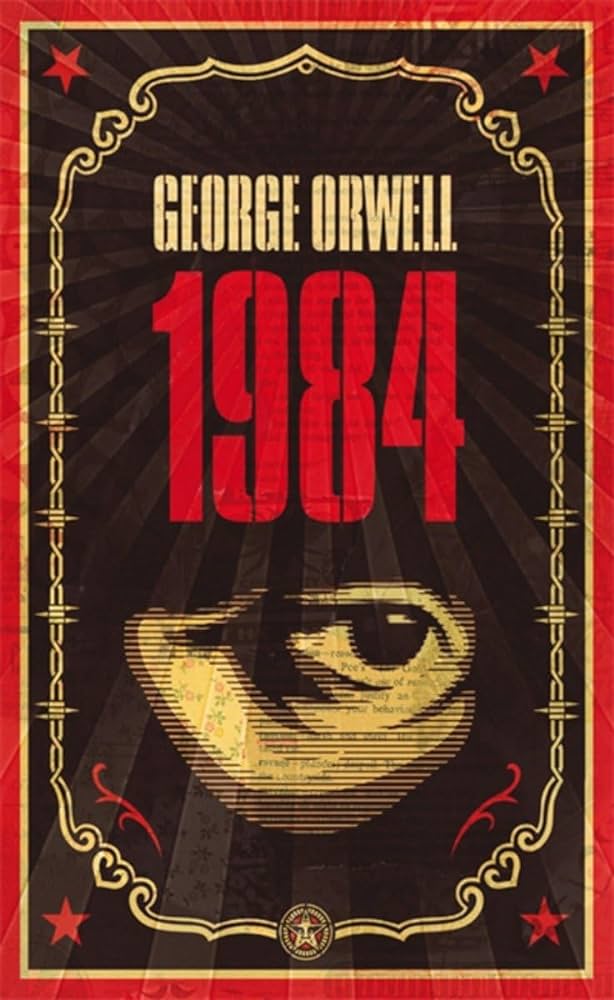
George Orwell’s Nineteen Eighty-Four, written in the late 1940s, offers a chilling depiction of these mechanisms of control. Although speculative fiction, the novel insightfully portrays how authoritarian systems operate, making it a timeless exploration of the dangers of unchecked power. Through its characters and themes, it examines survival under an oppressive regime led by the iconic Big Brother.
In the early 1990s, following the end of the Cold War, political scientist Francis Fukuyama proposed a bold theory: the idea that history, as a progression of ideological conflicts, had effectively ended. With the Soviet Union’s collapse and the triumph of liberal democracy, Fukuyama predicted a future where freedom and prosperity would spread globally, creating a harmonious and democratic world.
However, Fukuyama’s optimism proved premature. In the decades since, authoritarianism has experienced a resurgence. Many nations have embraced the idea that stability and prosperity can only be achieved under the control of powerful, centralized leaders. This shift has alarming consequences, as authoritarian regimes often stifle dissent, restrict freedoms, and suppress human potential. History offers stark reminders of the dangers of such systems, with Stalin’s Soviet Union and Nazi Germany serving as two of the most harrowing examples.
When George Orwell wrote Nineteen Eighty-Four in the late 1940s, the world was still grappling with the aftermath of these oppressive regimes and uncovering their inner workings. Orwell’s novel stands out because, although it’s a work of speculative science fiction, it captures the mechanisms of authoritarian control with unsettling precision.
If you want to delve into the perils of authoritarianism, Nineteen Eighty-Four is an essential read. Its themes resonate deeply, illustrating how power can corrupt and oppress. Along the journey, you’ll meet three key characters, each with distinct approaches to surviving in a society ruled by an omnipresent and oppressive figurehead known as—yes, you’ve likely heard the name—Big Brother.
The year is 1984, and Winston Smith lives in a dystopian version of London, now called Airstrip One, a province within Oceania—a superstate that also includes the Americas and Australia. This world is governed by Ingsoc (short for English Socialism), a totalitarian regime better known as The Party. The Party wields absolute control over society, masking its authoritarian nature with misleading labels.
Surveillance is one of The Party’s most powerful tools for maintaining control. Posters of Big Brother, Oceania’s leader, are everywhere, with his watchful eyes and the ominous slogan “BIG BROTHER IS WATCHING YOU.” The surveillance is not just symbolic—telescreens installed in homes and public spaces broadcast propaganda around the clock while simultaneously monitoring citizens’ every move. Even private moments are scrutinized, as telescreens can detect expressions of dissent or thoughtcrimes—any unorthodox ideas or behaviors.
Winston, however, has found a small reprieve. In his apartment, there’s a hidden alcove outside the telescreen’s view where he begins writing in a secret diary. Through his writings, we see the bleak reality of his life. Basic necessities like food, clothing, and hygiene products are scarce, leaving Winston malnourished and in poor health. His diet consists of stale bread and foul-tasting gin, symbolic of the Party’s ability to degrade every aspect of life.
Oceania’s society is rigidly divided into three classes: the Inner Party, which holds ultimate power and controls the ministries; the Outer Party, where Winston belongs, consisting of bureaucrats like him who carry out the Party’s directives; and the proles, the working-class majority relegated to menial labor and largely ignored by the Party.
Winston works in the Ministry of Truth, a department responsible for rewriting history to align with the Party’s current narrative. His job is to alter past records, ensuring that official accounts always match the Party’s latest version of events. Other ministries include the Ministry of Peace, which oversees perpetual wars against Eurasia or Eastasia (Oceania’s two rival superstates), the Ministry of Plenty, which manages the chronic shortages of goods, and the Ministry of Love, infamous for its role in surveillance, interrogations, and torture.
The Party enforces its ideology through relentless propaganda. Daily rituals like the Two Minutes Hate stir up hostility toward enemies of the state, whether foreign adversaries or supposed traitors. Citizens are required to express unbridled hatred during these sessions, and any failure to conform could lead to suspicion, arrest, or even vaporization—the complete erasure of a person’s existence.
The Party’s power is encapsulated in its slogans:
Winston struggles under the oppressive weight of this regime. While he participates in the required displays of loyalty, he privately questions everything. The propaganda, surveillance, and historical revisionism wear away at his sanity. He is haunted by doubts: Is Oceania really at war? Is Big Brother even a real person, or just a symbol of control? If the Party can rewrite history at will, how can anyone trust their version of reality?
One of Winston’s private rebellions is clinging to simple truths—like the fact that two plus two equals four. He fears that one day, the Party will demand that everyone believe two plus two equals five, and many will comply, their perceptions warped by relentless propaganda and fabricated records. His resistance, however small, is rooted in the belief that some truths are immutable, even in the face of overwhelming tyranny.
Analysis
The opening chapters of Nineteen Eighty-Four establish the terrifying foundation of The Party’s authoritarian state. Its methods of control—constant surveillance, propaganda, and historical manipulation—are chillingly effective. These tools don’t just monitor or oppress citizens; they reshape their perceptions of reality.
Through Winston’s perspective, we see the profound psychological toll of living under such a regime. He is both a product of and a rebel against The Party’s system. While he despises its deceptions, he can’t entirely resist its influence. During the Two Minutes Hate, he finds himself swept up in the collective rage, a visceral reminder of how propaganda manipulates even the most skeptical minds.
Winston’s awareness of The Party’s lies sets him apart but also isolates him. He recognizes the dangerous implications of the Party’s power over truth. If facts like “two plus two equals four” can be erased or altered, then reality itself becomes malleable. The novel’s early chapters poignantly illustrate the fragility of truth in a world where those in power dictate what is real.
Winston Smith lives in a constant state of fear, aware that anyone—neighbors, colleagues, or even family—could report him to the authorities. His decision to buy a forbidden diary from an antique shop in the prole district is a dangerous act, one he knows could lead to severe consequences. When Winston begins noticing Julia’s repeated presence at work and later in the prole district, his paranoia intensifies. He suspects she is a spy for the Thought Police, particularly when she appears while he is wandering the district and visiting the antique shop—a behavior that could easily be seen as suspicious.
However, Julia surprises him by secretly passing him a note at work that says, “I love you.” This confession transforms their dynamic, and despite his initial mistrust, Winston falls deeply in love with her. The two begin meeting in secret, eventually finding refuge in a rented room above the antique shop where Winston had bought the diary. The room, though simple and old-fashioned, becomes a sanctuary for their love and rebellion.
Julia offers Winston a new perspective on life under the Party. She is acutely aware of the regime’s deceit and oppression but chooses to focus on living in the moment. By being cautious and clever, she finds small ways to subvert the system and enjoy life. Unlike Winston, she is indifferent to the Party’s larger workings or ideology, seeing no point in dwelling on its control. Despite her more pragmatic approach, Julia’s presence energizes Winston, making him healthier, more optimistic, and more determined to resist the Party.
Winston’s hope for change is further fueled by rumors of The Brotherhood, a resistance group led by Emmanuel Goldstein, a former Party member. Convinced that O’Brien, a high-ranking Inner Circle member and architect of the Newspeak dictionary, is part of the resistance, Winston and Julia arrange to meet with him. During their meeting, O’Brien confirms their suspicions and inducts them into the Brotherhood. He gives Winston a book written by Goldstein, which explains the Party’s methods and philosophy.
The book reveals how the Party maintains power. It explains that advances in technology and production could have eradicated poverty and hunger, but totalitarian regimes like Stalinist Russia and Nazi Germany exploited these advancements for control. In Oceania, the Party uses perpetual war to distract and unify the population, maintaining stability through fear and anger. The war is symbolic, ensuring no side can win or lose, as its true purpose is to sustain the Party’s rule. The slogan “War is Peace” reflects this twisted logic.
As Winston reads the book in the rented room, he becomes hopeful that the proles—who vastly outnumber the Party—could one day rise up and overthrow their oppressors. However, before he can finish, Winston and Julia fall asleep, only to be awakened by their worst nightmare. The hidden telescreen in their room, concealed behind a painting, has been watching them all along. The shopkeeper, Mr. Charrington, is revealed to be an undercover agent of the Thought Police, and Winston and Julia are arrested and taken to the Ministry of Love.
Analysis
This section explores Winston’s transformation as he experiences love and hope for the first time in years. Julia’s presence brings warmth and purpose to his life, lifting him from his previous despair. Through her, Winston discovers a reason to fight back against the Party, even if his actions are ultimately futile. However, their love also makes him reckless, leading him to take risks that hasten his capture.
Goldstein’s book provides a deeper understanding of the Party’s totalitarian system. It describes how the Party exploits human weaknesses—such as greed and fear—to consolidate power. The Party’s use of constant surveillance, enforced cultural uniformity, and perpetual war ensures that rebellion is impossible. Hatred and dehumanization replace acceptance, and the system thrives on the suppression of individuality.
This portion of the story underscores the futility of resistance in such a deeply controlled society. Despite their love and fleeting hope, Winston and Julia are doomed from the start. Their arrest and betrayal reveal the Party’s omnipresence and its ability to crush even the most private and personal forms of rebellion.
In the grim final section of 1984, Winston, now separated from Julia and imprisoned in the Ministry of Love, faces his ultimate breaking point. Before their capture, Winston and Julia believed that, no matter the physical torture, their love and loyalty to each other could remain intact. They were convinced that their innermost thoughts were beyond the reach of the Party.
However, the Ministry of Love excels at dismantling both body and mind. O’Brien, the very figure Winston once hoped would save him, oversees his torment. To deepen Winston’s despair, he learns that Goldstein’s manifesto wasn’t a subversive text but a fabrication by O’Brien and the Party’s Inner Circle.
O’Brien’s aim isn’t just physical submission but ideological transformation. He wants Winston to embrace the Party’s doctrine, particularly the concept of doublethink. This principle requires one not only to accept a new “truth” but also to completely reject and forget any prior belief. A quintessential example is the Party’s assertion that two plus two equals five. For Winston, clinging to the truth that two plus two equals four has been an act of rebellion. Yet, doublethink demands he not only agree with the Party but also believe he was wrong all along.
This ideology represents the Party’s ultimate power: defining reality itself. Truth becomes whatever the Party decrees, erasing not just history but the ability to question authority. Through O’Brien, Winston learns that concepts like equality and freedom are buried in this rewritten reality.
Winston resists fiercely but ultimately succumbs. His spirit is broken when he faces his greatest fear – hungry rats. In a desperate bid to save himself, he betrays Julia, the one thing he vowed never to do.
In the epilogue, Winston and Julia are released, meeting briefly on the streets of London. They admit to having betrayed each other, their bond irreparably severed. Alone, Winston gazes at a poster of Big Brother, overwhelmed by the joy of surrendering. Tears stream down his face as he realizes the ultimate truth: he loves Big Brother.
Analysis
The conclusion of 1984 is devastating, revealing the depths of the Party’s ability to crush individuality and reshape reality. O’Brien stands out as a chilling villain, not just for the physical agony he inflicts but for his unsettling demeanor. He is depicted as a teacher, almost paternal in his approach, giving the impression that he genuinely wants Winston to survive and thrive under the Party’s ideology.
This section underscores the seductive and oppressive logic of authoritarianism. The Party’s slogans, like “Freedom is Slavery” and “Ignorance is Strength,” take on deeper meaning. O’Brien persuades Winston that surrendering individuality is liberating – by relinquishing personal identity and letting the Party think for you, you become part of something eternal and unyielding. In this twisted worldview, giving up resistance equates to true freedom and immortality.
Through Winston’s journey, Orwell illustrates the horrifying reach of totalitarianism. From the moment Winston purchased the forbidden diary, he knew his defiance would lead to punishment. Yet the ultimate tragedy lies in his psychological transformation. Despite his initial belief in the resilience of his mind, the Party succeeds in breaking him completely, reshaping him into a loyal, unthinking believer.
The narrative follows Winston Smith, a government worker in London, set in the dystopian year of 1984. In this future, the world is ruled by three oppressive superstates. Winston is employed at the Ministry of Truth, where his role involves altering historical records to align with the government’s ever-changing lies. This work sows seeds of doubt in his mind about the regime, though he remains under constant surveillance and lives in fear of the Thought Police.
Winston’s life takes a turn when he falls in love with Julia. Their relationship emboldens him, inspiring acts of defiance against the oppressive system. However, their rebellion leads to his arrest and betrayal by someone he thought was part of the resistance. Subjected to relentless physical and psychological torture, Winston ultimately succumbs. He emerges as a devoted supporter of Big Brother, the symbolic leader of a regime solely focused on maintaining its grip on power, despite being little more than an empty figurehead.
1984 remains a powerful and relevant exploration of the dangers posed by fear, propaganda, endless war, and pervasive surveillance when used to suppress individual freedoms. Although Orwell drew inspiration from Stalinist Russia and Nazi Germany, the novel highlights how any society can become vulnerable when truth and facts are distorted or manipulated.