In this book, you’ll discover:
*Please note that key idea 7 contains candid discussions about sexual intimacy.
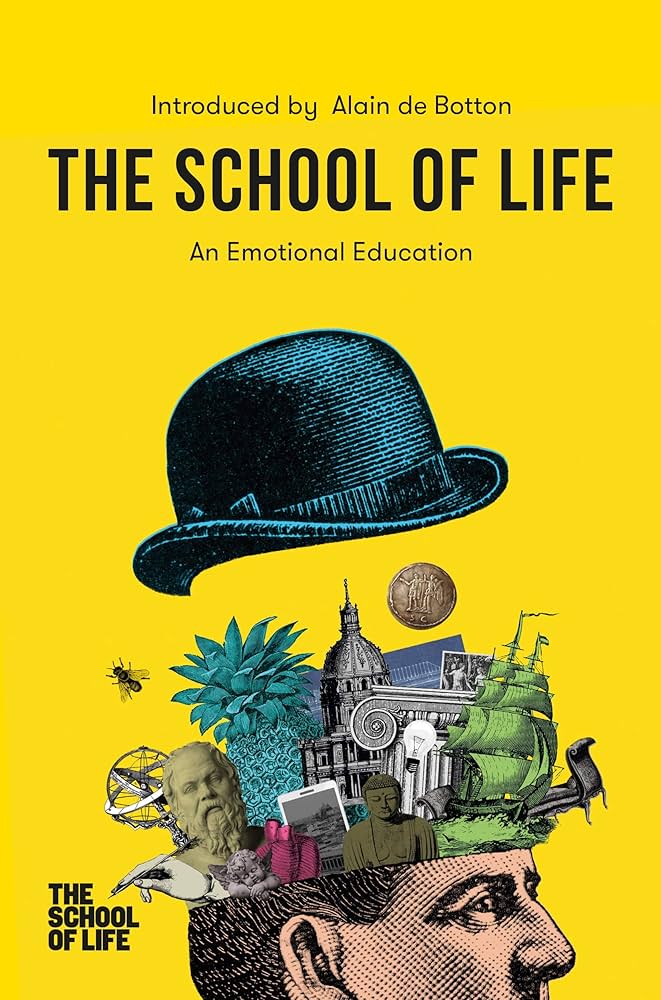
It’s clear that education plays a central role in today’s societies. Children spend at least a decade in school, absorbing knowledge about topics like cloud formations, tectonic plates, and French verb conjugations.
However, one crucial aspect is missing from the modern educational system: emotional intelligence. How much do recent high school or college graduates really understand about effective communication, managing anger, or handling relationships? Probably not much.
This gap arises because we often depend on life’s difficulties and painful experiences to teach us emotional skills. But this doesn’t have to be the case. Let these key concepts be some of your emotional lessons.
Please note that key idea 7 contains candid discussions about sexual intimacy.
In this book, you’ll discover:
We spend our entire lives inside our minds, yet we remain surprisingly unaware of our own inner workings. How often do we feel irritable, guilty, or angry without being able to identify the cause? We may sabotage relationships without understanding why, and many of us choose careers without truly knowing if they fit us.
Our minds are prone to forgetfulness, obsession, and self-deception. We often feel as though we’re reacting to situations in the moment, but in reality, our responses to the present are heavily shaped by our past—especially our childhood.
The key point is this: Our emotional patterns are deeply influenced by our childhood experiences.
One famous psychological tool, the Rorschach test, highlights this. In this test, we’re shown inkblots and asked to describe what we see. The images themselves don’t have a fixed meaning; instead, what we see reflects our emotions and past experiences. A woman raised in a nurturing, forgiving environment might see a cute animal in an inkblot, while a man raised by a controlling parent might see a threatening figure.
Our childhoods have a lasting impact on our emotional lives. Even if we grow up in a loving home, our vulnerable childhood selves can suffer emotional scars that stay with us as adults.
This is understandable, given how long we spend in childhood. While a foal can stand within half an hour of birth, the average person will rely on their parents for 25,000 hours by the time they turn 18. It takes years before we gain the skills to do simple things independently, like crossing the street or writing our names.
But childhood isn’t just a time of physical dependence—it’s also when we’re emotionally underdeveloped. We don’t always grasp the reasons behind our own emotions, let alone the emotions of others. For instance, if we hear our parents arguing, we might think they hate each other, not realizing that conflict can be part of a healthy relationship.
Moreover, our parents’ behavior greatly shapes our emotional development. Dismissive parenting might lead to emotional avoidance, while an overbusy parent might encourage attention-seeking behaviors.
These early experiences may seem minor, but they lay the foundation for significant emotional outcomes later in life.
The emotional struggles we face in adulthood are often shaped by our childhoods, but it can be difficult to trace their origins. Since the sources of our emotions are often hidden or unclear, we may not always receive the understanding or support we need from others. For example, a friend might view us as weak or indecisive without realizing that these traits may have developed in response to a bullying or competitive parent.
We’re often reluctant to acknowledge, or even remember, the events that caused our emotional wounds. Admitting that our childhood experiences have deeply influenced our adult behavior can feel embarrassing. It’s easier to look back with nostalgic fondness rather than confront the truth. But to truly understand our emotional struggles, we must face the past head-on.
The key point here is that emotional maturity requires us to analyze our past.
No one has had a perfectly emotionally healthy childhood, but it’s important to recognize the areas where our upbringing was either nurturing or harmful. To begin, ask yourself these questions: Did I have a caregiver who consistently put my needs before their own? Did my parents avoid negative judgments about me? Did they expect me to always be “good,” or did they allow me the freedom to make mistakes?
Next, assess how deeply your past has affected you. One way to do this is by looking at four key indicators of emotional health:
By reflecting on these key areas, you can gain insight into your emotional wounds and better understand the kinds of healing they may require.
Throughout history, humans have developed many tools to address our shortcomings. We use buckets to hold water that would otherwise slip through our hands, and knives to cut food that our teeth can’t manage. But what about healing our mental wounds—understanding ourselves, learning to trust others, and improving communication? For that, we created psychotherapy.
Psychotherapy offers a safe space to explore our impulses, desires, and fantasies without fear of judgment. While we’re often encouraged to confide in friends, social norms typically discourage burdening them with our emotional struggles. In therapy, however, sharing these inner experiences is not just accepted—it’s encouraged.
Although therapy is not a cure-all for emotional pain, it can significantly improve our lives.
The key takeaway is that therapy and meditation can be effective in helping us manage our emotions.
Even when therapy goes as well as possible, it isn’t a magic solution for unhappiness. No method truly offers that. However, therapy does provide something valuable: a sense of freedom. For example, we may feel compelled to always act cynical or overly cheerful, but therapy helps us realize that we can also be hopeful, fearful, or even change careers. It shows us that what we once saw as a personality flaw was simply a box we trapped ourselves in before we understood the world more fully.
Therapy helps us understand ourselves in relation to our past. For present emotions, however, philosophical meditation is another powerful tool.
Meditation, in general, aims to clear the mind and focus on the present moment. Philosophical meditation, though, has a different approach. Rather than pushing our thoughts aside, it invites us to explore and untangle them.
In this process, we focus on three key questions: First, what are we currently anxious or worried about? Second, what are we upset about—whether that’s sadness, regret, or envy? Third, what are we excited or ambitious about right now?
These questions help us clarify our often confused or muddled thoughts. We don’t always realize how much we’re consumed by worry, sadness, or excitement. Philosophical meditation gives these feelings the space and attention they need to be understood.
Society tends to celebrate winners—who doesn’t enjoy a good success story? But when it comes to failures, most people struggle to know how to respond.
When we fail, we’re often met with well-meaning but generic encouragement to “pick ourselves up,” “be resilient,” or “bounce back.” However, there’s only so much of that we can take. After repeated failures, like years of unsuccessful attempts in politics, we may need to face the reality that certain pursuits just aren’t meant for us.
Modern meritocracies often insist that success or failure is entirely in our own hands—luck or circumstance supposedly has no part. This narrow view has led to unnecessary stress and anxiety. It’s time for a more compassionate and understanding perspective.
The key point here is: We must be kind and generous toward others.
When we read about tragic characters like Hamlet, Antigone, or Anna Karenina, we naturally feel sympathy for them. These stories are about good people facing horrible circumstances, demonstrating that failure can strike anyone. Yet, in our daily lives, we often fail to extend that same generosity toward those around us.
We can shift our behavior by adopting the “weakness of strength” theory, which views people’s flaws as the inevitable downside of their strengths. In other words, every strength comes with its own weakness. For example, we might accept a friend’s chaotic lifestyle because creativity often comes with a certain messiness.
Understanding this theory helps us tolerate other people’s irritating traits with more compassion. But when it comes to their actions, it’s important to consider their underlying motives.
People rarely act out of pure malice; more often, they’re responding to pain. Think about it: we don’t lash out when we’re happy.
So, when someone attacks us, we should be more likely to respond with sympathy than with anger or shame. Those who seek to hurt us are not powerful or dominant—they are often at their weakest. Though challenging, we must remember that those who try to harm us may not need punishment, but our understanding and love.
How do you perceive people who are unfailingly polite? While some may view politeness as insincere or masking ulterior motives, it’s actually a mark of genuine respect for others’ feelings. In today’s world, where bluntness often takes precedence, it might be time to rediscover the power of courtesy.
Politeness reflects a thoughtful restraint – a recognition that not all thoughts or emotions are worth sharing. By focusing on kindness and respect, politeness becomes a cornerstone of charm, helping us connect with others and form meaningful relationships.
The key idea is this: charm flourishes through warmth, politeness, and vulnerability.
However, good manners alone can sometimes come across as cold or detached. To counter this, blend your politeness with empathy. Recognize that just as you might hide your inner struggles behind a composed exterior, others do the same. Warmly polite people actively work to put others at ease. For instance, offer a tired guest an extra cushion or dance with a friend to a song they love, even if it’s unpopular. These small gestures reduce isolation and foster connection.
Shyness, too, can hinder charm, but it’s rooted in feeling different or set apart. The truth is, we all share core experiences like love, anxiety, and struggle. Acknowledging these commonalities – and admitting our own vulnerabilities – can make us more approachable and endearing.
Instead of focusing on achievements or strengths, share relatable truths: how mundane your day was, how anxious you feel, or even how ordinary your life can seem. These admissions create bonds, offering reassurance that everyone is navigating life’s challenges together. Charm thrives when others see not perfection, but humanity.
Emerging in Europe around 1750, the Romantic movement prioritized emotion over reason and spontaneity over caution. While its influence has permeated many areas of life, its impact on how we perceive love has been particularly damaging. Romanticism leads us to believe that love is driven by an irresistible instinct, that marriage can sustain the passion of a whirlwind romance, and that true love requires adoring every aspect of our partner without criticism.
The problem? These notions are far from reality and can harm our relationships.
Romanticism sets us up to chase unattainable ideals, but adopting a more grounded Classical perspective on love could offer a remedy. The Classical view promotes a pragmatic and emotionally mature approach to relationships.
For starters, it encourages us to look beyond instinctual attraction. Why? Because this type of attraction often stems from unresolved issues in our upbringing. Romantic ideals can unconsciously draw us toward partners who replicate the neglect, humiliation, or instability we may have experienced as children. Instead, compatibility should include practical factors like shared values, habits, or attitudes – even agreement on how to clean the kitchen floor.
The Classical perspective also dismantles Romanticism’s demand to love every aspect of our partner. Instead, it suggests we accept that both we and our partners have flaws that can make cohabitation challenging. Acknowledging our own imperfections with humor and grace not only makes us easier to live with but fosters greater understanding in our relationships.
Likewise, instead of ignoring our partner’s shortcomings, we should strive to understand them. Their constant financial stress might stem from a childhood marked by instability, or their messiness could be a reaction against overly strict parenting. By recognizing these roots, we cultivate compassion and build stronger connections.
Romanticism, with its unrealistic ideals, has long misled us about love – and even about sex, as the next discussion reveals.
Romanticism has shaped our views on sex, making it seem like the ultimate expression of love and admiration. A healthy relationship, we’re told, should include frequent, satisfying, and conventional sex, while being free from attraction to anyone else. Yet, these expectations don’t align with reality.
It’s uncomfortable to acknowledge, but maintaining lifelong sexual desire for just one person is rare. It’s entirely possible to love your partner while feeling sexual attraction to someone else or to have conflicting desires, such as a longing for rough or unconventional sex despite leading a kind and gentle life.
At its core, sex is about seeking emotional intimacy and connection. However, Romanticism’s flawed ideals often turn sex into the focal point of relationship issues.
The key takeaway: Emotional disconnection is a root cause of relationship problems.
One common issue stemming from this is infidelity. Affairs are often seen as the ultimate betrayal, with the unfaithful partner cast as a selfish villain and the other as a blameless victim. But the reality is more nuanced. Affairs are frequently driven by a craving for emotional connection rather than pure sexual desire.
Affairs don’t begin at the first flirtation or meeting with someone new – they often have roots in preexisting emotional disconnection. Small, repeated behaviors can build resentment over time, such as publicly embarrassing a partner, dismissing their need for affection, or prioritizing work over quality time together. These patterns can lead a partner to seek the connection they feel is missing elsewhere.
How can we prevent emotional disconnection and its consequences?
The answer lies in addressing frustrations and unmet needs before they escalate. Openly discuss disappointments and desires as they arise. Try starting conversations with phrases like, “I sometimes feel frustrated when…” or “What I’d love you to notice about me is…”
These conversations may feel uncomfortable or even accusatory, but they’re essential. They offer a chance for fair criticism, mutual understanding, and a path to resolving underlying emotional issues before they drive a wedge between you and your partner.
For most of human history, material possessions were sparse. People owned only the bare essentials, such as basic clothing and a few household items. Poverty was nearly universal, and the global economy remained stagnant.
This changed around 1800, when technological advancements and economic growth created opportunities for wealth to increase. Families could suddenly afford previously unimaginable luxuries, like extra clothing, mirrors, or personal combs. With this shift, economies became consumer-driven and capitalist, meeting basic needs with remarkable efficiency. However, this progress hasn’t necessarily led to greater happiness.
The key takeaway is this: Consumer economies aren’t meant to fulfill our deeper emotional needs – and that’s okay.
One frustration with modern economies is their reliance on specialization. This division of labor requires individuals to focus on a narrow set of skills, allowing them to become highly proficient in one area. While this system generates wealth and stability, it limits personal expression and prevents us from exploring all our talents or career possibilities.
Unfortunately, there’s no simple fix for this issue. Specialization inevitably leaves parts of our potential unexplored. However, it does offer significant benefits, such as teaching focus and compromise while providing stability for raising families.
Rather than abandoning capitalism altogether, perhaps we could evolve it. Some argue that capitalism has reached its limit, but instead of discarding it, we could broaden its purpose.
What if capitalism could address not just material needs like food, shelter, and clothing, but also emotional and social needs like friendship, belonging, and autonomy? Imagine corporations that go beyond selling products, offering solutions for building community, supporting child-rearing, or fostering inner peace.
The specifics of such a transformation remain unclear, but this vision represents a promising direction for a more fulfilling capitalist system.
Anxiety is often labeled as a sickness, weakness, or mistake. But it’s none of these—it’s an inherent part of being human. When we reflect on how fragile we are, this becomes clear. Our bodies are delicate systems of organs and tissues that will one day fail us. Our societies, marked by relentless competition and chaos, leave us feeling overwhelmed. And when we seek solace, we often turn to other equally vulnerable humans, who may not always be able to provide the support we need.
The central idea is this: Art and nature offer us a way to find peace amid life’s anxieties.
Society pressures us to stay cheerful and hide our struggles, making our pain feel isolating and abnormal. Art, however, creates a refuge where our suffering is acknowledged and understood. Through its portrayal of love, loss, hardship, or inequality, art mirrors our pain and makes us feel less alone.
In art, we find a silent yet meaningful friendship. Just as we value friends who understand us, art gives us a sense of solidarity. Though it can’t respond, its imagery and stories remind us that our struggles are shared and universal.
Nature, like art, also soothes us, but it does so by placing our troubles into perspective.
Nature reveals life’s inevitable cycles—growth, struggle, decay, and death—showing that we’re all governed by the same unchangeable laws. When we look at something vast and enduring, like a mountain range or the endless sky, we’re reminded of how small we are in the grander scheme. This humbling realization can dissolve the weight of our anxieties.
By confronting the beauty and immensity of nature, our minor concerns fade, and a profound calm takes their place. Both art and nature remind us that while life is fragile and fleeting, we are never alone in our experience of it.
The core idea of this book:
Traditional education neglects to teach us about our emotions, leaving us ill-equipped to handle life’s most significant challenges. To develop emotional maturity and intelligence, we must delve into our pasts to uncover the roots of our current pain. In relationships, we should embrace a mindset of generosity and empathy. In our careers, it’s essential to accept some level of compromise, recognizing that professional fulfillment may always feel incomplete.
Practical advice: Learn to value the simple and inexpensive.
Consider this: Christopher Columbus, Catherine the Great, and Charles II all shared a fascination with pineapples. In their time, pineapples were a luxury, costing the modern equivalent of £5,000 for a single fruit. This exclusivity made people treasure them deeply—writing poems, building monuments, and marveling at their rarity. Today, pineapples are inexpensive, typically priced at £1.50, and their charm has faded as their accessibility has grown.
This example reminds us to appreciate beauty and significance in even the most ordinary or affordable things, rather than letting their cost determine their value. It’s a way to find joy in the everyday and reshape how we perceive worth.