In the forthcoming key ideas, you will discover:
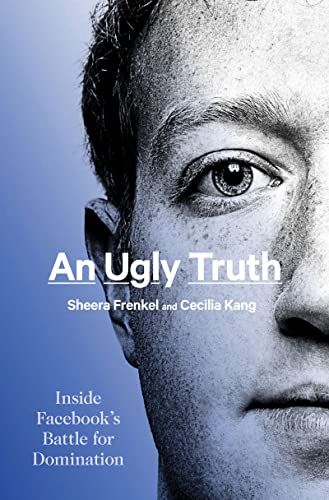
Facebook’s rapid ascent was nothing short of astonishing. Within a mere ten years, this project that originated in a college dorm room expanded from a modest campus experiment into a global social media juggernaut. However, in recent years, the company’s reputation has taken a darker and more troubling turn. It is now infamous for its privacy concerns, the spread of misinformation, and its unsettling political affiliations.
This book offers a comprehensive exploration of the intricate processes that led Facebook to become one of the world’s most contentious corporations. Drawing from meticulous investigative journalism, this narrative delves into the reasons and mechanisms behind the platform’s involvement in one scandal after another. Filled with startling revelations and unsettling realities, this timely analysis suggests that Facebook may have had deep-seated issues from its very inception.
In the forthcoming key ideas, you will discover:
On December 8, 2015, a new video surfaced on Facebook featuring Donald Trump, who was then just one of several presidential contenders, delivering an impassioned speech. In this speech, he vehemently criticized terrorists and immigrants and went as far as to advocate for a complete and comprehensive ban on Muslims entering the United States.
This video quickly gained widespread attention, going viral within a matter of hours. It was shared 14,000 times and received over 100,000 likes. For many Facebook employees, Trump’s anti-Muslim rhetoric constituted hate speech and was a clear violation of the platform’s terms and conditions. Consequently, they called for its removal from the site.
However, Mark Zuckerberg held a different perspective. After a meeting with Joel Kaplan, the Vice President of Public Policy at Facebook, Zuckerberg concluded that the speech was too “newsworthy” to be taken down. Consequently, the video remained accessible on the platform, where it continued to be shared extensively.
The key message here is: From the very start, Zuckerberg valued engagement over ethics.
Even during his time as a Harvard undergraduate, Mark Zuckerberg’s approach to social networking stirred controversy. His initial platform, FaceMash, was a short-lived blog where he allowed users to rank the attractiveness of his female classmates. While it gained popularity, it also faced significant criticism from student groups. In response to the backlash, Zuckerberg decided to embark on a new, less provocative project, leading to the creation of Thefacebook.
Launched in 2004, this early version of what we now know as Facebook had limited features, allowing students to create personal profiles, connect with other users, and exchange messages. Despite its simplicity, it quickly gained immense popularity on college campuses. By 2005, Thefacebook had amassed over one million members, with most users logging in multiple times a day. The platform’s success led Zuckerberg to leave Harvard, relocate to Palo Alto, and dedicate himself full-time to running Facebook.
During these formative years, Facebook experienced rapid growth and was hailed as the next big thing in Silicon Valley. The hype surrounding the platform was so substantial that in 2006, Yahoo attempted to acquire the company for a billion dollars. However, Zuckerberg declined the offer. Despite his youth and somewhat shy and awkward demeanor, he had ambitious plans for the company. Rather than prioritizing immediate profits, his focus was on expansion. He consistently challenged his small team to enhance the site’s engagement and entertainment value.
In September 2006, Facebook introduced a groundbreaking feature called the News Feed. Initially met with resistance from users due to information overload and privacy concerns, the News Feed yielded favorable results from Facebook’s metrics. It encouraged longer user sessions and greater content sharing, aligning with Zuckerberg’s strategic goals.
Zuckerberg didn’t particularly enjoy engaging in casual conversations, but in December 2007, he summoned the courage to attend a Christmas party hosted by a Yahoo colleague. However, his motivation for attending the event wasn’t to revel in holiday festivities. Rather, he had a specific person in mind – a woman named Sheryl Sandberg.
Sheryl Sandberg had already earned a stellar reputation as a savvy businesswoman. Her impressive background included degrees from Harvard and prior experience at the World Bank. At the time, she held the position of Vice President at Google, considered one of Silicon Valley’s premier startups.
During the party, Zuckerberg and Sandberg engaged in a lengthy discussion about business that lasted for over an hour. In the subsequent weeks, they had several more meetings. By March 2008, Facebook proudly announced the appointment of Sheryl Sandberg as its new Chief Operating Officer.
The key message here is: Sandberg transformed Facebook into an advertising powerhouse.
In many regards, Sheryl Sandberg was precisely what Facebook required. While Mark Zuckerberg was deeply engrossed in optimizing the site’s technology and user experience, he paid less attention to other aspects, such as profitability. In contrast, Sandberg possessed a strong business acumen. During her tenure at Google, she had nurtured the company’s modest advertising operation into a multibillion-dollar success. Now, she aimed to replicate this achievement at Facebook.
Sandberg perceived Facebook as uniquely positioned for success in the realm of online advertising. While Google primarily sold ads based on user search queries, Facebook had access to a much broader spectrum of user data. This wealth of information enabled the company to deliver highly targeted ads based on user activities. Moreover, the interactive nature of the platform encouraged users to directly engage with companies and share advertisements with their friends.
To harness these advantages, Facebook implemented strategies to effectively monetize user data. In 2009, the platform introduced the “like” button, simplifying user reactions to posted content.
Facebook then utilized these “likes” to offer tailored content and, more importantly, collect user preferences for sale to advertisers. The company also made adjustments to its privacy settings, introducing new settings that were intricate and puzzling, often misleading users into sharing more personal information.
Privacy advocates, including the Center for Digital Democracy, took notice of Facebook’s expanding exploitation of user data. In December 2009, this organization filed a complaint with the Federal Trade Commission (FTC), leading to Facebook’s agreement to undergo regular privacy audits. However, in the subsequent years, the government conducted minimal oversight or regulation of the company’s actions.
Officially, Sonya Ahuja held the position of an engineer at Facebook. However, unofficially, she was often referred to as “the ratcatcher.” Her role within the company was straightforward – whenever a potentially damaging story about Facebook made headlines, her responsibility was to identify and terminate the individual responsible for the leak.
The year 2016 kept the ratcatcher occupied. Gizmodo, a widely-read tech blog, had been publishing a series of damning articles shedding light on internal conflicts within Facebook. These reports alleged that, as the American election intensified, users’ News Feeds were increasingly populated with false stories and provocative hate speech. According to Gizmodo, Facebook employees had expressed a desire to address this troubling trend.
It was undeniable that the reporting held truth. In its pursuit of dominance, Facebook had become a significant influencer in the realm of political discourse, and the company grappled with the challenges that came with this newfound role.
The key message here is: Facebook tried and failed to remain politically neutral.
By 2016, millions of individuals in the United States and across the globe had turned to Facebook as their primary source of news and information. While this was advantageous for the company’s financial performance, it brought about its own set of complexities. Notably, Facebook’s News Feed algorithm prioritized posts with high levels of engagement, and regrettably, these tended to be inflammatory and sensationalist. Users frequently encountered content that reaffirmed their preexisting beliefs, regardless of its accuracy.
To address this issue, the company introduced a feature called “Trending Topics.” This feature allowed Facebook’s content team to have some degree of control over the content that appeared in users’ feeds. In May 2016, Gizmodo published an article alleging that the platform used this tool to suppress posts with right-wing perspectives. As expected, this story gained traction in conservative media circles. Republicans were already suspicious of Facebook’s potential liberal bias, and this incident seemed to confirm their suspicions.
In an attempt to mitigate the backlash, Mark Zuckerberg held meetings with prominent conservative figures such as Glenn Beck from Blaze TV and Arthur Brooks from the American Enterprise Institute. During these meetings, the Facebook founder reiterated his commitment to free speech and asserted that the company was striving to maintain political neutrality. However, this strategy only yielded partial success – conservatives continued to harbor suspicions, while liberals were displeased with what they viewed as appeasement.
Meanwhile, Facebook’s threat intelligence team detected a concerning new trend. It appeared that Russian hackers were utilizing the platform to disseminate false information about Democratic candidates. While this activity didn’t technically violate Facebook’s rules, some hackers were also sharing emails and other stolen data from the Democratic National Committee. The team took action by shutting down some of these unauthorized accounts, but the damage had already been done, with many of the posts garnering national attention.
Donald Trump’s unexpected victory in the presidential election caught much of the nation off guard, including Facebook. In the immediate aftermath of the election, Mark Zuckerberg and his team faced the challenge of comprehending the new political landscape.
One aspect of this challenge was establishing a relationship with the incoming administration, which had the potential to be adversarial. To navigate this, the company made the strategic move of hiring Corey Lewandowski, who had previously served as Trump’s campaign manager, as a consultant.
This decision was met with mixed feelings among Facebook employees, as the prospect of collaborating with the Trump administration was surreal and unpalatable to many. However, in the subsequent months, an even more troubling realization began to emerge. As Facebook conducted an internal examination of its role in the election, it became increasingly apparent that the company may have inadvertently contributed to Trump’s election victory.
The key message here is: Facebook avoided taking responsibility for widespread election meddling.
In the aftermath of the election, Facebook’s Head of Cybersecurity, Alex Stamos, initiated Project P, an internal investigation aimed at uncovering any external entities that might have exploited the platform for political propaganda. Stamos and his team meticulously examined thousands of political advertisements purchased during the election, searching for patterns indicative of coordinated political campaigns. This investigation ultimately led them to the Internet Research Agency (IRA).
Situated in St. Petersburg, the IRA is an organization dedicated to advancing Russian political interests. Throughout the 2016 campaign, it invested over $100,000 in Facebook ads promoting extreme positions on both ends of the political spectrum. These ads gained widespread popularity and were shared to the extent that they reached a staggering 126 million Americans. It is plausible that operations like the IRA’s played a role in influencing the election’s news coverage and ultimate outcome.
Initially, Facebook tried to downplay these discoveries, as the company was hesitant to become entangled in a political scandal. However, in March 2018, a scandal did erupt. The New York Times reported that Cambridge Analytica, a UK consulting firm, had exploited a security vulnerability to clandestinely acquire data from up to 87 million Facebook users. Subsequently, the firm sold this data to the Trump campaign for use in crafting targeted political advertisements.
This revelation reignited concerns regarding Facebook’s privacy practices, causing the company’s stock price to plummet by 10 percent. Mark Zuckerberg was summoned to testify before Congress, but during the hearings, many lawmakers displayed a lack of technological literacy, and Zuckerberg skillfully avoided making any self-incriminating statements. By the end of the day, Facebook’s stock price had rebounded, and it appeared that the company might escape significant accountability.
In August 2017, Sai Sitt Thway Aung, a soldier serving in the 99th Light Infantry Division of the Burmese military, activates his phone and accesses Facebook. With caution, he composes a new post expressing his fury toward Muslims and his aspiration to expel them from his homeland.
Aung’s sentiments are not unique; they are echoed across Myanmar as individuals post and disseminate derogatory content about the Rohingya, the Muslim minority in the country. This surge of hatred eventually leads to acts of violence. In the ensuing months, over 24,000 Rohingya lose their lives, and hundreds of thousands are forced to seek refuge in Bangladesh.
Subsequently, a United Nations fact-finding team investigates the conflict and concludes that Facebook played a pivotal role in exacerbating racial tensions in the region, ultimately contributing to a full-scale genocide.
The key message here is: Facebook’s lax content moderation contributed to real-life violence.
As of August 2013, Facebook had achieved a remarkable milestone, boasting more than one billion users. Nevertheless, Mark Zuckerberg had grander ambitions in mind, aiming to extend his platform’s reach to encompass billions more individuals. To realize this objective, the company needed to extend its influence beyond the affluent Western nations where it was already prevalent. To accomplish this, Zuckerberg initiated the “Next One Billion” project, an initiative aimed at expanding internet access and Facebook’s presence in developing countries.
While the project did achieve its goal of acquiring more Facebook users, it also brought about unintended repercussions. Facebook had not foreseen how its platform would be utilized in these new contexts, nor had it hired an adequate number of staff to moderate the site in the numerous new languages it was being employed in. Consequently, when radical anti-Muslim Buddhists started disseminating anti-Rohingya propaganda, the company was ill-prepared – at least initially.
As early as 2014, human rights activists had alerted Facebook to the perilous hate speech present on its platform. Matt Schissler, an activist in Myanmar, even made the journey to the company’s headquarters to caution its staff about the escalating calls for violence. Regrettably, these appeals went unheeded. Despite his efforts, Facebook took minimal action to curb the inflammatory rhetoric, and the Rohingya population bore the brunt of the consequences.
This avoidable tragedy, coupled with the Cambridge Analytica scandal and other highly publicized blunders, began to undermine Facebook’s popularity. It was no longer considered the hottest company in Silicon Valley, and new talent was seeking opportunities elsewhere. Consequently, in July 2018, Mark Zuckerberg made a significant announcement, declaring himself a “Wartime CEO” and committing to take a more prominent role in the company’s daily operations. Over the subsequent year, he aimed to steer his company back on course.
By May 2019, Mark Zuckerberg had grown accustomed to facing unfavorable media coverage. However, despite his resilience, a recent op-ed published in the New York Times felt like a betrayal. The piece was authored by Chris Hughes, one of Facebook’s early co-founders, and it bore the title: “It’s Time to Break Up Facebook.”
Hughes had departed from Facebook a decade earlier and had subsequently founded the Economic Security Project, a progressive think tank. In his article, he contended that Facebook had expanded at an alarming rate, becoming excessively large and powerful. Hughes alleged that the company had stifled competition, been reckless with user data, and essentially operated as a harmful monopoly.
Zuckerberg had every reason to be concerned, as Hughes was just the latest in a series of politicians, academics, and consumer advocates who were urging the government to disassemble Facebook.
The key message here is: Facebook made many enemies with its anticompetitive practices.
Facebook’s rapid expansion was, in part, driven by a consistent strategy of acquiring smaller competitors. At the time of Chris Hughes’s op-ed, the company had purchased nearly 70 other firms. Many of these acquisitions were relatively inexpensive, costing less than $100 million, but there were also significant mergers. In 2012, Facebook acquired the photo app Instagram for $1 billion, and in 2014, it spent $19 billion to acquire the messaging app WhatsApp.
These acquisitions propelled Facebook to an unprecedented user base of 2.5 billion people worldwide and granted the company access to an immense volume of user data. Although Mark Zuckerberg initially pledged to allow each acquired operation to maintain relative autonomy, he eventually decided to integrate the services more deeply. While the various apps still appeared separate on the surface, their underlying infrastructure became intricately interconnected.
According to legal scholars Tim Wu and Scott Hemphill, this merger strategy was primarily an attempt to complicate any potential antitrust action. By blending the services together, Facebook could argue that a government-mandated breakup would be excessively complicated. Nevertheless, this move did not alter the political landscape, as politicians like Elizabeth Warren and Bernie Sanders continued to make the regulation of Facebook a common talking point as the 2020 election approached.
Meanwhile, Facebook continued to face political missteps. Despite Mark Zuckerberg and Sheryl Sandberg touting new moderation policies, the platform continued to encounter problems. Throughout 2019, controversial deepfake videos circulated on the platform, including an embarrassing video of House Speaker Nancy Pelosi, a longtime ally of Silicon Valley. When Zuckerberg chose not to remove the clip, Pelosi turned against the company, leaving Facebook with few friends in Washington, D.C.
During the summer of 2019, Mark Zuckerberg had a hectic schedule. Under the guidance of Joel Kaplan, Nick Clegg, and other experts in Facebook’s public policy, the CEO spent several months networking with influential figures in the political sphere. He held meetings with Republican Senator Lindsay Graham, conservative commentator Tucker Carlson, and ultimately, President Trump himself.
The meeting with President Trump, which took place in the Oval Office while sipping on Diet Cokes, proceeded without major issues. Zuckerberg complimented Trump on his impressive presence on social media, and in return, Trump became more receptive to Zuckerberg. Following the meeting, Trump even posted a tweet celebrating the occasion.
Although this controversial meeting raised concerns among many Facebook employees, Zuckerberg appeared unperturbed. After all, he recognized the importance of cultivating influential allies in high-ranking positions to safeguard Facebook’s future.
The key message here is: Facebook faltered to rebrand itself as a bastion of free speech.
Zuckerberg’s meeting with Trump aimed to shift the perception of Facebook. He wanted the president and Republicans to view his company as an American asset, particularly in light of growing competition from Chinese platforms like WeChat and TikTok.
However, this wasn’t his sole strategy. He also sought to reframe Facebook’s lenient content moderation as a positive. In preparation for the 2020 campaign season, Facebook declared a hands-off approach to fact-checking or regulating political advertisements, sparking criticism from politicians, advocacy groups, and concerned citizens worried about the spread of misinformation in another election.
To counter this backlash, Zuckerberg delivered a high-profile speech at Georgetown University in Washington, DC. In his speech, he emphasized Facebook’s commitment to free speech, falsely claiming that the platform’s founding purpose was to facilitate political discourse regarding the 2003 Iraq War. He drew puzzling parallels between online posting and the Civil Rights Movement.
The speech received widespread criticism, including from organizations like the Anti-Defamation League and prominent congresswoman Alexandria Ocasio-Cortez. Sandberg later attempted to defend Zuckerberg’s new stance in an interview with journalist Katie Couric, but her efforts failed to provide a convincing case for Facebook’s policies. After a series of missteps, the public had grown weary of the negative consequences associated with the company, and further challenges lay ahead.
Once more, President Trump takes the stage, delivering another press conference in April 2020 as the COVID-19 pandemic sweeps across the globe. In a characteristic departure from the topic at hand, the president suggests that consuming household disinfectants could serve as a cure for the virus.
Predictably, the video quickly appears on Trump’s Facebook page, despite technically violating the platform’s policy against spreading medical misinformation. Since the onset of the pandemic, the company has been more diligent in combating false health-related claims. Nevertheless, a dilemma arises – how should Facebook handle this situation? Should they remove the President’s post?
Once again, Zuckerberg and his team choose to prioritize the principles of free speech, allowing the post to remain, even with the misinformation it contains.
The key message here is: Multiple crises push Facebook to reevaluate its free speech absolutism.
The spring of 2020 brought about a significant shift in the realm of online content moderation. The emergence of the COVID-19 pandemic and the nationwide protests following George Floyd’s murder ignited a surge in impassioned rhetoric, prompting social media platforms to take action. In May, Trump posted a Tweet implying that protesters should face violence. In an unprecedented move, Twitter classified the post as dangerous.
However, Zuckerberg chose not to take any action in response. This decision led to outrage among Facebook employees, with many participating in a digital walkout, and 33 of the company’s founding employees signing an open letter denouncing Facebook’s stance. By June, even major advertisers were growing weary of the negative publicity, with prominent companies like Verizon, Starbucks, and Ford initiating a one-month boycott of the platform.
Trump’s posts were not the sole issue at hand. Facebook’s new private group feature had also become a breeding ground for hate speech, conspiracy theories, and right-wing militia organizations, causing considerable problems. Then, on January 6, a violent mob stormed the Capitol in an attempt to overturn the recent election. It became apparent that many of the participants had spent significant time organizing and posting on Facebook, particularly in unmoderated group pages.
Eventually, the company changed its stance. Facebook announced a more stringent policy against dangerous posts and suspended Trump’s account for several weeks. Furthermore, the company introduced The Facebook Oversight Board, an independent panel tasked with ruling on content-related issues. While ostensibly designed to enhance oversight, critics argue that it’s merely an attempt to shift responsibility away from the company’s executives. For Facebook, the future remains uncertain.
The key message in this book is that:
Throughout its history, Facebook has consistently found itself embroiled in controversy. Mark Zuckerberg’s relentless pursuit of continuous growth, the implementation of addictive user engagement algorithms, and lenient content moderation policies have collectively turned the platform into an effective amplifier for extremist perspectives and political strife. Although the company has taken steps to address some of these issues, there is still a significant amount of work left to be accomplished. The future of this social media giant, whether it will enhance its services or decline in prominence, remains uncertain.