In the ensuing key concepts, you will discover:
Recall the year 2016. Can you recollect the moment when Colin Kaepernick, the quarterback of the San Francisco 49ers, knelt during the national anthem of the United States as a protest against police brutality and racial discrimination?
Kaepernick’s action ignited widespread discussions. Some regarded it as a form of peaceful and understated protest, while others perceived it as a disrespectful publicity stunt.
Each of these perspectives on Kaepernick’s actions represents a frame, a specific standpoint that shapes how we perceive a particular issue. Frames influence our interpretation of the significance of a matter. For example, the frame of racial equality, as well as the frame of racism itself, are notable examples.
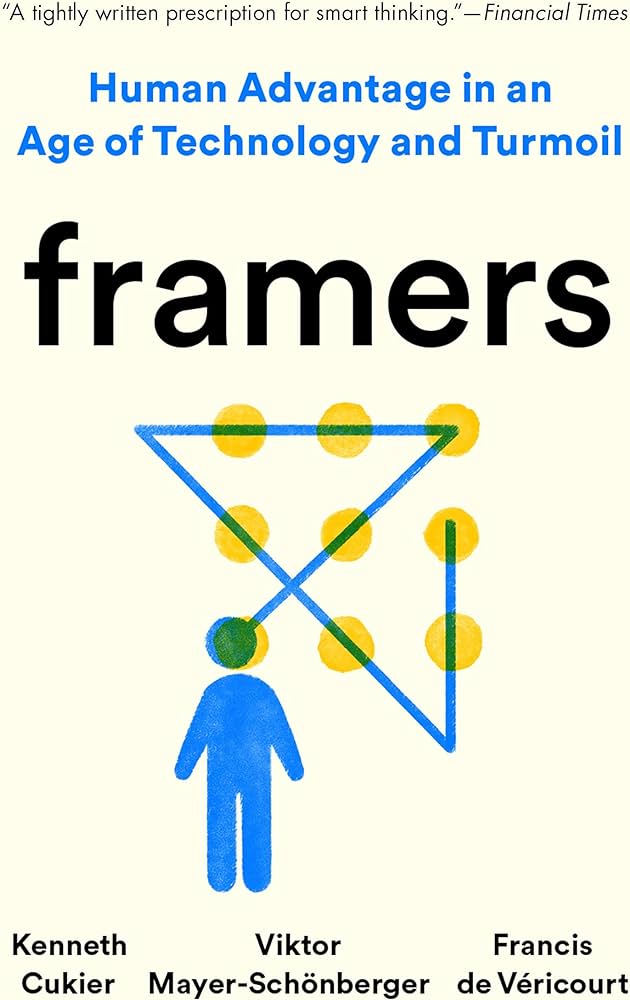
For the majority of individuals, framing occurs instinctively. However, it doesn’t have to be automatic. In fact, our future hinges on our capacity to actively engage in framing and do so effectively. This is the central theme of this book.
In the ensuing key concepts, you will discover:
Since their discovery in 1928, antibiotics have played a crucial role in saving numerous lives. However, their extensive use has led to an unforeseen and alarming consequence: certain bacteria have developed resistance to them. Consequently, many individuals now succumb to infections that were once treatable.
The quest for alternative antibiotics to replace these ineffective ones proved to be an arduous challenge for scientists. While new molecules similar to the old antibiotics showed promise initially, bacteria could rapidly and easily adapt to them, rendering them ineffectual.
Fortunately, Regina Barzilay, an artificial intelligence professor at MIT, had an innovative approach to reframe the problem. In doing so, she underscored a uniquely human capability.
The key message here is: Solving future problems will require the human capacity for framing
Barzilay introduced a new perspective: What if she focused on identifying substances that could exterminate bacteria, rather than merely attempting to recreate antibiotic-like molecules?
In pursuit of this question, Barzilay and her team trained a computer algorithm to sift through a series of molecules and pinpoint potential bacteria-killing agents. In early 2020, they successfully identified one such molecule, now known as halicin, with the potential to combat drug-resistant diseases.
By reframing the problem of bacterial resistance to antibiotics and harnessing the power of AI, Barzilay effectively addressed a challenging issue. However, the subsequent news headlines celebrated AI as the hero, overlooking the most crucial aspect of the story: Barzilay’s ability to reframe the problem. Until then, researchers had approached the problem within the confines of conventional drug development. It was Barzilay and her team – not just the algorithm – that devised the new perspective, selected the compounds for the computer’s training, and utilized their biological expertise to confirm halicin’s potential.
\While AI can make objective decisions, it lacks the capacity to frame issues. Therefore, relying solely on computers to solve all our future problems is not viable. However, exclusively depending on human intuition driven by emotion can lead to unfavorable outcomes, such as populism and cancel culture.
The solution lies in harnessing the human capacity to frame. Framing enables us to perceive our most significant challenges – such as climate change, pandemics, and systemic oppression – from fresh perspectives. By viewing these issues differently, we may ultimately find solutions.
In the 1930s, the Soviet Union attempted to implement communist principles in agricultural practices by embracing Lysenkoism, a theory of plant genetics rooted in Marxist-Leninist ideology. Lysenkoism endorsed various unfounded assertions, such as the notion that crops could be densely planted without competing for resources, much like how individuals within the same social class in a communist society were believed not to compete with each other.
This policy, unsurprisingly, proved to be a catastrophic failure. It serves as a vivid illustration of framing gone astray. The Soviet Union extended cultivated land by a hundredfold, yet the yields withered or perished, resulting in widespread famine and loss of life. The nation had taken an economic frame – communism – and applied it to agriculture, resulting in devastating consequences.
Framing continually influences our world, both in significant and subtle ways, underscoring the importance of getting it right.
The key message here is: Frames infuse every aspect of our lives.
Frames, whether consciously acknowledged or not, hold significant real-world implications. A recent case in point is the COVID-19 pandemic, where different countries’ framing of the crisis led to varying outcomes. New Zealand, for example, approached COVID-19 in a manner similar to its response to the 2002 SARS outbreak. Although New Zealand hadn’t experienced SARS, it had developed disease-monitoring systems and policies that could be adapted to address COVID-19 effectively.
In contrast, Britain framed COVID-19 as a disease resembling a mild seasonal flu. Instead of implementing an aggressive testing and contact tracing strategy, Britain opted for a herd immunity approach, allowing the virus to spread through the population until a certain percentage gained immunity.
The consequences of these distinct frames were evident: by early June 2020, New Zealand had achieved COVID-free status, while Britain had one of the highest fatality rates globally.
Frames not only aid our understanding of the present but also illuminate what might not yet be apparent. For example, in 2010, scientists applied Einstein’s framework of general relativity to predict the orbital paths of two black holes engaged in a gravitational dance.
In essence, frames serve as tools for interpreting the world. The next few key ideas will delve deeper into the components that constitute a frame and their tangible benefits.
Ben Bernanke, a renowned economist, played a crucial role in averting a complete catastrophe during the 2008 financial crisis. At the time, the situation appeared grim for banks, and policymakers were working within the framework that providing bailouts to individual firms might create undesirable incentives for others.
However, Bernanke held a different perspective. His research had delved into the 1929 market crash that led to the Great Depression, granting him insights into the cause-and-effect connections between the central bank’s response and the harm it inflicted on the economy. With this understanding, Bernanke directed the Federal Reserve to engage in asset purchases from banks, thereby injecting them with fresh capital they could use for lending, which, in turn, would stimulate the economy.
Bernanke’s emphasis on causality proved to be paramount. It enabled him to grasp the interconnections and relationships among various elements within the system and, consequently, how to frame and address the problem effectively.
The key message here is: Well-reasoned causal inferences help us frame better
Understanding causality is not limited to humans; it extends to various creatures. For instance, a dog can learn that sticking out its paw upon command results in a treat. However, the dog typically can’t generalize this knowledge to anticipate that other friendly behaviors might also lead to treats.
Both animals and artificial intelligence (AI) share the limitation of being unable to envision causal connections that aren’t immediate and apparent. AI, in particular, requires predefined causal frameworks through coding before it can perform as intended.
In contrast, humans excel at this. We can experience burning our hand on a hot stove and readily comprehend that touching other heated surfaces will yield the same painful result. Furthermore, we can take it a step further by linking our experience of burnt skin to how various substances melt when exposed to fire.
Admittedly, there are times when our causal inferences are inaccurate. For instance, if we observe a rooster crowing each morning before the sun rises, we may develop a causal belief that the rooster’s crowing causes the sunrise. However, if the rooster dies, and the sun still rises, our assumption is proven wrong.
Improving our ability to uncover concealed causal mechanisms enhances our framing skills. When making a causal inference, it’s beneficial to question the reasons behind it. Consider the assumptions or explanations you are working with, and be open to revising them if they are not firmly rooted in reality.
In the final match of the 2018 World Cup, French striker Antoine Griezmann was preparing to take a free kick. His shot, however, brushed the top of Croatian defender Mario Mandžukić’s head, diverting the ball just beyond the goalkeeper’s grasp and into the goal. The referee overseeing the game marked it as an “own goal” for Croatia.
To reach this decision, the referee envisioned an alternative scenario, a counterfactual, in which Mandžukić had not touched the ball. In this imagined version of events, the referee determined that the goalkeeper would have easily caught the ball, attributing the goal to Mandžukić instead of Griezmann. Counterfactuals like this provide insights into how things might have been different and offer glimpses into potential futures. They constitute the second fundamental element of framing.
The key message here is: Counterfactuals enable us to consider alternate realities.
Thanks to counterfactuals, we gain insight into the entire spectrum of potential cause-and-effect relationships. For instance, picture a scenario where you’ve set aside the last chocolate chip cookie for yourself. However, when you enter the kitchen and open the cookie jar, it’s empty! Initially, you assume your child must have eaten it and start pointing fingers.
But then, you contemplate an alternative possibility – perhaps it was actually your spouse who yielded to the irresistible temptation. Counterfactuals serve as a check against hastily assigning blame or making judgments based on potentially incorrect gut instincts. This is crucial not only in family dynamics but also for the well-being of our world.
This is not an overstatement. Think back to the Cuban Missile Crisis of 1962 when President John F. Kennedy and his advisers received intelligence that the Soviet Union was deploying nuclear missiles in Cuba. The military recommended an immediate large-scale strike. However, the president recalled that such rash action had backfired in the recent Bay of Pigs incident, and he was reluctant to repeat that mistake. Instead, Kennedy tasked his advisers with generating alternative perspectives on the situation.
One of the options they proposed – implementing a blockade instead of launching an attack – was the one he chose, ultimately preventing nuclear warfare. Counterfactuals enable us to consider different choices and enhance our decision-making. They broaden our outlook and, ultimately, strengthen our capacity for causal reasoning.
The architect Frank Gehry once famously stated that his most challenging task was one where he was tasked with constructing a house without any limitations or constraints whatsoever. Paradoxically, this assignment left him feeling paralyzed because the sheer number of options made it difficult to make decisions.
Conversely, when the children’s author Theodor Seuss Geisel, known as Dr. Seuss, was presented with the challenge of writing a book using only 50 distinct one-syllable words, he created the incredibly popular “Green Eggs and Ham.”
Innovators often embrace limitations, regulations, and restrictions because, in a less obvious way, these constraints serve as a wellspring of creativity. They do this by providing boundaries within which creative thinking can flourish. These constraints constitute the third and final element of framing.
The key message here is: Constraints helpfully restrict the number of possible frames.
Constraints are not inherently fixed in a given challenge; instead, it’s your responsibility to determine which ones to retain and which ones to modify. The process begins by identifying the “hard” constraints, those that are genuinely essential and unalterable. Afterward, you can introduce or remove “soft” constraints, which can be more flexible. This is a challenging task, but you can facilitate the process by considering three guiding principles: mutability, minimal change, and consistency.
The mutability principle revolves around examining the aspects of a situation that you believe can be altered. For instance, if you’re running late for a meeting and need to find a quick way to get there, you won’t assume an ideal scenario where every traffic light turns green. Instead, you’ll explore various transportation options.
Then, there’s the minimal change principle, which emphasizes minimizing the alterations made to a set of constraints. This approach reduces the risk of investing time in unrealistic and extravagant possibilities
Are you familiar with the saying, “If all you have is a hammer, everything looks like a nail”? Often, we have a similar relationship with frames. We tend to rely on the frames we are familiar with and have used before. This isn’t necessarily a negative thing; in fact, it can often lead to quick decision-making and positive outcomes. However, the drawback is that consistently relying on the same frames limits our ability to shift perspectives and approach a situation differently when needed.
It’s important to understand that reframing is far from effortless. Nevertheless, challenging established frames and creating new ones is sometimes the only way to find a solution to a problem.
The key message here is: Choose a reframing strategy based on the situation at hand.
How can you approach the process of reframing? There are three primary methods: repertoire, repurposing, and reinvention.
Repertoire is the simplest among the three and is the one most commonly employed. It involves reviewing the frames you are already familiar with and selecting the one that best suits the current situation. An illustrative example of this is seen in the case of Ben Bernanke, who drew on his understanding of the Great Depression to frame the 2008 financial crisis effectively.
The second method of reframing is by repurposing a frame from another industry or field. This approach is beneficial when you need to reframe a situation but lack a suitable model within your existing repertoire.
Ingvar Kamprad employed this type of reframing when he established the furniture company IKEA in the 1950s. Kamprad observed that the traditional approach to furniture involved purchasing items as long-term investments to be passed down through generations. However, the broader trend in consumerism was shifting towards disposable, budget-friendly products. Kamprad took this frame from consumerism and applied it to the furniture industry.
Repurposing is efficient, but there are instances where we encounter novel situations that resist the frames we are familiar with or those found in other domains. In such cases, the only option is to reinvent a frame.
Reinvention is by far the most challenging method of reframing and is often recorded in history books. Charles Darwin, for example, revolutionized our understanding of living beings by framing them all as descendants of common ancestors. This completely transformed our comprehension of how life on Earth evolves and changes.
Regardless of the reframing method you choose, each requires certain key qualities: open-mindedness, comfort with uncertainty, and a willingness to challenge the status quo. It’s essential to nurture these traits.
In 1959, there were three times as many technology companies centered around Boston’s Route 128 as there were in Silicon Valley. However, by 1990, this situation had completely reversed. What led to this shift?
The difference can be attributed to the contrasting philosophies of East Coast and West Coast tech companies. East Coast tech firms prioritized stability over innovative thinking. They operated with highly formal and hierarchical structures, and employees were incentivized to adhere to the directives set by corporate leadership.
Conversely, on the West Coast, the business landscape was characterized by numerous small, decentralized companies that highly valued innovation and originality. These organizations encouraged employees from various companies to collaborate and exchange ideas freely.
This example underscores the importance of embracing frame pluralism for individuals, organizations, and society as a whole. Frame pluralism refers to the presence of a wide and diverse range of perspectives, rather than a homogeneous and limited set of viewpoints.
The key message here is: Frame pluralism ensures individual, organizational, and societal progress.
On a broader societal scale, when states suppress pluralism, it leaves society more vulnerable. This phenomenon of cognitive oppression was evident in the fascist and communist societies of Europe during the 1930s and ’40s, the Red Scare in the United States in the 1950s, and the genocide in Rwanda during the 1990s. All of these instances led to fear and violence. Thus, there is a strong argument for upholding frame pluralism at the societal level because an open and tolerant society tends to function better for all its members and fosters progress.
Similarly, within organizations, teams that comprise members with diverse backgrounds, viewpoints, and perspectives are better equipped to tackle challenges effectively. It’s advisable to encourage team members to independently reflect on an issue before convening as a group for discussion. This approach helps guard against groupthink and enables the organization to benefit from a wide array of perspectives.
Moreover, frame pluralism is also crucial for individuals. When individuals possess a vast and diverse set of frames in their mental toolkit, they make more informed decisions.
A practical way to nurture pluralism is by engaging in cognitive foraging. This term suggests actively seeking different ways of thinking and gaining alternative perspectives on the world.
The key message in this book is that:
Whenever we examine or perceive an issue from a specific perspective, we are essentially involved in the act of framing. Frames consist of three fundamental elements: causality, counterfactuals, and constraints. We have the capacity to manipulate each of these elements to enhance, reshape, and construct frames. It is imperative for all of us to enhance our framing skills as this will enable us to effectively address the intricate challenges that lie ahead.
Additionally, here’s another piece of actionable advice: time your reframes judiciously.
The world may not always be receptive to new frames. For instance, around 1900, one-third of all automobiles were electric, but electric cars lost popularity until the resurgence initiated by Tesla in the early 2000s. Tesla’s success was partially attributed to impeccable timing. Advancements in electric motors, battery technology, and computing had occurred, and the public perception of gas-powered cars had shifted to being environmentally detrimental. Therefore, when contemplating a new frame, it’s essential to evaluate whether the prevailing circumstances have evolved to the point where the world is prepared for your frame, along with all its associated goals and attributes.