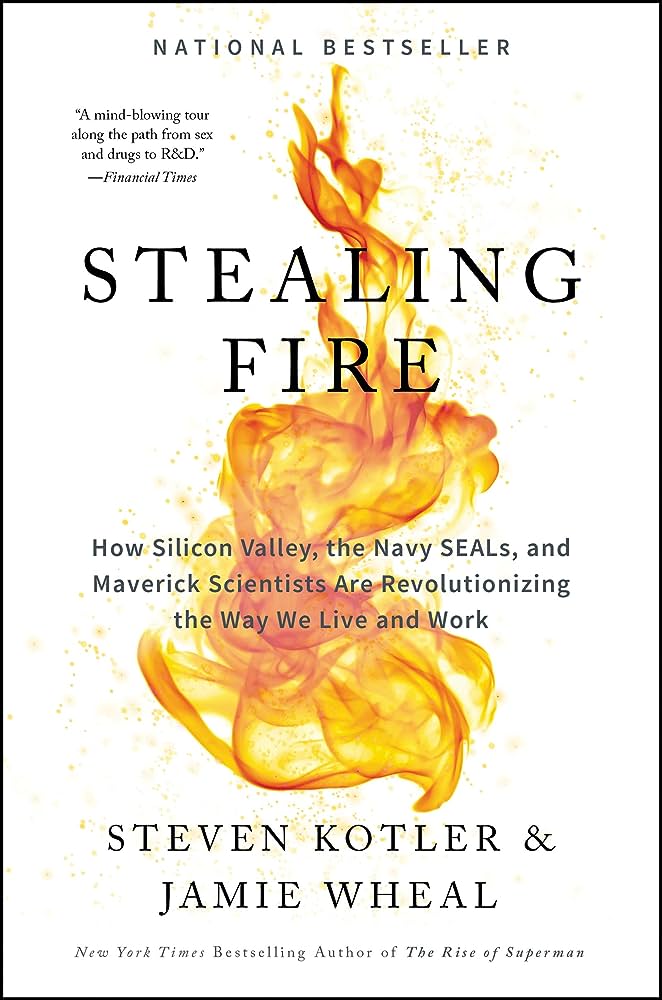
Ever wondered how extreme athletes maintain focus during their life-threatening stunts? Or how Navy SEAL units can communicate without words and make lightning-fast decisions during missions? Whether fueled by the excitement of their endeavors or honed through extensive training, high-achieving individuals have discovered a mental state the authors refer to as “ecstasis” – a concept originating from the Greek term for “standing beyond oneself.”
In this book, we will explore how certain individuals have reached states of ecstasis in the past, and we’ll also delve into new research and technology aimed at making this state accessible to everyone – all without the inherent risks of activities like skydiving, the use of hallucinogenic drugs, or spending decades in seclusion at a monastery.
Throughout the following key concepts, you’ll discover:
Ever wondered how extreme athletes maintain focus during their life-threatening stunts? Or how Navy SEAL units can communicate without words and make lightning-fast decisions during missions? Whether fueled by the excitement of their endeavors or honed through extensive training, high-achieving individuals have discovered a mental state the authors refer to as “ecstasis” – a concept originating from the Greek term for “standing beyond oneself.”
In this book, we will explore how certain individuals have reached states of ecstasis in the past, and we’ll also delve into new research and technology aimed at making this state accessible to everyone – all without the inherent risks of activities like skydiving, the use of hallucinogenic drugs, or spending decades in seclusion at a monastery.
Throughout the following key concepts, you’ll discover:
Around 2,500 years ago, Alcibiades, a young Greek politician and army general, hosted a memorable party at his Athens villa. To create a unique ambiance, he served a special drink called kykeon, which was typically reserved for Greece’s elite during the exclusive nine-day ritual known as the Eleusinian Mysteries. Alcibiades wasn’t invited to this ritual, but he managed to obtain some kykeon anyway to make his own party unforgettable. His actions led to rumors, and he had to flee Athens to avoid death sentence for revealing the secrets of Eleusis. Nevertheless, this did not dissuade others from seeking ways to alter their consciousness, similar to the mythological figure Prometheus, who faced eternal punishment for stealing fire from the gods.
The main takeaway from this historical event is that the pursuit of altered states of consciousness is an ancient quest that dates back thousands of years.
The exact reasons why kykeon induced such spiritual and cathartic experiences remain unknown.
Some believe that the barley in the drink might have been contaminated with the ergot fungus, the same one used to produce LSD today. Regardless, this kind of ecstasis was not meant for ordinary people in ancient Greece.
In the present day, individuals known as “twenty-first-century Prometheans” are exploring various ways to achieve altered states of consciousness. The authors of the text met with diverse individuals, including military personnel, elite athletes, tech entrepreneurs, and healthcare providers. The research showed that people across different fields are seeking ways to enhance their performance by altering their perception of reality and experiencing some form of ecstasis.
Various methods are employed to achieve this, such as trial lawyers experimenting with psychopharmaceutical drugs, military officers attending meditation retreats, and stock traders using electrodes to induce ecstasis. Altogether, the pursuit of altered states of consciousness has given rise to an “Altered States Economy,” with an annual expenditure of approximately $4 trillion. This encompasses legal substances like alcohol, tobacco, and caffeine, illicit drugs like cocaine, methamphetamines, and heroin, as well as expenditures on pharmaceuticals, psychiatric counseling, video games, action sports, music, film, pornography, and social media.
Despite the significant investments made in seeking altered states, the mechanics of ecstasis remain not fully understood.
Back in 2004, the US Navy’s SEAL Team Six was on a highly classified mission in Afghanistan. Their objective was to capture an Al-Qaeda operative known as Al-Wazu, who had escaped from an American detention center and was actively recruiting for Osama Bin Laden. The SEALs needed to apprehend him alive to gain valuable intelligence. The operation required swift, careful, and silent coordination as a team. They located Al-Wazu in his compound, asleep but armed, and managed to capture him without firing a single shot. The crucial factor that led to their success was the team’s ability to synchronize their consciousness and make collective decisions, opting not to shoot to avoid unnecessary harm.
The main point to take away here is that while we can recognize the state of flow when we observe it, the process of training individuals to achieve ecstasis (a state of collective flow) remains somewhat enigmatic.
Navy SEALs are renowned for employing quantifiable performance metrics in their rigorous screening process, resulting in only the most exceptional candidates making the cut. However, the extensive training required to develop a SEAL comes at a high cost. It takes around $500,000 to train one SEAL, and an additional $4 million to elevate them to the elite status of SEAL Team Six. This doesn’t even account for the millions spent on training candidates who do not ultimately make it through.
In the case of the Al-Wazu mission, success didn’t solely rely on the SEALs’ physical abilities, such as marksmanship or climbing prowess. Rather, it hinged on their capacity for split-second decision-making as a cohesive unit.
To assess and enhance an individual’s ability to synchronize their thinking with a group, a new facility called the Mind Gym has been established at the SEALs’ training center in Virginia. Here, state-of-the-art body-brain performance devices are employed. Brain activity is monitored using EEG devices, heart-rate fluctuations are tracked with cardiac coherence devices, and sensory deprivation tanks are used to eliminate distractions and practice disengaging the self, thereby expediting the learning process, including language acquisition. The hope is that these techniques will facilitate a smoother transition from individual to group flow during high-pressure situations.
The Navy SEALs exemplify one group that utilizes current knowledge of non-ordinary states to explore their practical applications. To understand the different facets of ecstasis research, the authors have identified four primary forces of ecstasis: psychology, neurobiology, pharmacology, and technology. In the upcoming key ideas, each of these areas will be explored, beginning with psychology.
As of 2017, approximately 25 million Americans suffered from post-traumatic stress disorder (PTSD), often stemming from experiences like child abuse, sexual abuse, or war trauma. For a long time, PTSD was either overlooked, misdiagnosed, or treated ineffectively. The only two approved medications for PTSD, Zoloft and Prozac, require weeks or months to demonstrate noticeable effects.
However, some unconventional treatments have shown promising results in recent times. The key message is that MDMA, surfing, and meditation have the potential to alleviate PTSD symptoms.
This is the key message: MDMA, surfing, and meditation can help alleviate symptoms of PTSD.
MDMA, commonly known as ecstasy and associated with club culture, has attracted the attention of scientists for potential clinical psychotherapeutic applications. A study by psychologist Michael Mithoefer in 2010 utilized MDMA in a controlled trial and found that a single dose could, in some cases, completely alleviate PTSD symptoms. Notably, the effects persisted for years after undergoing one to three rounds of MDMA therapy under supervision. The US government approved studies exploring MDMA’s use for treating anxiety and depression in 2015.
Similarly, other unconventional treatments have demonstrated positive results. Occupational therapist Carly Rogers tested the combination of surfing and talk therapy with Iraq War veterans suffering from PTSD at Marine Corps Base Camp Pendleton. The veterans experienced immediate relief after surfing, with some who had stopped speaking suddenly engaging in conversation again. A formal surf therapy program was established as a result, and over a thousand soldiers volunteered to participate. The study’s final outcomes indicated a significant reduction in PTSD symptoms after a minimum of five weeks.
While these findings are promising, MDMA and surfing come with their own risks and are not readily available to everyone. On the other hand, meditation offers a more accessible alternative. In a study conducted by the US military on individuals with PTSD, a month of daily meditation enabled 84 percent of participants to reduce or even discontinue their antidepressant medications, whereas the symptoms of the control group worsened by 20 percent.
As our understanding of the human body grows, the relationship between the mind and body becomes increasingly intricate. It is now evident that emotions do not solely originate in the brain but are also influenced by other parts of the body. For instance, the heart contains 40,000 neurons, and the stomach and intestines house an astonishing 100 million neurons. Neurobiological research, which is one of the four forces of ecstasis, reveals that various mental states produce measurable physiological responses. With the aid of AI technology, we can now use biometrics to predict the success of US Navy submariners and even work towards reducing suicide rates.
This knowledge indicates that our mental state is shaped not only by our thoughts but also by the physical experiences we undergo.
The main takeaway here is that artificial intelligence can leverage neurobiological data to identify effective teamwork skills and address issues related to suicide prevention.
In an effort to predict which sailors would cope well during six months confined in a submarine and which ones might struggle with their bunkmates, Chris Berka, CEO of Advanced Brain Monitoring, conducted a research project in 2014. The study involved connecting EEG machines to sailors to measure brain waves and equipping them with heart-rate variability monitors. After a four-month training program, the biometric data collected accurately predicted which sailors would perform well in an actual submarine assignment and which ones might face difficulties.
In a separate project at the University of Southern California, an AI therapist named Ellie was designed to detect early signs of depression, anxiety, and PTSD to address the rising rates of suicide in the military. Ellie, though appearing human, is an AI-powered therapist. She communicates through a video monitor, actively listens, and possesses the ability to read facial expressions, discern tones of sadness in patients’ voices, and interpret their choice of words. Crucially, she maintains a nonjudgmental approach, leading patients in a 2014 study to be twice as likely to share personal information with her compared to a traditional human therapist. The ultimate goal of this project is to make Ellie’s technology accessible to anyone with a laptop and an internet connection.
When wildlife photographer John Downer placed underwater cameras to observe the behavior of bottlenose dolphins in their natural habitat, he was amazed by their apparent calmness. Upon closer examination of the footage, he noticed an intriguing behavior – the dolphins seemed to engage in a sort of game. Each dolphin would chew on a pufferfish before passing it on to another dolphin. In response, the pufferfish released a potent nerve toxin as a desperate defense mechanism.
Interestingly, in small doses, this toxin had a euphoric effect on the dolphins, inducing a pleasantly stoned state.
Dolphins aren’t the only animals that have their unique ways of altering their minds. Many other creatures have their own methods of getting “high.” For example, cats are known to consume catnip, dogs have been observed licking toads, and sheep occasionally snack on hallucinogenic lichen. As for humans, there is an abundance of options to choose from, but some of the most popular substances include ergot-derived LSD and psilocybin, which is the psychoactive compound found in magic mushrooms.
The key message here is: Psychedelic drugs can help achieve a state of ecstasis.
Now, let’s turn our attention to the third force of ecstasis: pharmacology.
According to a theory, intoxication may serve an evolutionary purpose. Animals can sometimes become stuck in repetitive behaviors, finding it challenging to break free from such cycles. Intoxicating substances can disrupt this pattern, pulling them out of the monotonous loop.
For humans, this process of “depatterning” through hallucinations or drunkenness could potentially enhance lateral thinking skills, allowing for more creative and unconventional problem-solving. However, strict regulations have made it difficult to conduct controlled studies on illegal substances like LSD and psilocybin. Nevertheless, there are shifts happening in this regard.
Robin Carhart-Harris, a psychopharmacologist who took on the role of head of psychedelic research at Imperial College London, began investigating the effects of psilocybin on the brain. Through the use of functional magnetic resonance imaging (fMRI), Carhart-Harris gained deeper insights into an experience that had previously been studied primarily subjectively.
When we enter an altered state of consciousness, we transcend our usual selves. This sense of selflessness is attributed to the deactivation of specific brain regions, termed transient hypofrontality in neuroscience. Interestingly, these same regions deactivate during experiences with LSD, meditation, and exercise.
As a result of this deactivation, the usual mental chatter quiets down, and the networks responsible for unfocused daydreaming momentarily disengage. Instead, new networks form connections between more distant parts of the brain. This phenomenon may explain why psychedelics can aid in generating creative solutions to challenging problems.
Alan Metni initially pursued a career as a lawyer, but he soon discovered that his true passion lay in the exhilarating act of jumping out of airplanes and flying through the sky. He became deeply enamored with the thrill of flight and made thousands of jumps, constantly seeking ways to further enhance his training. For him, flying provided an instant pathway to ecstasis, an incomparable experience compared to anything else.
However, skydiving carries inherent risks, and each year there are tragic accidents, even among experienced flyers. Not everyone is willing to take such life-threatening risks.
Fortunately, individuals like Metni, along with other innovators, are working on developing technology – the fourth force of ecstasis – to make such thrilling experiences accessible to a wider audience in a safer environment. The goal is to democratize the access to these experiences while minimizing the potential dangers associated with them.
Here’s the key message: New technology is bringing ecstasis to a wider audience – without the usual risks or commitments.
Metni began his exploration by working with large fans and wind tunnels, eventually leading to the creation of iFly – an indoor flying experience that offers the same exhilaration of flight without the associated fatalities. As of 2017, iFly had established 54 locations across 14 countries, providing the opportunity for anyone aged three and above to enjoy this unique experience. The technology allows flying teams to conduct numerous test jumps, enabling groups like SEAL Team Six to practice their group flow, mastering the transition from individual to collective consciousness while soaring through the air.
Another example is Mikey Siegel, who abandoned his dream job as a roboticist to embark on a soul-searching journey through India and South America. It was during a ten-day meditation retreat in California that he finally experienced a taste of the much-touted clarity of mind on day seven, though the initial days were marked by nothing more than a backache. Despite the positive experience, Siegel found meditation to be an inconvenient and impractical way to achieve that heightened state of consciousness.
Thus, he founded Consciousness Hacking, a company that delved into experimenting with various wearable biofeedback devices to potentially create a shortcut to reach the same altered state. Prototypes using transcranial magnetic stimulation and transcranial direct stimulation have shown potential in deactivating specific cortical brain regions. Although the current effects are comparable to having a glass of wine, further testing may lead to more profound alterations in consciousness.
Every year, a gathering of innovators seeking ecstasis convenes in the Black Rock Desert in northwestern Nevada for a week-long event known as Burning Man. Among the attendees are Silicon Valley entrepreneurs, including Larry Page and Sergey Brin from Google and Elon Musk from Tesla. The festival attracts artists, musicians, and performers who showcase their consciousness-altering creations, and inventors like Mikey Siegel present their prototypes.
Burning Man serves as a colossal experiment in creating a city from scratch, formed by a massive collective effort. Beyond its spectacle and theatrical allure, the event fosters an environment where individuals in non-ordinary states of consciousness come together, leading to spontaneous collaborations that often extend beyond the festival’s duration.
One remarkable incident occurred in 2005, just moments before Hurricane Katrina hit the Gulf Coast. In a remote corner of Burning Man, some high-ranking Pentagon officials and hackers were working to establish the festival’s live stream and emergency wifi. When news of the hurricane reached them, one individual took initiative and adjusted a reconnaissance satellite to observe the hurricane’s impact on the Gulf Coast in real time.
The key message here is: Gatherings like Burning Man are an opportunity to use non-ordinary states to overcome pressing problems.
Feeling a sense of helplessness after Hurricane Katrina, a group of festival-goers at Burning Man gathered $40,000 in relief donations and founded Burners Without Borders. They immediately left the festival and traveled to Mississippi, where they established a distribution center to assist charities like Oxfam. Through their efforts, they donated more than $1 million to clear rubble and aid in the area’s reconstruction. Subsequently, they extended their support to other relief projects, including those for Japan’s Fukushima disaster in 2011 and Hurricane Sandy in 2012.
In 2011, Dr. Dave Warner, the individual who had hacked the satellite during Katrina, found himself in Afghanistan. As a defense contractor and an expert in data visualization with a neuroscience PhD, Warner, along with MIT scientists, traveled to Jalalabad to promote Burning Man’s principles of radical inclusion and open information. They established the “Burner Bar,” offering drinks in exchange for any form of information. For something as simple as a Heineken, they gained valuable insights, such as details about local farmers’ crops, the location of health clinics, or troop movements.
The group collected a vast amount of information, which was incorporated into Warner’s data visualization program. He insisted that it remain unclassified, but despite his intentions, the data was eventually utilized by the UN, Afghan officials, the Pentagon, and other organizations. Over time, these efforts in radical inclusion and open information led to saving numerous lives.
Many of the individuals we’ve discussed earlier are at the forefront of groundbreaking innovation, leading the way in harnessing the four forces of ecstasis. However, let’s take a broader view and examine which tools have started to gain more widespread adoption.
In the field of psychology, meditation has been rebranded as mindfulness-based stress reduction, becoming a billion-dollar industry.
In neurobiology, transcranial magnetic stimulation devices have demonstrated effectiveness, sometimes surpassing traditional antidepressants.
Regarding pharmacology, both medical and recreational cannabis have been legalized in numerous US states, and a significant number of Americans, around 32 million, regularly use psychedelics.
As for technology, devices now have the capability to monitor various aspects of the body, including hormone levels, heart rates, and brainwaves.
While some individuals may become addicted to the ecstasis experienced through risky activities like extreme sports, drugs, or sex, there are other methods to achieve similar altered states of mind. The Hedonic Calendaring system offers a five-step guide to explore non-ordinary states:
The first step involves listing all of your favorite activities that take you out of your own head, such as skydiving, travel, or attending live music events.
This is the key message: Hedonic Calendaring helps you determine when and how to access ecstasis.
The next step entails evaluating the value of each activity using the Ecstasis Equation. Consider factors like time commitment, risk, and reward to rank the activities. For instance, while seeing a shaman in Peru might be highly rewarding, a 10-minute meditation at home would require less time and effort.
Step three involves sorting each activity based on how frequently you’d like to engage in them – whether daily, weekly, monthly, seasonally, or annually.
Research on habit-forming suggests that incorporating new routines into existing habits makes them more likely to stick. Thus, in step four, think about ways to integrate these ecstasis activities into your current habits and daily life.
Lastly, be mindful of not becoming what the authors refer to as a “bliss junkie.” It’s essential to avoid getting addicted to altered states for the wrong reasons. Schedule 30 days each year where you completely abstain from all ecstasis-related activities, including meditation, kinky sex, or psychedelics. Allow your mind and body to recalibrate during this period and observe how you feel.
The key message in this book
The quest for non-ordinary states of consciousness is not a recent phenomenon, but modern times have brought us a deeper understanding of its mechanisms. Substances like MDMA, activities like surfing, and practices such as meditation show promise in aiding individuals with PTSD. AI therapists have proven effective in reducing suicide rates. Psychedelic drugs can facilitate unique neural connections in the brain. Additionally, advanced technologies like flight tunnels and transcranial direct stimulation devices offer the potential to induce states of ecstasis without endangering one’s life or requiring extensive meditation sessions.