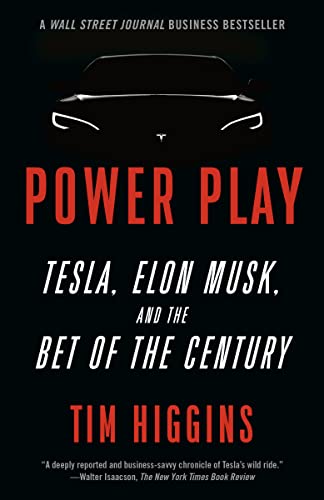
This book will delve into
During the early 2000s, electric cars were considered futuristic and impractical. Despite numerous attempts by prominent players in the automotive industry to develop commercially viable electric alternatives to gas-powered sports models over the course of a century, success seemed elusive. However, in Silicon Valley, a determined group of young engineers and entrepreneurs saw an opportunity to tackle this challenge.
These visionaries established Tesla Motors with a clear goal: to create an electric car that not only ran on electricity but was also fast, attractive, and cost-effective. In the following key ideas, we will explore how their seemingly idealistic start-up managed to become the most valuable player in the global auto industry within just fifteen years.
This book will delve into
Back in 2002, as global warming started gaining attention in mainstream discussions, Martin Eberhard, a Silicon Valley engineer, took note. Being a sports car enthusiast, he recognized that his beloved sports cars were consuming large amounts of gasoline, contributing to climate change.
Eberhard pondered the possibility of designing an electric car that could match the design and technological appeal of renowned models like the Porsche 911. With the goal of bringing his vision to life, he established AC Propulsion to develop an electric car named the tzero, and enlisted the assistance of another engineer, Marc Tarpenning, to work on its advancement.
In 2004, the stage was set for a new addition to the mix when Elon Musk, an aspiring investor, entered the scene. Musk, the young millionaire founder of PayPal, had recently launched the space transportation company SpaceX and chaired the solar company SolarX. Most crucially, Musk possessed a bold vision that aligned perfectly with Eberhard and Tarpenning’s, along with substantial financial resources to support their endeavor.
Here’s the key message: Tesla Motors was founded in 2003 by Martin Eberhard and Marc Tarpenning.
Eberhart and Tarpenning presented a business proposal to Musk, introducing the concept of Tesla Motors. Their pitch outlined the idea of creating a fully electric sports car equipped with a two-speed transmission and luxurious interior – essentially an electric vehicle that could rival the world’s top sports cars. They named it the Roadster.
To bring this vision to life, Eberhart and Tarpenning aimed to secure around $7 million in funding, which they intended to use to hire additional engineers and develop a handmade prototype. Over the following four years, they planned to seek further investments to scale up production and build 565 Roadsters, selling each at $79,900. Their ultimate goal was not only to generate a healthy profit but also to make a significant impact on the world.
While Musk initially had reservations about the simplicity of their financial projections, he recognized the transformative potential of the Roadster project. He was so convinced of its significance that he decided to take a significant risk, contributing $6.35 million of the initial $6.5 million investment. Eberhart and other smaller investors contributed the remaining amount.
In return for his substantial investment, Musk assumed the role of chairman in the company, while Eberhart became the CEO, and Tarpenning took on the position of president. As the primary financier, it was Musk who ultimately led the company’s progress and future direction.
The concept of electric cars has been around since the inception of automobiles. Automakers have been making attempts to create battery-powered vehicles since the mid-1800s. Although the technical possibility existed, the challenge of producing batteries with enough power to sustain a lightweight, high-speed electric car for extended periods remained insurmountable.
However, Tesla accomplished what no other company had achieved with the Roadster. Under the leadership of J. B. Straubel, Tesla’s engineers successfully developed a fully electric sports car utilizing lithium-ion batteries, the same lightweight batteries used in laptops. This revolutionary technology set the Roadster apart from any other electric vehicle.
Even before the prototype was constructed, Tesla had already exceeded its budget significantly.
This is the key message: Tesla was plagued by money problems, but Musk managed to steer the company away from ruin.
In 2006, Eberhard and Tarpenning unveiled the Roadster prototype, an unprecedented car with cutting-edge Tesla batteries and a stylish design. However, production encountered significant supply-chain shortages, indicating the need for more funds before substantial manufacturing could commence.
Despite these challenges, Musk was already looking ahead. While acknowledging the groundbreaking nature of the Roadster, he recognized that it was not yet commercially viable and had long envisioned releasing an electric car for the mass market. Thus, even as the Roadster was still in development, he urged Tesla’s engineers to work on a separate line of luxury sedans, which became known as the Model S. Priced more affordably than the Roadster, the Model S aimed to appeal to mainstream consumers.
To support these ambitious projects, Tesla continuously raised funds, yet expenses also escalated rapidly. The company faced the threat of bankruptcy in 2008, leading Musk to take out personal loans that he reinvested into the company. His personal investments and extensive fundraising efforts played a significant role in steering Tesla through its financial difficulties, securing millions from other investors.
Just as Musk had been sold on Eberhard and Tarpenning’s tzero prototype, the demonstration of a Roadster prototype allowed him to persuade additional investors to support the company. Concurrently, Tesla went public, focusing on new revenue projections centered around the Model S.
Musk’s effective fundraising approach paid off, and by 2011, Tesla’s total revenue had risen significantly, reaching close to $1 billion.
Towards the end of 2006, Eberhard found himself in a troubled state as he received a call from Musk. Musk had extensively test-driven the Roadster prototype over the weekend and presented a long list of complaints and demands for changes. From uncomfortable seats to the absence of mechanical buttons for the doors, these requested alterations would require significant additional costs for the company.
This situation was becoming a familiar occurrence at Tesla, with Musk increasingly assertive about his ideas. It became evident that Musk was gradually assuming a more dominant role within the company, and it wouldn’t be long before he took over Eberhard’s position as CEO.
By 2007, Musk had transitioned from being an external investor to closely managing every aspect of the company’s engineering, design, and marketing. The author suggests that Musk utilized aggressive tactics in the boardroom to push Eberhard out of his role as CEO at Tesla. As Eberhard exited, he filed a lawsuit against Musk, alleging libel, breach of contract, and other claims. Meanwhile, Musk continued to consolidate more authority within Tesla, ultimately becoming the CEO in 2008. As Musk’s control grew, so did the disagreements and tensions with others within the company.
The key message here is this: As Musk raised more funds for Tesla, he increased his control over the firm.
As the production of the Model S commenced, Musk’s increasingly irritable temperament and unyielding personality became well-known throughout Tesla’s offices and factory floor. He became known for firing individuals over minor errors, even for simple mistakes like typos, regardless of their position within the company.
The author recounts an incident in which Musk engaged in a physical altercation with a senior sales manager who resigned due to frustration with Musk’s leadership style. As Musk’s public image grew, so did the exposure of his angry outbursts.
One notable incident on Twitter involved Musk accusing a diver, who had assisted in the rescue of schoolboys from a flooded cave in Thailand, of being a pedophile simply because the man criticized the usefulness of the submarine Musk had sent for the rescue effort. Another instance on Twitter almost caused severe damage to the company when Musk suggested taking Tesla private, leading to an investigation by the Securities and Exchange Commission.
However, despite these flaws, Musk proved to be an exceptional marketer for Tesla. He skillfully sold investors and the public a more ambitious vision for the company’s future, one that surpassed the original ideas presented to him. His strategy involved creating a stylish, high-speed electric car, capitalizing on the excitement generated, and experiencing exponential growth.
Even the most experienced car manufacturer faces significant challenges when establishing a new factory. However, having institutional experience can make the process somewhat smoother, as valuable lessons are passed down through generations and integrated into established processes. Toyota, for instance, developed a successful method for resolving maintenance problems, encouraging any worker to halt production until the issue is solved.
On the other hand, Musk chose not to learn from other carmakers. Unlike Toyota, he preferred to continue Tesla’s assembly line operations while addressing issues, resulting in a chaotic factory floor. Under Musk’s leadership, everyone was in a race against time.
Right from the beginning, Tesla encountered a barrage of problems that pushed the company to the brink of collapse multiple times. Depleted cash reserves led to manufacturing delays. Despite this, Musk had publicly committed to shipping Model S vehicles to customers by the summer of 2012. To keep that promise, the company had to set up production in an unused factory, interestingly provided by Toyota.
The key message here is: Tesla encountered serious operational problems during its rise, and overlooked customer experience.
Unlike typical carmakers, Tesla did not allocate much time for standard testing procedures. For example, German automakers would typically subject a car to 6 million miles of testing over two winters to identify potential engineering issues. However, due to time constraints, Musk approved testing for only one million miles over six months. During this limited testing period, Tesla not only aimed to identify problems but also to fix them.
Moreover, Musk insisted that testing procedures should not impact the production schedule, which was already falling behind on its targets. As a result, any issues uncovered during testing would only come to light after production had commenced, leading to additional costs for last-minute fixes. Unfortunately, in 2015, Tesla recorded an injury rate of 8.8 injuries per 100 workers, significantly higher than the industry average of 6.7.
These challenges also resulted in frequent recalls for previously sold cars, generating negative publicity and causing concerns among potential customers. Despite facing numerous defects and reports of dissatisfied consumers, the Model S would eventually become a pivotal moment for Tesla.
Start-ups in the auto industry face notoriously tough challenges. For instance, among all the carmakers currently selling vehicles in the US, the most recent one to emerge and still be in operation was Chrysler, established as far back as 1925.
At the heart of Tesla’s vision lay a fundamental question: Could this start-up truly succeed in one of the most well-established and competitive industries? Even Musk himself doubted whether his company could eventually stand alongside giants like GM, Ford, Toyota, and BMW – iconic global brands that sold millions of vehicles annually. Nevertheless, despite the unfavorable odds, Musk remained determined to pursue his quest.
Despite encountering various production issues, by the end of 2013, Tesla was well on its way to selling nearly 23,000 Model S sedans in the US, surpassing even the sales of high-end models like the Mercedes-Benz S-Class. The Model S boasted an exterior and interior design and build quality that could rival some of the finest cars in the market. Additionally, Tesla’s battery range was almost comparable to a Chevy Volt running on gasoline.
Here’s the key message: The Model 3 marked Tesla’s first real foray into the mainstream auto industry.
The Model S was revolutionizing the concept of luxury for a particular group of environmentally conscious and stylish consumers, who had become a significant demographic among California’s elite. This allowed Tesla to carve out a new market segment, and as Musk’s vision materialized, Wall Street executives started recognizing that traditional automakers would need to step up their game to compete with the innovation coming from Silicon Valley. Consequently, major auto companies began investing billions to shift towards electric vehicles.
Despite the impactful success of the Model S in disrupting the auto industry, Musk’s long-term vision was not fully realized. He aimed to scale up the company and transform the initial tech start-up into a full-fledged car manufacturer. Following the Model S, Tesla devoted the next few years to launching the Model 3. Just like its predecessor, the Model 3 was anticipated to be a game-changer, offering a fully electric car to the public at a more accessible starting price of $35,000.
The development of the Model 3, like the Model S, faced significant challenges during production. To meet the timeline goals, a large portion of the assembly line was set up in a makeshift tent located in the parking lot of Tesla’s California factory. Nonetheless, the introduction of the Model 3 allowed the company to raise billions more in funding. While the rest of the world was grappling with a financial crisis, Musk managed to avoid the historical struggles faced by other US automakers, specifically bankruptcy.
In January 2019, Elon Musk and Shanghai’s mayor, Ying Yong, were photographed together in a field on the outskirts of Shanghai on a chilly day. They were there to mark the ceremonial ribbon-cutting event, celebrating Tesla’s first venture into car manufacturing outside of the US. The occasion took place at the company’s physical factory, situated six thousand miles away from the initial assembly line tent in California. Images of the smiling duo quickly circulated on news outlets worldwide.
By 2019, Tesla had undergone a significant transformation from its state in 2013 when the Model S faced skepticism from buyers due to being a start-up carmaker using new technology. Now, with the success of the Model 3 on the roads, Tesla was no longer just an ambitious idea promoted by idealistic Silicon Valley visionaries; it had become an established and credible brand.
The key message here? At a valuation of over $700 billion, Tesla is currently the world’s most valuable automaker.
To make the Model 3 competitive in the market, Tesla needed to increase production capacity and reduce manufacturing costs. This required a substantial amount of funding, which China was willing to provide. The country saw an opportunity to stimulate the electric vehicle market and invited Tesla, offering a $1.26 billion loan from state-connected Chinese banks to establish a factory with local funds.
Tesla planned to replicate the successful assembly line they had established in the US, but expanding internationally came with some challenges. Nevertheless, by autumn 2019, it was evident that Tesla’s overall growth strategy was effective, and as promised by Musk in January, they were ready to commence Model 3 production in China.
This achievement was remarkable, considering the incredible journey Tesla had undergone since its inception, starting from Martin Eberhard and Marc Tarpenning’s initial pitch to Musk. Just over a decade before venturing into China, Tesla had faced near failure, and Musk had even risked his personal fortune to pursue his vision for the Roadster and Model S. With each successful milestone, Musk’s confidence grew, enabling the company to venture further into uncharted territories, such as self-driving cars.
As Tesla’s stock continued to soar, the company’s success was undeniable. By the summer of 2020, Tesla had become the most valuable automaker globally, with a staggering valuation of $700 billion, surpassing the combined worth of Toyota and Volkswagen.
The key message in this book is that:
In the early 2000s, the establishment of Tesla marked the beginning of a new era for electric cars. Initially, the company received substantial funding from investor and entrepreneur Elon Musk, who later assumed control of Tesla. Over the course of fifteen challenging years, Musk navigated through financial struggles and operational difficulties while relentlessly pursuing Tesla’s ambitious vision. By 2020, his leadership had propelled Tesla to become the world’s most valuable car company.