This book will teach you:
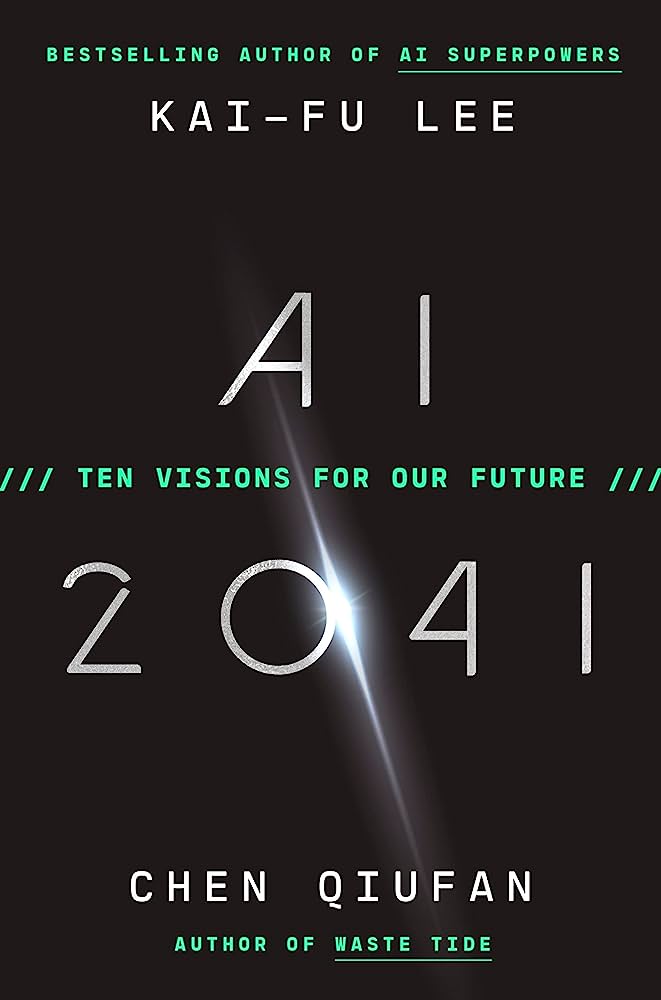
Sometimes, the present day is already a science fiction fantasy. Who would have imagined that one day you could ask your home appliances to play you a song or that you would carry a computer that could alert you when it’s time to take a walk?
But this is only the start. The advancement of deep learning and natural language acquisition will accelerate AI developments. Already in effect are autonomous vehicles and weaponry. Deepfake films and virtual reality games are also getting more convincing, making it challenging to tell fiction from fact.
Each fundamental concept is introduced with a brief fictional scenario about the world in 2041 or after another 20 years of AI progress and is then followed by a discussion of the potential social effects of these advancements. They will assist you in becoming ready for the AI revolution together.
This book will teach you:
By joining a new insurance provider called Ganesh Insurance in Mumbai in 2041, Nayana’s family significantly reduced their insurance costs. The problem? They must consent to the firm accessing all of their personal information.
Throughout the following few weeks, their phones were continuously pinging with recommendations after Ganesh advised the family to use a particular set of applications for everything, from investing to locating the most significant grocery discounts. The applications reminded them to drink water when they should, warned her grandfather to drive more cautiously, and pestered her father about his smoking until he gave it up. Their insurance costs decreased with each wise choice they made. Everyone would benefit.
However, the family’s premiums skyrocketed when Nayana fell in love with a man who lived in a less affluent area. He was perceived as a health danger to the family since the AI had deduced that he was of a lower socioeconomic position.
The key lesson here is that while AI can improve your life, it can potentially use your data against you.
The tale of Nayana offers a horrifying glimpse into how AI may mimic the prejudice in society. Deep learning has been one of AI’s most critical advancements in the past ten years. Thanks to deep understanding, computers can classify data, identify patterns, and make predictions. Facebook employs deep learning technology to provide personalized suggestions and maximize your time on its network. The program can precisely forecast what will engage you by scrutinizing every click you make and comparing your data to the millions of others in their system.
Deep learning has a lot of advantages. AI can examine many data points and draw correlations that the human mind would find impossible. However, AI lacks the richness and nuance of human thought. It cannot be based on experiences, theoretical ideas or common sense.
AI is also susceptible to prejudice and discrimination. In Nayana’s case, the app was unaware that her potential partner belonged to a different “caste” and that society would see the union negatively. However, it still seemed to indicate that the match would pose a “threat” to the well-being of Nayana’s family by studying his family’s data and monitoring where he resided. Deep learning will only become more widespread and potent in the following years. One of our most pressing concerns will be how to make it helpful to society.
Amaka felt fear. He had been requested by a sketchy firm named Ljele to leverage his expertise as a programmer to produce a deep fake video for them. He was required to film a well-known Nigerian politician confessing to scandalous behavior. The firm threatened to disseminate a phony film of Amaka kissing another man in a nightclub, if she failed to comply. He could be sent to prison, which would exacerbate his family issues.
The essential takeaway is that by 2041 it will be challenging to detect frauds because deep fakes will be so convincing.
An uproar was caused in 2018 after a video of former president Obama referring to President Trump as a “total dipshit” went viral online. The problem? It was a deep fake produced by Buzzfeed to demonstrate what was possible with AI technology and to caution viewers to exercise caution while viewing anything online.
It took some time for engineers to figure out how to get computers to understand and interpret photos before they could create the deepfake technology. Therefore, they looked to the human brain for inspiration, which includes a visual cortex that collects data about an image before sending it to the neocortex, which analyses that data and then gives the picture a more nuanced interpretation. Designers developed a CNN, convolutional neural network, using this paradigm.
A unique form of technology known as a Generative Adversarial Network, GAN, composed of two CNNs, is required to produce deep fakes. One is a “forger,” which examines millions of pixels in each image it views, to determine what makes each one distinct. After studying photographs of dogs, the forger can create a phony image of a dog. This is forwarded to the second CNN in the network, a kind of “detective.” It compares the forged image to authentic ones and alerts the forger of any mistakes. The forger then updates the picture in response to the detective’s criticism. Millions of times are repeated in this cycle until the phony dog can no longer be distinguished from the genuine one. Additionally, this method may be used to produce deepfake films and incredibly realistic pictures.
Of course, the results of this might be harmful. Deepfakes may be used as political weapons to undermine candidates or disseminate misinformation, as Amaka’s narrative illustrates. They may also be used to terrorize or extort others. Deep fake porn with famous people’s faces invaded porn sites in the real world in 2019.
Programmers have been rushing to develop algorithms to identify irregularities the human eye cannot notice to defeat deep fakes. However, deepfakes are growing at an equal rate.
When Golden Sparrow was a small child, his parents were murdered in a car accident, and he was then placed in an orphanage. He was given a particular acquaintance by those responsible for taking care of him there; he named the companion Atoman after his favorite superhero. Golden Sparrow required special glasses with a virtual reality interface to see Atoman. He soon began always to wear them. Since Atoman had access to his data cloud, he was the ideal travelling companion because he knew well about Golden Sparrow. Additionally, a biometric ribbon fastened to Golden Sparrow’s wrist supplied a continuous stream of real-time data regarding his behavior and physiological health.
Golden Sparrow’s best buddy, Atoman, assisted him with his studies, responded to his inquiries and helped him plan trips. But above all, he was always chatting with Golden Sparrow, the perfect conversationalist for a lonely young guy.
The main point in that is: AI partners will assist individuals in learning in novel ways.
Many individuals have engaged with AI assistants, such as discussing with an automated assistant when making a travel reservation, even if most people don’t have a supporting virtual friend like Atoman.
For decades, computer scientists have worked to enable machines to communicate with people. However, until recently, these efforts were constrained by how time-consuming it was to train computers to respond to conversational instructions. All of that changed in 2017 with Google’s creation of the “transformer”. A neural network for sequence transduction serves as the transformer. By studying millions of pages of text, it can recognize conversational patterns and forecast what it ought to say in response to a particular remark without the need for human involvement. The OpenAI institute just released its computer that can produce poetry and mimic any author’s style. It was made by feeding a computer text that would need 500,000 lives for an ordinary person to read.
Additionally, do you recall how Atoman assisted Golden Sparrow with his homework? These innovations have the power to alter schooling. Students could receive attention from personalized AI “teachers” that they wouldn’t get in noisy classrooms. Using AI tutors might free instructors from some of their most taxing duties, such as grading papers, giving assignments, and responding to common inquiries. In contrast, human teachers will continue to play a crucial role in supporting students’ growth in emotional intelligence, creativity and social skills -all areas in which people thrive as opposed to AI companions.
The so-called COVID generation, who grew up in the two decades following the outbreak and devastation of COVID-19, included Chen Nan. She cannot recall a period when people didn’t fear being sick. Every season, COVID makes a comeback. Everyone must wear a biosensor membrane on their wrists that communicates their physiological data in real-time. Nan remembers the first outbreak well since her grandparents perished, and she now avoids leaving her flat for fear of contracting the disease.
Delivery bots clean whatever she needs and bring it to her door. Cleaning robots in her home assist her. She also has a job online. She, therefore, has no motive to go other than the fact that she is alone. How can she develop relationships or find love while she is cooped up inside?
The main takeaway is that AI will revolutionize healthcare for the COVID generation.
The narrative by Chen Nan is a hypothetical look at the possible long-term impacts of COVID on people’s life. But one thing is sure: advances in artificial intelligence (AI) will be critical to curing the virus and enabling individuals to change their behavior to avoid contracting it.
Even today, it’s normal to use a smartphone to estimate the risk of infection, and several nations have created applications that inform users when a person who may be sick is around. These applications will spread more widely and spark contentious debates about privacy vs safety. Today, a QR code in an app is used to verify a person’s immunization status. They could eventually have to wear biosensor membranes, like those described in the narrative, that send physiological data and let them know when their immunizations are about to expire. Doctors will depend more on digital health records as they become more common to diagnose and cure illnesses. Additionally, new tools will revolutionize how quickly COVID vaccines can be created.
COVID may negatively impact humanity’s social customs and mental health in the long run. Most individuals won’t completely retreat from society, but many are already considerably more cautious about who and where they go. These behavioral shifts will be made possible by AI-based technology like delivery bots. But as of now, robots are unable to love. As a result, those who, like Chen Nan, yearn for face-to-face interaction will finally have to force themselves to leave their houses.
The seance was held in a pitch-black chamber with flickering candles and rose petals on the table. Aiko experienced mixed emotions. The medium, an older woman, started the ritual. The woman’s voice abruptly transformed into a young man’s, and the table shook erratically. Aiko knew that the person who had perished under unexplained circumstances was Hiroshi, her rock star hero.
Aiko was participating in an “extra reality” (XR) game. It gave her the impression that she was speaking with the man she adored so much in person. Her XR glasses let her see his spirit, which unexpectedly manifested as an apparition. Additionally, the storyline was expertly crafted to appeal to her interests, needs, and worries. That was confirmed by the lengthy survey she completed on her smartphone.
The main takeaway is that the distinction between the actual world and virtual reality will become hazier.
Her game was highly immersive because it had more than just virtual reality features, that allowed Aiko to see a virtual environment through her glasses. She also saw Hiroshi in places she was acquainted with, like her house or a busy street. He also engaged the elements in her actual physical surroundings. This is the most recent advancement in XR, mixed reality. As it involves complex technology that enables the recognition of items in a scene and natural language abilities, it is currently in the early phases of development. However, it will spread significantly during the next 20 years, obfuscating the distinction between fiction and reality.
These technologies will seem much more organic and seamless than it does now because of innovations like XR contact lenses and undetectable, built-in earbuds. Also, haptic bodysuits and gloves let gamers replicate touch and experience heat or cold.
Immersive games, like the one Aiko was playing, are the natural use for this technology. However, they might also be used in military training exercises to replicate wartime situations, to let new surgeons hone their techniques on a computer-generated patient, or to let students “meet” historical personalities in the classroom.
XR has a lot of promise to improve how we work, play and learn. However, it may also be abused. If individuals wear XR glasses all day, they are also given an app permission to view their data and gather personal information about them. We must carefully consider what happens to the data and create regulations to safeguard user privacy.
Chamal drove his car across the streets of Colombo, a city in Sri Lanka, from his cockpit in the training facility. His duty? Save visitors from a terrorist assault at a well-known temple. Even self-driving cars, which he was piloting, might be confused by accidents that deviate from the path they have been taught to follow, so he assisted in directing them to safety. He gathered carloads of terrified, perplexed visitors and drove them through the chaotic streets to their hotel while weaving between smoke plumes on his way to the temple. Gunshots could be heard in the distance, and he could feel the trembling.
The main takeaway is that developing self-driving technology is difficult but has the potential to revolutionize our transportation systems.
Creating fully autonomous vehicles has long been a developer’s goal. Driving is a complicated activity. Think about getting into your car to leave for someplace. You’ll need to survey the area and look for obstructions using your sense of perception. As you choose which way to go toward your objective, you must also be adept in planning and navigation. You’ll need to pay close attention to other drivers and anticipate their next moves. Additionally, you’ll frequently be forced to decide on the fly what to do.
Even the most advanced computer cannot possibly simulate these abilities. Driving involves so many different factors. Perhaps there are roadworks, inclement weather, terrible weather, or a dog that runs into the roadway. How is it possible to outfit a robot to handle these scenarios?
This AI project has higher stakes than others. A Facebook algorithm error may result in you seeing an offensive advertisement, but a technical flaw in an autonomous vehicle could result in a fatality. However, human drivers also have a poor reputation. In actuality, vehicle accidents claim the lives of approximately 1.35 million people annually. Autonomous vehicles may lower that number once they are fully operational.
Using augmented reality eyewear that displayed the area around the automobile on a big screen, Chamal could direct the car to safety from a distance. For now, one method of making autonomous vehicles safer is to use distant human drivers. Another option would be to change the layout of our cities and roadways drastically. Imagine pedestrian and vehicle-only lanes or intelligent roads that can interact with vehicles continuously. In the future, this dream will come true.
Marc was saddened after his wife and kid perished in a California wildfire. But the sadness quickly gave way to anger. The firestorm was caused by climate change, brought about by a society fixated on achieving technological advancement at any cost. Physicist Marc was developing a model of a quantum computer. He decided to shut down the world that had brought him such suffering using his knowledge and abilities.
He developed advanced drones that could fly through the air like a flock of birds, and he used them to target and kill corporate executives and other individuals causing climate change. He also attacked important ports, halting the oil supply and wreaking devastation.
The main takeaway from this is that autonomous weapons are a threat to humanity’s existence.
Although it seems impossible, drones like Marc’s exist. The Israeli military has created a drone capable of locating and killing a specific target by detonating an explosive. And even simpler drones can be a threat. Nicholás Maduro, the president of Venezuela, recently came dangerously close to being killed by two drones that detonated explosives while he was making a speech. Global powers are competing to develop the quickest and deadliest weapons in a new arms race brought on by autonomous weaponry.
Of course, nuclear weapons long could obliterate huge populations. However, they have also served to discourage hostilities. The mere knowledge that big states possess nuclear weapons has prevented them from attacking one another. On the other side, autonomous weapons can be used secretly. Retaliation is particularly tough if no one knows where the offender originated. That indicates that there is no deterrent impact. Additionally, terrorists like Marc in the narrative who wish to create chaos or start a bloody conflict can use them to their advantage.
Autonomous weapons will only get deadlier as AI improves and accelerates with improvements in quantum computing. Therefore, it is crucial to find means of protecting humanity from any potential repercussions. Some remedies have suggested mandating human intervention or banning these weapons, just like chemical weapons have been prohibited. Since they call for universal agreement, these options will be complex. But we must respond right away.
Landmark, one of the giant construction corporations in the US, was the target of large-scale worker protests. Thousands of individuals were working for the corporation, and they were all set to lose their jobs. The cause? AI employees may complete specific tasks more quickly and for free, eliminating the need for human labour. They were registered in an “employment restoration” firm as a condition of their settlement, which promised to retrain them and provide them with new work. However, these positions were frequently low-paying or far from their homes. Their lives have been completely turned upside down by AI.
The main takeaway is that automation is contributing to a crisis in employment.
Menial and entry-level occupations are most at risk as more companies replace their people with AI alternatives. AI will simply expand the gap between the affluent and low-income people because many of these positions are held by individuals currently earning the federal minimum wage. Many vocations, including plumbing, will be replaced by machines programmed to assemble standardized pieces.
There will be significant effects from this widespread labor emigration. People would lose their wages and the companionship and a sense of purpose that a fulfilling job can provide. Imagine spending a lifetime perfecting your craft, only to find that after a few weeks on the job, a computer performs better than you! Higher rates of drinking, depression, and suicide have all been associated with unemployment. This will have detrimental implications, given how widespread it is. A financial safety net might be created through policies like the Universal Basic Income, which could also assist in dispersing some of the vast profits generated by job automation. But more is needed to address the issue of finding meaningful employment for individuals. To do this, we must invest in educating people to perform tasks that AI will never be able to function as effectively as people.
AI excels at activities like data analysis that don’t call for creativity. Humans, on the other hand, are capable of imaginative thought. We can make our own tasks, apply common sense, and connect abstract concepts. Any job that calls for these abilities will always require human involvement.
In terms of qualities like empathy and compassion, humans excel AI. While an AI nurse may be as adept at administering medications, he won’t be able to convey worry as effectively as a person. Thus, human involvement will always be necessary in the care professions.
Helping those displaced by AI find new careers that allow them to utilize their distinctively human abilities is one of the finest ways to support them.
Self-made millionaire Victor was bored and miserable despite his wealth. He leapt at the chance for some much-needed excitement, so when he was invited to a mysterious island near Doha, he accepted. But he had to give a computer access to his personal information when he got to the island, and he soon realised what it had been used for. Before he even asked, all of his whims and desires were catered to. A robot attended to him. His accommodations were furnished with all his favourite items, and his favourite music played nonstop. He was at first ecstatic. But before long, he was bored once more and tired of always being happy.
The main takeaway is that AI may maximise your happiness.
AI can predict your favourite foods and political ideologies. But can it bring you joy? To maximise Victor’s satisfaction, AI looked at his data. The good outcomes, however, were just temporary. It fulfilled his hedonistic urges but didn’t enable him to attend to his more fundamental needs.
What, then, causes happiness? Abraham Maslow proposed a hypothesis in 1943 that claims there is a “hierarchy of needs” in human beings. The most basic physiological requirements for food and shelter are at the bottom of the hierarchy. The wants for security, safety, and work come first, then those for love and belonging, self-worth, and self-actualisation. AI advancements should make it simpler to meet the basic physiological demands of the human population.
Costs associated with manufacturing will decline thanks to the renewable energy revolution, while labour costs will plummet because of AI automation. There won’t be any need to worry about starvation or homelessness if the benefits of the clean energy revolution are shared across society. However, while Maslow’s basic requirements will be met, it is more difficult to foresee how this new century will gratify more complicated desires. Will individuals still be motivated to achieve self-actualisation if they are no longer required to work? What will give them sensations of love and belonging and make them feel like vital members of their communities?
As all the tales we’ve heard demonstrate, AI is a disruptive technology that will fundamentally alter how we live in the next twenty years and beyond. However, it is up to us how exactly that will go. By safeguarding privacy, dividing revenues, preserving the environment, and limiting the use of weapons, human governments have the authority to ensure that AI serves society as a whole. On that, our pleasure depends.
This book’s main takeaway is that:
Every aspect of our life, from how we date to the types of jobs we perform, will undergo technical and societal change due to AI. However, it will also be able to power lethal autonomous weapons that have the potential to end civilization as we know it. The future effects of AI on the planet must be shaped now.
Here is some additional helpful guidance:
Learn about what is occurring with your data.
Whenever you click on a post or search for a flight, you provide free data to large corporations like Google and Facebook. It is precious and can include delicate personal information. As a result, start sharing your information with caution. Search for an alternative search engine that disables trackers and reviews privacy policies.