This book will teach you
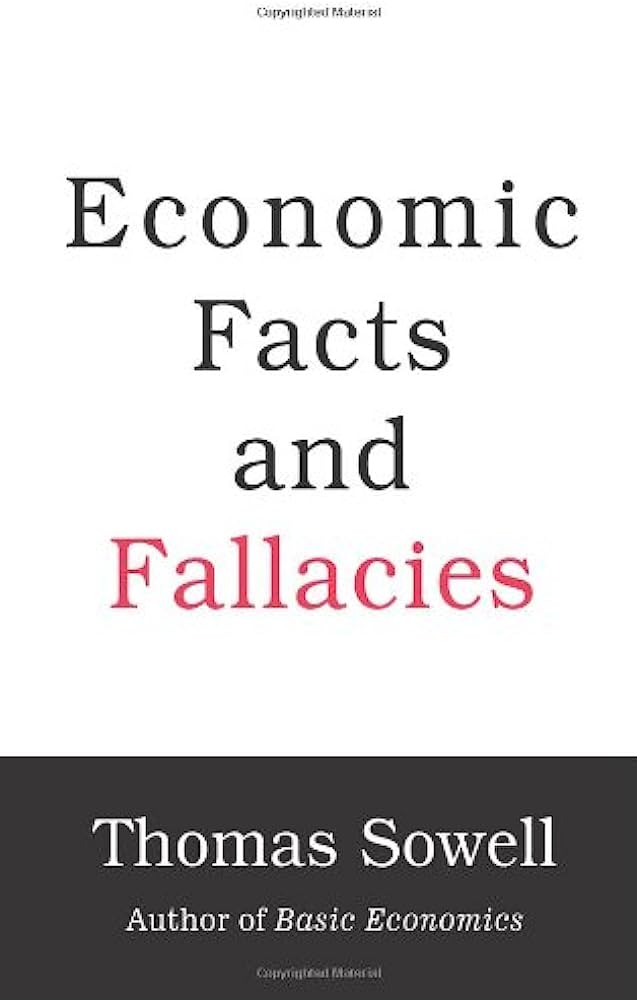
We deal with huge problems like inequality and urban decay. Each of them is difficult enough to solve on its own, but if we misinterpret them or leave out some crucial details, the task becomes much more difficult. Falsehoods unfortunately thrive in the world we live in. Furthermore, these mistakes might have detrimental effects on the economy at both the national and global levels.
This book teaches you how to guard against erroneous thinking on a variety of subjects. Whether the subject is income imbalance or housing policy, you’ll learn how to spot what the author views as the most common errors. Once these errors are under control, you should be able to rationally consider the problems that we all face.
This book will teach you
Despite having the best of intentions, politicians and activists can end up making things worse. This might happen if their choices are driven more by moral rage and strong feelings than by logic. People cling to incorrect beliefs and ultimately cause more harm than good.
The idea that there must always be a winner and a loser in every economic transaction is one such fallacy. They carry out a transaction with a zero sum. In other words, if someone did very well for himself, it must have been at the expense of someone else.
The idea that economic effects are always positive is the key lesson to be learned.
Numerous well-intentioned economic policies that have detrimental economic effects are based on the zero-sum fallacy. Consider rent control. The property owner always wins in a transaction like renting, according to proponents of the zero-sum transaction theory. They claim that the tenant must be protected as a result. What is the solution? rent control.
Landlords and builders nearly unanimously consider the terms to be undesirable when they have been used in the past. Construction halts and rent is not paid by tenants. Over time, housing options grow limited, which is bad for people who have to rent. For example, Melbourne experienced a long period of no new apartment development after the Australian government implemented rent limits during World War II.
However, individuals who adhere to the zero-sum theory of the economy are unable to see how renting benefits both parties. Their actions could be ineffective, as we’ve seen.
Another area where the zero-sum fallacy can be evident is in international commerce. Some individuals believe that affluent, highly developed countries are always the “winners” and that poorer, less developed countries are always the losers. They believe that stronger countries have benefited from the weaknesses of their weaker competitors.
But those who hold this viewpoint are allowing sanctimony to distort their judgment. Above all, they are unable to recognize the positive impact that trade has had on the economies of many of these emerging countries. Others, including South Korea, Hong Kong, and Singapore, have only gotten better since allowing wealthy Western countries to make investments there.
Everything about the outcome was zero-sum; both parties appear to have benefited greatly from the arrangement.
You may be familiar with the Latin expression post hoc. It comes from the Latin phrase “After this, therefore because of this,” or “After this, therefore because of this.”
Or, to put it another way, since Y occurred after X, X must have been the cause of Y. This is a fallacy known as the post hoc fallacy, as should be obvious.
You run the risk of making poor decisions when you don’t understand the fundamentals of politics and economics.
Here, the fundamental argument is that politics frequently suffers from the post hoc fallacy.
The post hoc fallacy has been applied in some well-known cases. One used the chemical DDT and took place in the middle of the 20th century. DDT was divisive from the beginning and was finally banned in the US in 1972. Other administrations quickly made similar decisions.
There were several reasons why DDT was banned, but one stood out as being particularly compelling. The prevailing belief was that DDT caused cancer.
This initially appeared to be true. The prevalence of cancer had increased in areas where DDT had been sprayed.
But a closer look revealed that this was a post hoc fallacy, as you may have predicted. DDT was frequently used to kill mosquitoes and reduce the risk of malaria in less developed countries. And it worked: DDT eliminated insects, and malaria cases declined. Since humans were living longer, cancer might be acquired and ultimately result in death. Therefore, it was wrong to outlaw the pesticide on the grounds that it caused cancer.
A costly mistake, in fact. Mosquito populations increased as a result of DDT bans by various governments. Again, millions of people were soon killed by malaria.
Another example of the post hoc fallacy is the idea that the 1929 stock market crash resulted in the collapse of the entire US economy and a rise in unemployment. The major decline allegedly resulted in a serious catastrophe that lasted for years.
But a closer look reveals the truth. Shortly after the stock market crash, the unemployment rate actually started to drop. When the government got involved, the situation for job seekers simply got worse. When American officials accepted the post hoc fallacy, the stock market was used as a scapegoat.
However, the truth often speaks for itself. Despite the predictions of many leaders, the economy actually expanded in 1987, more than 50 years after the first stock market crash.
The idea is that we must improve healthcare. How many people would be against it? very little, if any.
So let’s take a closer look. Exactly what does “improving healthcare” mean? Is it related to the billions of taxpayer monies being used to finance cancer research? Why not treat skin rashes with the same money instead?
All of a sudden, things aren’t nearly as cut and dry.
This is a problem with demands that are vague in their goals, such “we should improve healthcare.” Since we only have a specific amount of resources, we must be very clear about our intentions and set limitations on what we can accomplish.
Though many supporters of progressive measures fall short in this area. They have a lengthy wish list. They adopt the fallacy of the open-ended.
The primary lesson from this is that those who support progressive political objectives need to be cautious of the open-ended fallacy.
When you fall victim to the open-ended fallacy, you can never finish the assignment. There’s always more you can do, regardless of how much you’ve already accomplished. Air quality, public safety, and healthcare may all be enhanced. But there is a danger. Politicians may decide to make significant financial investments in a select few policy domains.
Governments are often drawn to divisive themes with broad appeal. However, this can mean that other areas are neglected. It might also lead to the expansion of bureaucracy under the pretense of addressing intractable, unresolved problems.
Another variation of the open-ended fallacy is unlimited extrapolation. Consider the argument that there is no way to stop urban sprawl because building new streets, homes, and businesses only results in the creation of more streets, homes, and businesses. It frequently operates under the presumption that development will continue indefinitely.
However, this point of view is erroneous. There is a limited pool of people who are available. Every person who moves to a newly developed area causes the population of the place they just left to decline. In other words, there hasn’t been much of a change in how crowded society is overall.
Anyone who asserts that since the home’s entryway is made of wood, the entire house must also be built of wood is undoubtedly erroneous. Logicians refer to it as the composition fallacy. This is the notion that what holds true for one component also holds true for the entire.
Governments favor a particular group, city, or industry and believe that their actions will benefit everyone. This is how politics operates. They ignore the overall and place their primary attention on the component.
The main takeaway from this is that the fallacy of composition is a problem for economic policy.
Local governments’ efforts to “revitalise” certain city areas and communities are one illustration of this illusion. They think that revitalising an allegedly “run-down” area would be advantageous for the whole economy or nation.
Yet, in reality, they’re making the compositional error. This is what really transpires. An improved area attracts successful businesses and high-income residents. Of course, they all originate from someplace else, and they drive away citizens and enterprises that are less prosperous. The economy, as a whole, receives no net gain from any of this.
However, governments all across the world continue to start up massive “improvement” projects. On a national level, they mostly lead to the destruction of long-standing communities, the compelled transfer of people who do not want to move, and the waste of endless amounts of public funds.
The composition fallacy frequently involves public money for specific focused efforts. It is claimed that an investment of this nature will benefit the entire economy. The general consensus is that government expenditure will boost tax revenue and generate new jobs.
Does this indicate that the government shouldn’t support any improvement projects at all? According to the author, it is preferable to keep tax payers’ money in their possession. They will invest their money in the things they deem most crucial. That is the simplest way to avoid the composition fallacy.
Consider a company that sells something that most people find perplexing and worthless, like a wind-up frog that accomplishes nothing. Such a corporation wouldn’t exist very long; it would quickly go out of business. Before that time, however, the board of directors and the shareholders would probably step in and pressure the CEO to make things right.
One area of life where this isn’t the case is the academic community. It is not subject to the same forces and incentives. It provides a difficulty.
The main takeaway from this is that academic institutions are not held to the same norms and requirements as businesses.
A corporation is either profitable or not in the business sector. It fails if it doesn’t provide them with a product they want. Investors leave, money stops coming in, and the company goes out of business.
Not all educational institutions function in this way. Unlike businesses, which must answer to their shareholders and customers, nonprofit institutions, such as some colleges and universities, are largely unaccountable. This is due to the fact that they receive funding from donors, foundations, and other sources whose opinions are irrelevant, such as taxpayers. Even if they had chosen to, several of these contributions are long dead and unable to take part.
According to the author, due of this lack of accountability, these academic institutions may offer certificates that are mediocre or even useless. The results of academic study undoubtedly have the potential to benefit society as a whole. However, a sizable percentage of academic production is only valuable to those who wish to pursue careers in academia.
Furthermore, since a significant percentage of this research is supported by outside organizations like foundations, the government, and other entities, there are few limitations on how far it can be carried out. It’s permissible for research that won’t actually benefit society to accumulate, and a lot of the time, this study just sits on university libraries’ shelves and gathers dust.
What good does that do?
According to American novelist and comedian Mark Twain, there are three varieties of lying: “Lies, damned lies, and statistics.” What specifically did he mean by it? In essence, statistics can be changed to offer incorrect information, especially if information is given out of context.
Politicians frequently utilize statistics to emphasize how unequal the world is. However, situations aren’t always cut and dry.
Here, the main point is: Data might contribute to a misperception of wealth disparity.
Even though the issue of wealth inequality is touchy, statistics don’t tell the whole story. Take into account, for instance, how income is calculated. Most income statistics indicate earnings before taxes. But this distorts the picture. After taxes, wealthy people’s profits are actually much lower.
However, these numbers sometimes don’t include government aid and other comparable payments. This suggests that estimates of the real economic resources of people with lower salaries are frequently greatly exaggerated. Without the proper context, anyone looking at these numbers would come to the conclusion that there is a big difference between the rich and the poor in terms of quality of life.
There isn’t, though, in reality.
Another misunderstanding that may be brought on by these deceptive numbers is the notion that the wealth of the wealthy is derived from the poverty of the poor. When studying the apparent wealth disparity, people may fall victim to the zero-sum fallacy that has already been mentioned.
Regular Americans would be among the most disadvantaged people in the world in a country like the US, where there are more billionaires than anywhere else, if the wealthy truly profited at the expense of the poor. But they’re not.
What should this teach us? Use caution when interpreting numbers. Don’t base your opinion on some data about how unfair the world is. Pay close attention to the context of such data and stick to the truth.
How Europe Undeveloped Africa is the renowned book by Guyana historian and activist Walter Rodney. That word sums up the idea that Europe exploited Africa and caused the poverty on the continent.
The idea that wealthier nations contribute to poverty in less developed parts of the world extends beyond just Africa and Europe. For instance, British colonial rule is cited as the cause of India’s poverty, while US and Canadian actions have exacerbated the region’s issues. There are other causes of poverty, the author argues, and this interpretation of what happened is distorted.
The main takeaway is that it is a myth that Western countries are too responsible for the impoverishment of less developed countries.
What else may be to blame if the West isn’t responsible for the poverty in regions like Africa? The author believes that location is one of the key offenders.
Geography has significantly influenced the development of ideas and technology. The blending of several cultures led to many innovations. And these concepts became richer the more individuals engaged with one another. This ultimately resulted in wealth.
Little geographical barriers, for instance, prevent individuals from meeting and sharing ideas inside the Eurasian continent. Geography gave humans in ancient Eurasia the chance to create strong technology.
On the other hand, ideas just couldn’t be shared in the same manner in other regions of the globe. They are isolated from other civilizations, maybe because of the Sahara Desert or the vast waters that surround Australia.
There is still another thing. Empires and nations have ups and downs. Their living standards, scientific and cultural advancements, and even their military might, may all rise and fall. Take the Islamic world as an example. Since the Middle Ages, it has consistently outperformed Europe on almost all fronts. It had a higher quality of life and level of sophistication than any nation in northern Europe.
Throughout the whole history of humanity, “equality” has never existed.
The countries that are now prosperous may become impoverished in the future. Moreover, those who are now having difficulty may one day become powerful empires. There will be many causes for these shifts in luck, but one important lesson is to consider the bigger picture. By doing so, you may be able to avoid a frequent error.
The main idea of this work is:
There are economic myths that keep coming up. These have harmed economic policy and strategic thinking for decades, from the zero-sum fallacy, which asserts that there must always be winners and losers, to the fallacy of composition, which confuses the part for the total. Many well-intentioned activists, including environmentalists and anti-poverty campaigners, have encountered barriers as a result of these misconceptions. We can only start addressing the world’s issues if these myths are exposed.
Practical suggestions:
Avoid making judgements based on emotions.
Take a step back the next time you hear anything in the news that makes you angry, whether it’s a story about discrimination or the wealth gap. Make sure your emotions aren’t impairing your judgement. Are you certain that everything is as it seems to be? Do you have all the information? Does it appear that important context is missing? After considering all of the available information, only then should you create an opinion.