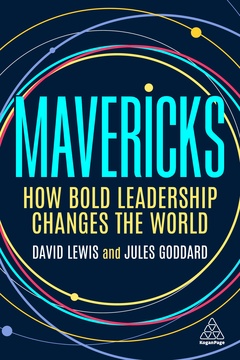
This book will teach you:
There are many mavericks in the world, despite the fact that there is only one Elon Musk. In order to understand precisely what makes a maverick a maverick, the writers of Mavericks conducted interviews with several of them. They came up with five important qualities.
You’ll learn in “Mavericks” that mavericks make the finest leaders -those who really make a difference- and that you, too, can be one! Be the change you want to see in the world by developing this aspect of yourself.
Additionally, this book will teach you:
Elon Musk, Jacinda Ardern, Steve Jobs Oprah Winfrey. What ties all of these folks together? They are maverick leaders—free-thinkers who often use a fairly unconventional style of leadership, with astounding outcomes.
Elon Musk and other well-known maverick leaders will not be discussed, however. We’re going to concentrate on something a little different instead: regular mavericks. People who are typical, like you and I.
Yes, I do. A maverick may be anybody. It’s not merely a matter of your genetic makeup or if your parents encouraged independent thought in you. The writers of Mavericks researched a variety of maverick figures, including businessmen and specialists in explosives. They came to the conclusion that these mavericks weren’t solely products of nature or nurture after spending hours doing study and interviews.
It’s true that some folks are just inherently more… unconventional. Consider Sidney Alford as an example. From a young age, this explosives specialist had traits of a maverick. Bombs captivated Alford as a young boy living up in London during the Second World War. He would gather materials from bomb sites to create pyrotechnics. He even constructed firecrackers out of nitrogen triiodide in school and placed them next to a patient teacher’s chair.
Alford subsequently had a remarkable career as an engineer, designing tools to disarm terrorist explosives.
It was clear that Alford was unique. But the writers firmly believe that we all have innately rebellious instincts. Consider how inquisitive, adventurous, and creative youngsters can be. It is entirely up to us whether or not we exhibit such characteristics as we move through life.
You may decide to become a maverick, in other words. You may choose it once more and again.
You could be asking yourself at this point, “Do we all have to be mavericks?” Is it really that crucial? Okay, sure. It is significant, in the writers’ opinion. Mavericks are the answer to our world’s problems of division and homogenization. We need dissidents, innovative thinkers, and individuals who can view the world from different perspectives.
The ultimate objective is to build unconventional civilizations and a better planet. However, we need to consider change on a smaller scale before we jump to conclusions about proposals for global reform. Let’s begin with the person in the first place. What really distinguishes a maverick?
The authors’ study led them to pinpoint five essential traits that characterise the maverick spirit. All mavericks, including Steve Jobs and Khadim Hussain—but more on him later—share these traits.
We’ll examine each of these maverick traits individually. You’ll have a better understanding of how to realise your maverick potential after you comprehend them.
Belief—a belief in improving things—is the first attribute. Maverick leaders are aware of the precise improvements that are required and are eager to implement them. They are driven by a desire to improve things rather than ego or personal preference.
It was clear to Khadim Hussain that something had to change. He was raised in a hamlet in a far-off region of Pakistan. He had polio as a kid, which rendered his legs useless. Despite his disabilities, Khadim was keen to continue attending school, but he lacked a wheelchair. His companions then transported him there in a wheelbarrow.
Khadim was sent home by the instructor when he arrived at school. “People like you can’t go to school,” was the unmistakable message. Khadim, however, was not going to give up. He wished for everyone to have access to education and to be able to attend school. Later, he advocated in his area for females’ schools. He had to struggle to alter people’s perspectives. Many peasants had traditional views and believed that females weren’t deserving of an education.
Khadim received ferocious resistance from locals along the way, including religious authorities and even his own father. But he didn’t let it stop him. Khadim has been advocating for females’ education for 20 years. Thousands of female students have graduated from the girls’ school he helped build, and he is now regarded as a respected leader in his neighbourhood.
Khadim has a strong belief in the value of education. He has overcome the hurdles by persevering and bringing about actual change thanks to this great commitment.
You must maintain motivation in the face of criticism and defeats in order to be a maverick leader like Khadim. You also need to be clear about your beliefs. So, consider what you want to improve in your organisation or neighbourhood. And how would you improve the situation? What will you do to address the situation?
Perhaps Gandhi’s comments can serve as an inspiration, as they did for another unconventional leader the writers spoke with: It is said, “Be the change you want to see in the world.”
Mavericks seek to alter the status quo. Additionally, they need to be very resourceful if they want to make a difference. One other trait shared by all mavericks is resourcefulness.
Maverick leaders understand that being resourceful involves establishing connections and seeing opportunities, often in novel ways. They recognise potential when others could easily overlook it because they look in unexpected areas. Maverick businesspeople, for instance, might identify a market niche and fill it with novel products, creating exciting new business chances.
That is what it means to be resourceful: to see opportunities and act on them. Alternatively, you may conceive of it as “exploiting capital.”
Consider social capital as an example. Intelligent mavericks understand the importance of conversation and the sharing of ideas. A fresh possibility might arise from even a simple chat between two persons. But here’s an intriguing development. Frequently, a discussion between two strangers might be more fruitful than one between two close friends.
Maverick leader Armene Modi is aware of the importance of supposedly weak relationships. She didn’t merely depend on the support of close friends and coworkers when she made the decision to enhance gender equality in India and start her own NGO. Instead, she “knocked on every door,” in her own words. She made contact with individuals who were on the outer reaches of her social networks as well as friends of friends.
Totally unrelated people started pledging their help as she spread word of her NGO idea throughout her broad networks. These ‘weak relationships’ had a surprising amount of power and helped her launch the NGO.
Thanks to her network, the NGO that Modi founded is still flourishing twenty years later. And India has advanced significantly in terms of gender equality. For instance, the average age of marriage for females has increased from 13 to 19 in certain areas.
Even if you don’t have any plans to create an NGO or revolutionise society, Modi’s narrative may still teach you a useful lesson. Mavericks that accomplish things are adept at using their whole network and social capital. They depend on more than simply their intimate relationships.
Yes, working alongside friends and people you know and trust is good. You won’t get very far, however, if you don’t diversify. Therefore, reach out to the individuals you know as well as the people they know. Go beyond the boundaries of your network.
And that’s not the end of it. Keep in mind that you may use all types of money in all types of circumstances. Be creative.
Katharine Birbalsingh is unorthodox in addition to being a resourceful maverick, like other mavericks. Though maybe not in the manner you’d anticipate, she is a nonconformist.
She established and took over leadership of London’s Michaela Community School in 2014. Birbalsingh’s method of teaching is not very trendy, at least not by the standards of the twenty-first century. Traditional disciplines are studied by pupils at the Michaela School. Latin lessons are offered in place of IT courses. The regulations are also traditional. Students are not permitted to converse while they go between courses.
And yes, there is a rigorous uniform policy, as you have undoubtedly figured by this point. There are restrictions on the kind of pencil cases that are acceptable. Birbalsingh thinks that rigorous rules and high expectations are beneficial for pupils. And the outcomes are self-evident. Many Michaela School graduates have gone on to attain notable academic success. The school received “excellent” ratings from inspectors.
It’s possible that Birbalsingh’s method isn’t the most clear illustration of maverick nonconformity. However, it’s really rather radical in this situation. Her method is in opposition to how education is now practised in the UK.
Among her more liberal coworkers, Birbalsingh is a divisive figure. She sparked a stir when she spoke her opinions at a Conservative Party conference before starting the Michaela School. Birbalsingh thinks that white guilt has a detrimental effect on minorities in the educational system. She believes that individuals should be held accountable for their own actions. Raising standards and expectations will be necessary for pupils of colour.
These comments caused her liberal colleagues a great deal of controversy, as you can surely understand. Birbalsingh was compelled to quit from her position as head of school and shunned by her peers.
Of course, Birbalsingh quickly recovered and established the Michaela School with great success. Her experiences, however, highlight the inherent dangers of a nonconformist strategy. You’re probably going to enrage folks because you’re a maverick. Therefore, be ready for setbacks.
It is advised by the writers to seek for “fertile terrain.” Find a situation where you can effectively be a nonconformist and implement your views. That doesn’t always imply abandoning your career or your neighbourhood. Sometimes all you need to do is find a new employer or social group. Even if they don’t always agree with you completely, try to work together with individuals who understand you.
Finally, a word of caution: avoid being unconventional only for show. You must possess the same rebellious spirit as Birbalsingh and be willing to take unusual action in order to affect good change.
It’s clear that being a maverick isn’t always simple. You’ll experience obstacles, and sometimes you’ll even fail.
Of course, the possibility of failure might be frightening. However, mavericks don’t fear. They are aware that while failing is difficult, it is also vital. When you attempt anything new, that is what occurs.
Take biking as an example. How do you become a bike rider? Simply do it. You mount the bicycle. You pick yourself up, get back on the bike, and try again after falling off. Practice consistently until you master it.
The mavericks are aware of this. They realise that learning from errors is a necessary component of development.
They are also aware that making mistakes is often the greatest way to learn. They’re open to experimenting and trying various strategies until they discover one that works.
Naturally, telling someone to “just experiment” isn’t very helpful. You must be skilled at experimentation to get the best outcomes.
One of the mavericks the writers spoke with, Oscar Corona Lopez, had a fantastic attitude to experimenting. Lopez established his own business as an agent for a Mexican insurance provider. Knowing that most businesses fail, Lopez understood he needed to be adaptable and ready to try new things. Additionally, he was aware that excellent experimenting starts with the appropriate questions.
Where can you find individuals lined up to participate in something? Lopez wondered to himself as he was hiring for his new business. The response? Reality programmes with auditions, such as The Voice.
Lopez posed a query, discovered the solution, and then came up with a business theory. In order to build a more effective team, he reasoned to himself, “If I conceive of recruiting as an audition process, then I can pick individuals who are enthused about participating.”
The experiment was then carried out by Lopez, who created an entertaining and inventive hiring procedure that resembled an audition. Candidates had to create movies introducing themselves and participate in group exercises.
After selecting the winners, Lopez took some time to consider his experiment. How did these new hires compare to others who had gone through more conventional means of recruitment? What features of the experiment were successful? What may be altered the next time?
Lopez’s recruiting experiment has lessons for all of us. It serves as the basic basis for any productive exploration. Ask insightful questions, develop a working hypothesis, and then do some well-planned experiments. Afterward, evaluate your performance and draw lessons from your mistakes.
A maverick experiments in this manner. For your subsequent endeavour, use a similar strategy and gauge the results.
What if your well thought-out experiment is a complete failure? As we’ve previously seen, most mavericks eventually fail and encounter difficulties. Perseverance is another essential trait of mavericks because of this. Whatever occurs, they don’t let anything stop them.
Even when they are the target of direct hatred, they persist. That is what took place in Khadim’s case. recollect his prior tale? He encountered rejection and hatred from several members of his society, including his own family, as he advocated for girls’ education in Pakistan. He persisted still despite everything. He persisted in trying.
The writers found this common trait among maverick leaders when conducting their interviews with them. All of these mavericks have courage and fortitude. They persisted in the face of difficulties.
Some individuals are simply more robust by nature, you could be thinking. Okay, perhaps. However, everyone can toughen up. Simply identify your objectives, more precisely, your higher level objectives.
There are several types of objectives. Some objectives are doable, short-term tasks that you wish to do every day. Naturally, they help you remain concentrated. However, they won’t always help you persevere in the face of significant resistance.
You’ll need some assistance from your higher order ambitions when times are rough. These are the objectives that are firmly ingrained in your worldview. You hold these values. your way of life. the things that actually count.
To Khadim, expanding chances for education and employment were the most important things. He wished to improve people’s lives. His life’s philosophy and higher-order objectives were these.
The writers identified a definite tendency in their leader interviews. Every maverick shared his or her objectives and ideas. They implied that they were motivated by an underlying goal even though they didn’t declare it directly. The mavericks discussed the significance of seeing others’ potential, standing up for the underdog, or having a constructive influence on their nation.
It’s time to ask yourself, “What’s my life philosophy,” if you haven’t already. What are the higher order objectives that will direct my efforts, then?
You’ll discover that, like other mavericks, you can be remarkably resilient once you have the answers. You’ll also realise the genuine value of your labour.
Mavericks see their work as a personal matter. The job itself may become a source of purpose and fulfilment when it is in line with your higher order aims and life philosophy.
A good maverick leader is devoted to improving things without vanity or conceit. However, they could find an incredible feeling of satisfaction via their profession along the road.
Just take into account the reality that we are essentially wired for labour. Our DNA contains it. Everything was done in small groups by our early ancestors, who conversed and collaborated as they worked. And it still is today. Group activities are enjoyable for us.
Therefore, it makes sense that maverick leadership may be so rewarding if we are all born with an inner maverick and we all like working with others.
We have discussed a few strategies for realising your maverick potential. Like Khadim Hussain, you may engage in some introspection to determine what you want to change and why it is important to you. Additionally, you may do some tests utilising the framework that Oscar Lopez found to be very successful.
In addition, the writers provide some additional helpful advice that was motivated by their own professional experiences as well as their conversations with mavericks.
Be inquisitive first. Mavericks are naturally inquisitive. Connect with others who have different backgrounds and perspectives, and then ask thoughtful questions. This calls for thoughtful questioning and attentive attention to both what is said and what is not stated.
Make some notes after the discussion. The unconventional Keith Coats, a futurist consultant with TomorrowToday, is the source of this advice. Coats advises maintaining a log of all these insightful discussions since it may serve as a valuable resource and teaching tool.
Coats has engaged in “curiosity discussions” with a variety of individuals throughout the years, including writers, businesspeople, homeless men, and a monk who had completed a 10-year silent retreat.
You’ll learn more if you approach things with curiosity. And in order to adapt and succeed, leaders must be lifelong learners.
A second straightforward tip that might help you cultivate another maverick characteristic is to live life experimentally. Experiments don’t need to be elaborate undertakings. They might be routine daily activities on a small scale. Come up with a concept for an experiment you wish to begin the following day every night before you go to bed. Afterward, begin it!
Every day, make an effort to be innovative; try something new. To be a maverick, you must consistently make the right decisions and do the right actions. The process of progress never ends.
It’s time to have a broader perspective. Not only do we need maverick people, but we also need maverick businesses that can build better society. Aim high, mavericks, always!
However, what really does a maverick organisation entail? How can you start one or make an existing maverick more unconventional?
Everything is possible, as the tale of the Dutch bank ING demonstrates. In 2015, this established business suffered a little revolution.
The most significant adjustment was a radical restructure of the top personnel. They were separated into 350 “squads” of nine members each after being split into 13 “tribes.”
Now, these staff “squads” collaborate in interdisciplinary teams. Steering committees, project managers, and other types of pointless bureaucracy are not essential. Instead of wasting time in meetings, staff may connect and network in a more casual setting, and there is more openness throughout. The workplace today resembles a college campus more.
The maverick transformation of ING was made possible by courageous leadership choices. Surprisingly, digital businesses like Spotify rather than other banks served as the inspiration for the modifications.
And “adhocracy” is arguably the best term to describe these trends in general. ING changed into an adhocracy, a less hierarchical, more flexible kind of organisation. Instead of looking up at the boss, employees turn their heads to face the client.
An organisation that is maverick may be identified by its adhocratic structure. So consider the organisational structure of your business. If the system is archaic, hierarchical, and bureaucratic, consider methods to shake it up.
You may implement a number of maverick practises in just about any firm. Of fact, being a maverick demands a radical change in strategy for many typical businesses. It requires being ready to try new things, for instance, or organising around the issue at hand rather than the position that has to be filled.
These modifications take time to take place. But they may occur, particularly when led by a rebellious figure, like you, for example.
Mavericks by David Giles Lewis, Jules Goddard, and Tamryn Batcheller-Adams has reached its conclusion.
Let’s look at the maverick manifesto since it completely summarizes this book: “I don’t follow the crowd. I have experimentation, resiliency, and resourcefulness. I know how to improve things and I want to. A distinct vision of my higher order objectives and personal philosophy serves as my compass in life. Create your own version of this manifesto to bring out your inner maverick. By doing this, you’ll discover personal satisfaction, advance your business, and maybe even affect global change.
Asking a colleague, “How should I adjust to bring out the best in you?” is one action you may do right now. When the other person offers any advice, you might respond, “It would assist me if you modified your own behavior in this manner so that I can change.” so on. It’s an excellent icebreaker that both depends on and fosters trust. You may begin building a network of supporters in this manner.